NAD+ and AHK-Cu in Metabolic and Longevity Research: A Deep Dive
A research overview of NAD+ and AHK-Cu covering mitochondrial metabolism, sirtuin activation, copper-peptide signaling, and laboratory handling protocols.

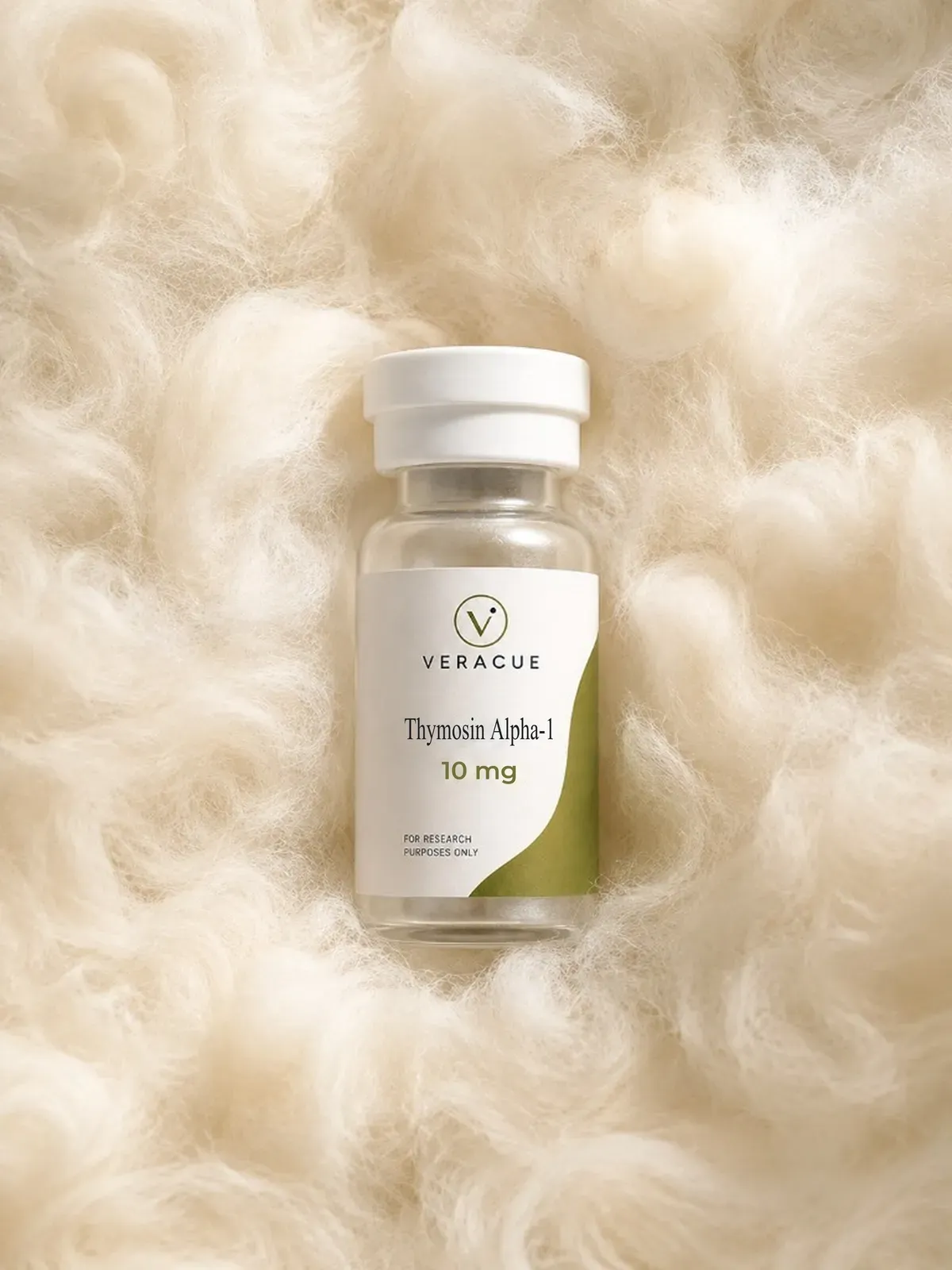
Thymosin Alpha-1 is a 28-residue peptide whose N-terminal serine is acetylated, written Ac-SDAAVDTSSEITTKDLKEKKEVVEEAEN-OH, and it is a fragment of the precursor protein prothymosin alpha. It has the formula C129H215N33O55, an average mass of about 3108.3 g/mol and CAS 62304-98-7. The name is easily confused with thymosin beta-4 and its TB-500 fragment, which are unrelated sequences. One 10 mg vial size is available, supplied strictly for laboratory research.
Ask for the analytical documentation of any lot.
HPLC is the method used to measure purity
Ask for the report for a specific lot through the contact page
Supplied for laboratory research use only
Mass spectrometry is the method used to confirm identity
Thymosin Alpha-1 (Tα1, also written TA1) is a 28-amino-acid acidic peptide with an acetylated N-terminal serine. It is a proteolytic fragment of the precursor protein prothymosin alpha, with formula C129H215N33O55 and CAS 62304-98-7. Veracue supplies it for laboratory research only.
Labs look at Thymosin Alpha-1 mainly in cell-based assays that involve Toll-like receptor signaling on dendritic cells and other innate immune cells. Its sequence and mass are well standardized across chemical databases, which makes it straightforward to check against a lot record.
| Product name | Thymosin Alpha-1 (Tα1, TA1) |
| Peptide length | 28 amino acids, Nα-acetylated at the N-terminal serine |
| Parent protein | Prothymosin alpha (proteolytic fragment) |
| Molecular formula | C129H215N33O55 |
| Molecular weight (average) | 3108.3 g/mol |
| Monoisotopic mass | 3106.50 Da |
| CAS Registry Number | 62304-98-7 |
| PubChem CID | 16130571 |
| Size offered | 10 mg vial |
| Research designation | Research Use Only |
These are reference-chemistry values for the molecule as documented across chemical databases, not a Veracue analytical result. Physical form, salt or counterion form, purity, net peptide content, lot results and storage conditions are reported on each lot’s documentation and can be requested through the contact page.
Thymosin Alpha-1 is the first 28 residues of prothymosin alpha, with the N-terminal serine acetylated. In one-letter code it is Ac-SDAAVDTSSEITTKDLKEKKEVVEEAEN-OH.
In three-letter code: Ac-Ser-Asp-Ala-Ala-Val-Asp-Thr-Ser-Ser-Glu-Ile-Thr-Thr-Lys-Asp-Leu-Lys-Glu-Lys-Lys-Glu-Val-Val-Glu-Glu-Ala-Glu-Asn-OH. The sequence is rich in acidic residues, and the reported isoelectric point is about 4.0 to 4.3.
Chemical databases, synthesis literature and supplier records converge on this same sequence, formula and mass. A record that shows a different length, a missing acetyl group or a different formula describes something else.
| Representation | Value |
|---|---|
| Molecular formula | C129H215N33O55 |
| Average molecular weight | 3108.3 g/mol |
| Monoisotopic mass | 3106.50 Da |
| CAS Number | 62304-98-7 |
| PubChem CID | 16130571 |
| Isoelectric point (pI) | About 4.0 to 4.3 (acidic peptide) |
They share a naming family but are unrelated peptides. Thymosin Alpha-1 is a 28-residue peptide, while thymosin beta-4 is a distinct, larger actin-binding peptide, and TB-500 is a synthetic fragment used as its research analog. A procurement record that says only “thymosin” is ambiguous, so match the sequence and CAS number.
Laboratory studies describe Thymosin Alpha-1 acting through Toll-like receptor signaling, mainly TLR9 through the MyD88-dependent pathway and TLR2 through MyD88- and TRIF-dependent pathways, on dendritic cells and other innate immune cells.
Downstream readouts in those assays include dendritic-cell maturation markers such as CD80, CD86 and MHC class I and II expression, and cytokine measurements such as IL-2 and IFN-γ. Findings vary by stimulus, cell type and study design, so they describe assay results and not a general property of the peptide.
The page gives molecular reference information and general assay-level context. It cannot establish what is in a particular vial, and published work may not say which chemical form was used. Veracue does not provide dosing, administration or usage guidance of any kind.
A purity percentage on its own answers only one question. A useful certificate lets you confirm what the material is, how pure it is by a stated method, how much of the vial is actually peptide, and that the report belongs to the lot you received.
Because Thymosin Alpha-1 is a 28-residue peptide, mass-spectrometry identity and net peptide content are especially informative next to HPLC purity, since single-residue deletions and truncations are the most common synthesis impurities at this length.
| COA item | What it tells you | What it does not establish |
|---|---|---|
| Lot or batch number | Links the report to a specific production lot | Anything about quality unless it matches the vial label |
| HPLC purity (%) | Share of detected signal in the main peak under stated conditions | Identity, net peptide content or biological activity |
| Mass spectrometry or LC-MS | Whether the observed mass matches the expected 3108.3 Da average (3106.50 Da monoisotopic) species | Purity, or the amount of material present |
| Net peptide content | How much of the vial’s mass is peptide rather than salts, counter-ions or water | Chromatographic purity |
| Laboratory name and test date | Who tested the lot and when | Independence, unless the relationship is disclosed |
HPLC helps assess chromatographic purity. Mass spectrometry helps assess molecular identity and mass. Neither alone establishes every aspect of material quality, so read the purity value together with the method and detection conditions on the analytical record.
Veracue confirms a field only when the lot certificate reports it. The certificate page explains how to request lot documentation, and storage conditions follow the label and documentation for the lot you hold.
Ask the Veracue team about available documentation for a specific lot, or review the certificate library.
Thymosin Alpha-1 is supplied solely for laboratory research, scientific investigation and analytical characterization. It is not a drug, cosmetic, dietary supplement or food, and it is not intended for human or veterinary use or for any form of administration. This page contains no dosing, administration or usage guidance of any kind. Purchasers are responsible for using the material lawfully and within an appropriate research setting. See the Medical Disclaimer and the Terms and Conditions for sitewide policies.

RESEARCH PEPTIDE
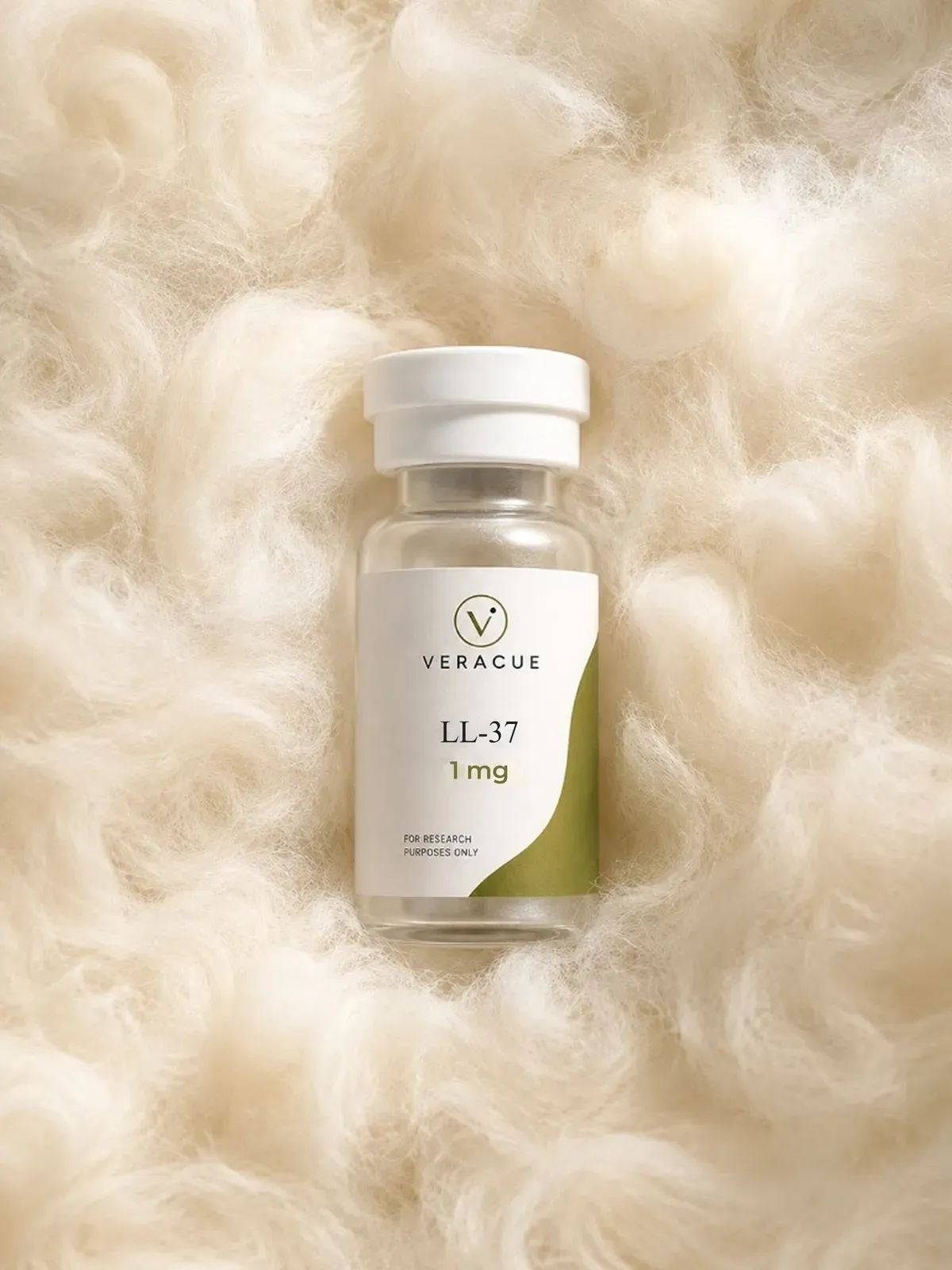
LL-37 or hCAP-18? The vial holds the 37-residue peptide (C205H340N60O53, about 4493.3 g/mol), not the precursor. 1 mg, laboratory research only.

RESEARCH PEPTIDE
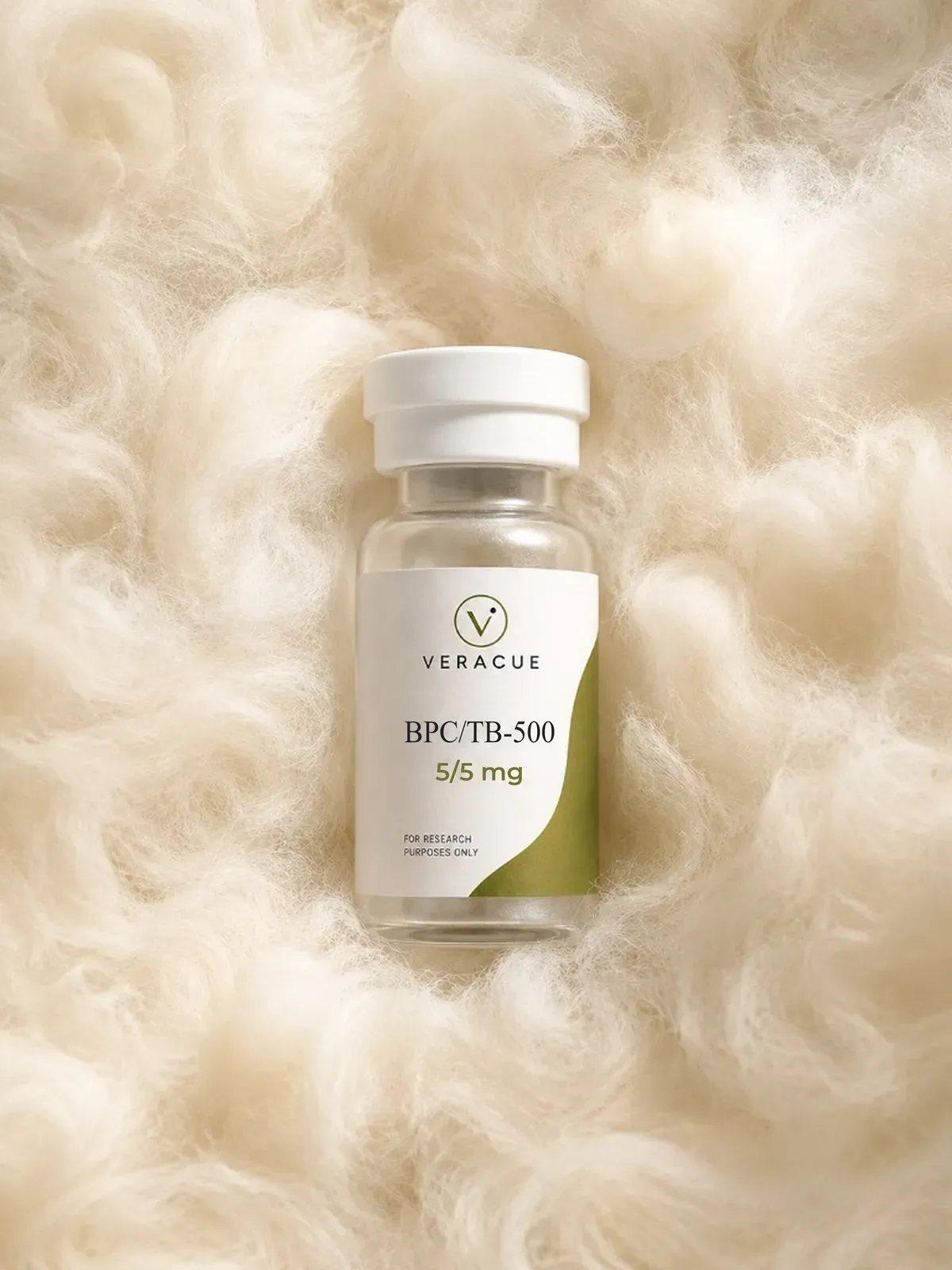
Two peptides in one vial: BPC-157 (GEPPPGKPADDAGLV) and acetylated TB-500 (Ac-LKKTETQ), each with its own CAS number. 5/5 and 10/10 mg, research use only.

RESEARCH PEPTIDE
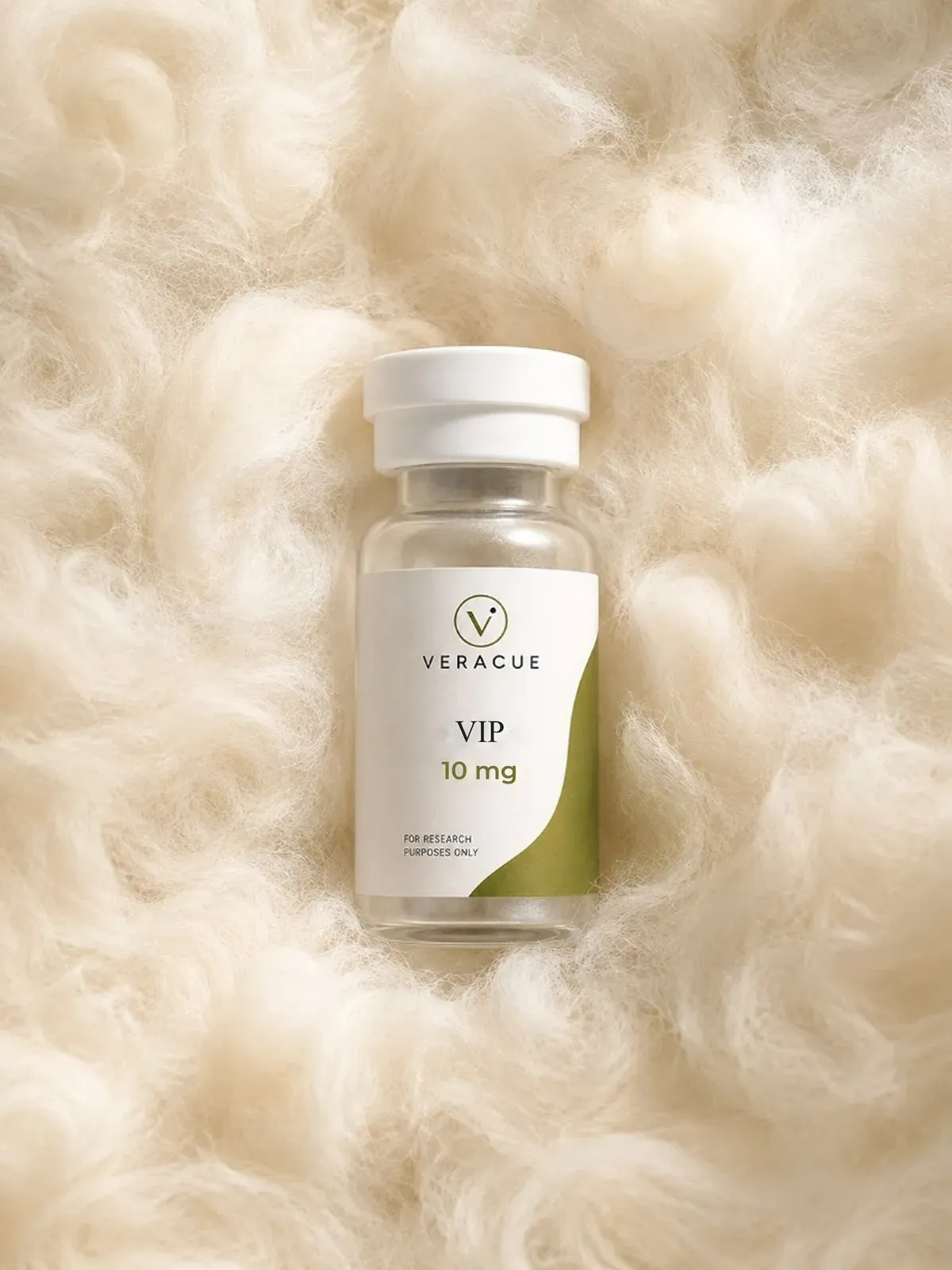
Is VIP the same as PACAP? No. It is a 28-residue amidated peptide, C147H238N44O42S, CAS 40077-57-4. Research use only; supplied as a 10 mg vial.

RESEARCH PEPTIDE
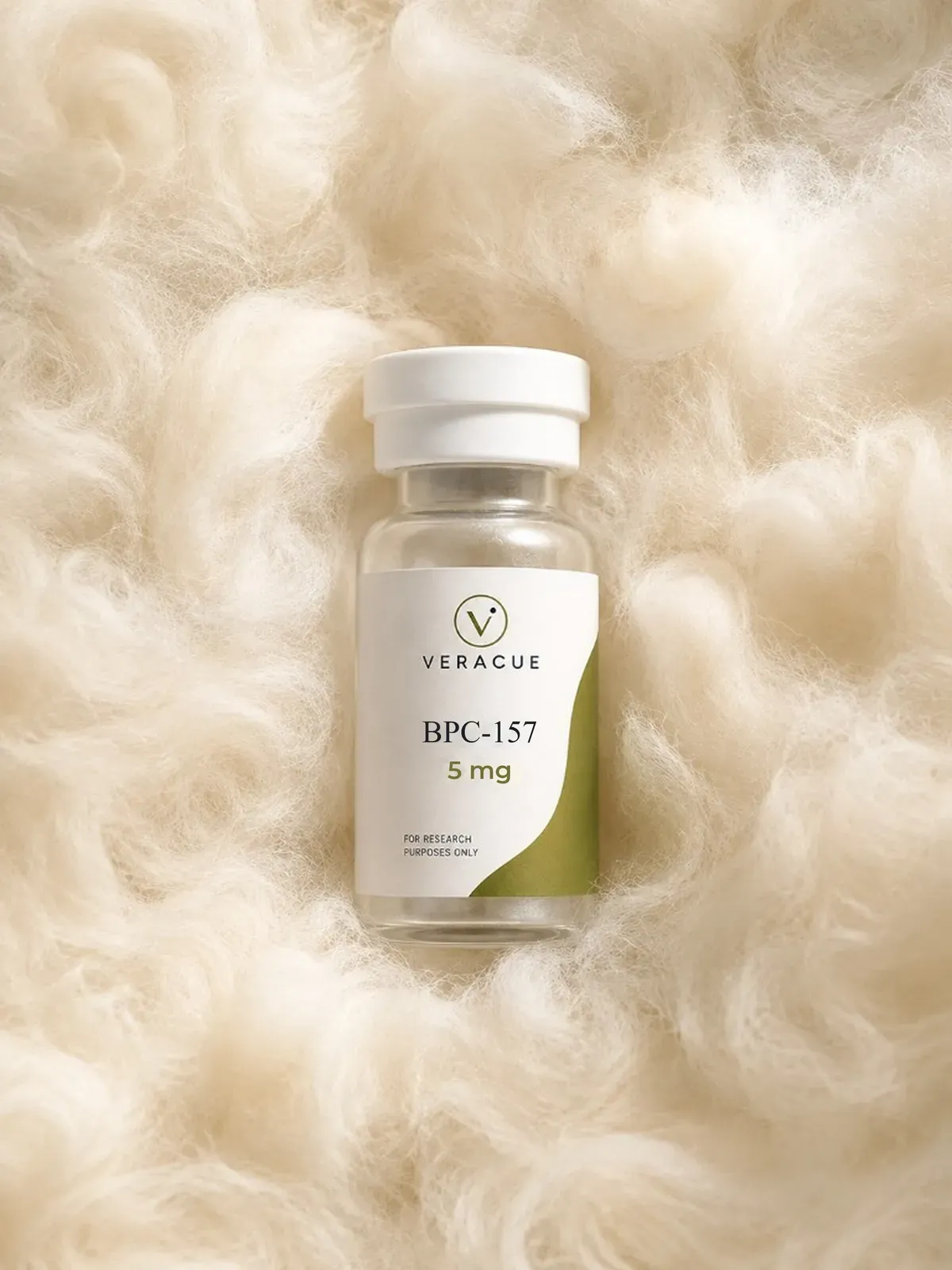
Is BPC-157 a blend or one peptide? It is a single 15-residue molecule, GEPPPGKPADDAGLV (CAS 137525-51-0). Sold in 5 and 10 mg for research use only.