
Research Compliance · Scientific Documentation · Direct Specialist Support
Research Peptide FAQs
Purity testing, storage, legality, ordering, and compound-specific answers, indexed by category and searchable by keyword.
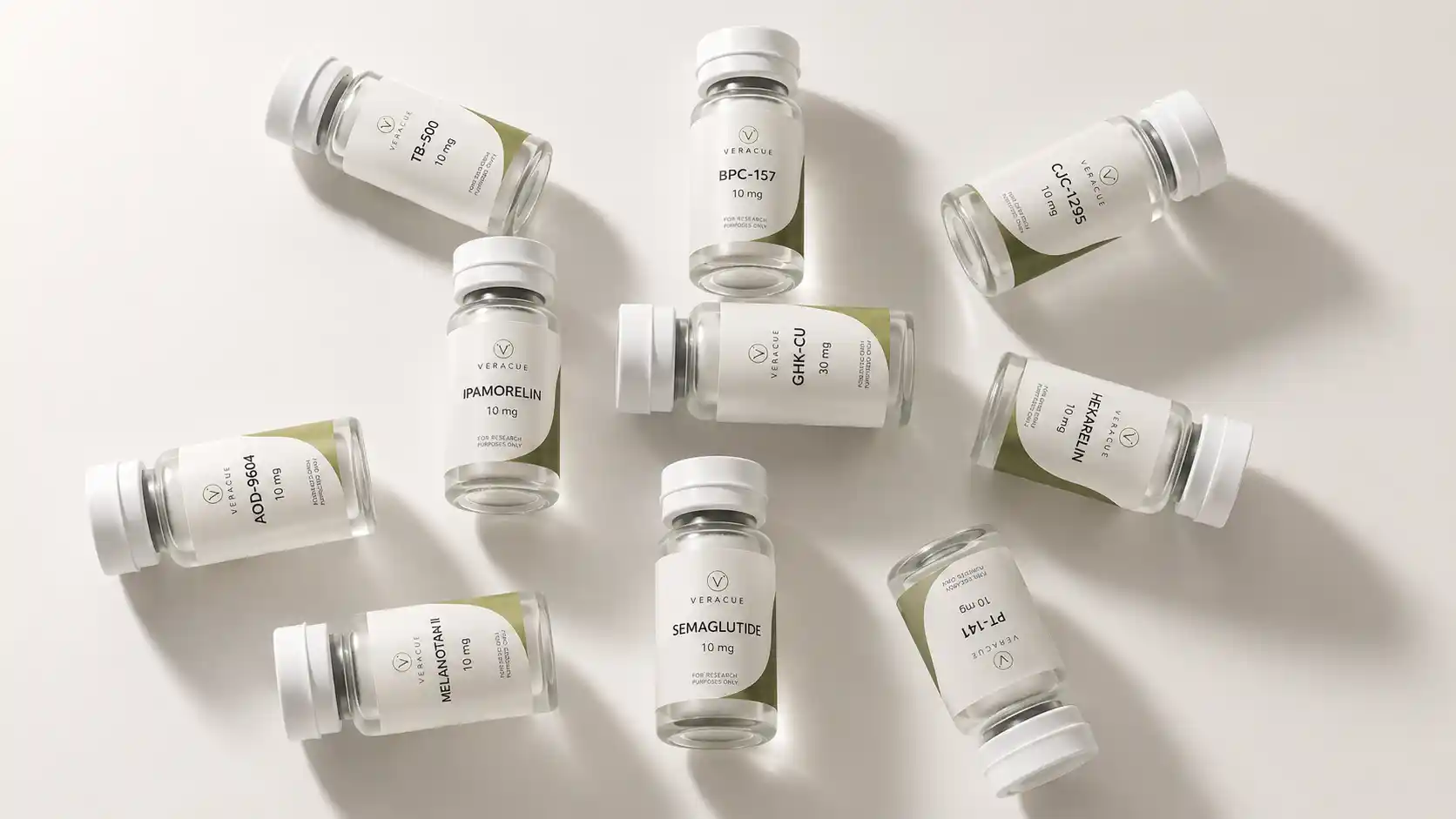
COA Verified,
Analytical Transparency
A Real Chemist
Answers
Direct technical guidance, not a script.
Ask about technical specifications, reconstitution math, or a specific batch's COA, and our scientific team answers directly.
General Peptide Education
5 QuestionsShort chains of amino acids, synthesized specifically for lab work rather than for a body to consume.
Every compound in the Veracue catalog is built and tested to a documented purity standard before it goes on sale, and it stays sold that way: for research only.
Labs use them as standardized reagents across cellular, biochemical, and pharmacological studies.
A purity-verified compound means a researcher is testing the variable they intend to test, not an unknown impurity, in an academic or institutional setting.
They aren't classified for human use in any way.
Every Veracue compound carries a Research Use Only (RUO) label. That means it hasn't been evaluated or approved for, and isn't intended for, human or veterinary consumption.
Nothing ships until it clears analytical testing. Purity gets confirmed by HPLC, identity by mass spectrometry, on every batch.
Those results land on a certificate of analysis specific to that batch, so a researcher can check the numbers rather than take our word for it.
Academic labs, private research organizations, and institutional researchers order from the Veracue catalog when they need a purity-verified compound for a study.
Every purchase happens on the same understanding: these materials are for research, not for anything else.
Legality & Compliance
5 QuestionsYes. Buying a compound labeled and sold strictly for laboratory research is legal in the USA.
That legality rests on the RUO label and the actual use matching, on both sides of the transaction.
The RUO designation means a compound is made, labeled, and sold with one purpose: scientific study.
It's not built for diagnosis, treatment, or human consumption, and the FDA hasn't evaluated it for any of those.
No drug or supplement framework applies to research peptides.
They're handled as general chemical and research reagents instead, outside any pharmaceutical approval process. That's exactly why accurate RUO labeling and paperwork carry so much weight.
No. Nothing sold as research use only has FDA evaluation or approval behind it for human or veterinary use.
FDA review is a process for approved drugs and medical products, not for laboratory research materials.
No. A controlled laboratory environment is the only setting these compounds are built for.
Human use, veterinary use, anything outside of scientific research, all of it falls outside their approval.
Quality & Analytical Testing
5 QuestionsA COA is the lab report for one specific batch: measured purity from HPLC, confirmed molecular weight from mass spectrometry, and the date it was tested.
That's what lets a researcher confirm a vial's specs directly, instead of trusting a label at face value.
High-performance liquid chromatography (HPLC) separates a compound from anything else in the sample and reports how pure it actually is.
Pair that with mass spectrometry, which confirms identity and molecular weight, and you've verified both what it is and how clean it is.
Check the HPLC purity printed on the batch COA and compare it with the purity your study requires.
That number has to come from an independent batch test, not a figure printed on a page with nothing behind it.
Pull the certificate of analysis for that specific batch and check its lot number against the vial in hand.
If your lab has HPLC or mass spec access, you can run your own confirmation directly, too.
Where it applies, a Veracue batch can carry independent third-party analytical confirmation on top of our internal testing.
That's an extra layer of assurance, on top of the in-house COA, not a replacement for it.
Supplier & Ordering Questions
5 QuestionsA batch tested independently, a COA visible before you buy, a stated purity threshold, and RUO labeling that isn't buried near checkout: that's the checklist.
Real verification and clear compliance, not marketing copy, are what separate a trustworthy supplier from the rest.
Is every batch tested independently? Is the COA available before you order? What purity threshold does the supplier actually commit to?
Then ask how the order ships and how it's stored in transit, since that matters just as much as the testing.
An invoice, at minimum, plus access to that batch's certificate of analysis.
Institutions can request more, like consolidated invoicing, through a wholesale account.
Bundles and discounts live on the shop page instead of here, since availability shifts with inventory.
Check the shop directly, or subscribe to the mailing list to hear about changes.
Yes, across the United States.
Every shipment goes out in packaging built to keep the compound stable in transit.
Storage & Handling
4 QuestionsUnreconstituted peptides stay frozen or refrigerated, away from light and moisture, until you're ready to use them.
Check the product page for the exact storage window for that specific compound.
Heat and repeated freeze-thaw cycles break down a peptide's structure and eat into its usable purity over time.
Keeping temperature consistent is what protects the integrity your COA actually confirmed.
Cold-chain handling keeps a compound inside a set temperature range from the moment it ships to the moment it arrives, using insulated packaging and cold packs where the compound needs them, so nothing degrades in transit.
It depends on the concentration you're targeting: concentration (mg/mL) = peptide mass (mg) ÷ water volume added (mL). Add 2mL to a 10mg vial and you get 5mg/mL; on a U-100 syringe, 1mL always equals 100 units.
Our peptide reconstitution calculator breaks down mg/mL and mL-to-units ratios across vial sizes, with the math done for you.
Glp-s
5 QuestionsA lipid-modified analog built on the GLP-1(7-37) backbone, supplied as a reagent for laboratory receptor and assay work.
With HPLC for purity and intact-mass analysis for identity. The attached lipid chain pushes the mass well above that of the bare peptide, so the mass result is the quickest check that the right molecule is in the vial.
No. It is labeled for laboratory research use only and is not intended for human or veterinary use in any form.
No. Everything in the catalog ships as a research reagent, without protocols or usage guidance. Storage and handling notes for lyophilized material are in the Storage & Handling tab.
Use the contact page and name the product and vial size. We will tell you what analytical documentation is available for that lot before you order.
Glp-t
5 QuestionsA 39-residue peptide carrying a C20 fatty diacid, studied in laboratory systems as a dual GIP and GLP-1 receptor agonist.
It looks like plain GIP and like other lipid-modified incretin peptides on a quick read. Mass spectrometry on the specific lot is the dependable way to confirm which molecule you are holding.
No. It is sold for laboratory research only and carries no labeling for human or veterinary use.
No. The catalog is supplied for research use only, so there are no protocols, schedules or usage notes for any compound.
Send a message through the contact page with the product and size you are considering. We will reply with the documentation that exists for that lot.
Glp-3rta
5 QuestionsA single 39-residue peptide with a C20 fatty diacid, designed to engage the GIP, GLP-1 and glucagon receptors, and used in laboratory receptor-signaling studies.
Because one molecule engages three receptors: GIPR, GLP-1R and GCGR. The name describes the receptor profile of a single compound and not a mixture of three.
No. It is a laboratory research reagent only, and it is not labeled or intended for human or veterinary use.
No. It ships as a research reagent without protocols or usage guidance of any kind.
Contact us with the product and vial size. We will tell you which analytical documents are available for that lot before you order.
Mots-c
5 QuestionsA mitochondrial-derived peptide studied for its part in metabolic signaling and cellular energy regulation, in preclinical research.
Metabolic regulation, exercise physiology, and mitochondrial function studies all reference it, mostly in cellular and animal-model work.
No. Existing literature can't predict or guarantee an outcome for a new study; every research use needs its own protocol and its own analysis.
No. It's not a supplement or anything meant to be consumed; it's sold strictly for laboratory research.
Yes. Every batch is tested for purity and identity, and the results sit on that batch's certificate of analysis.
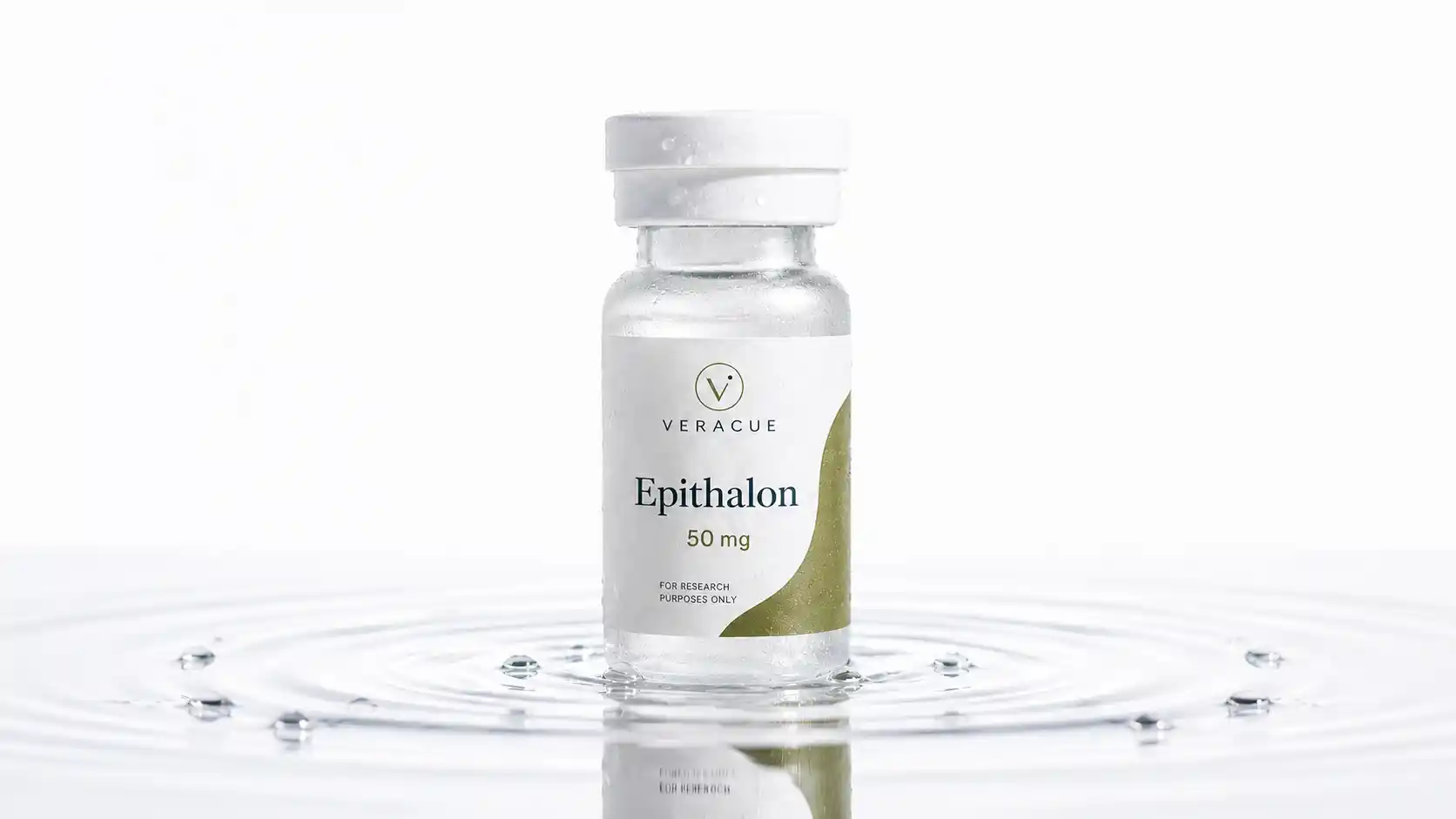
Epitalon
5 QuestionsA synthetic tetrapeptide studied mostly in longevity and cellular-aging research, including work tied to telomerase activity.
No. It's offered strictly for research, with no medical, therapeutic, or treatment claim attached.
No. It's not labeled, intended, or approved as a human longevity treatment; it's sold for laboratory research into aging-related biology, full stop.
Purity gets confirmed batch by batch and published on that batch's COA, rather than promised as one blanket number across every lot.
No. We don't make medical, therapeutic, or anti-aging claims here; it's referenced strictly through research literature.
Aod-9604
5 QuestionsA modified fragment of human growth hormone (residues 176 to 191), studied in metabolic research with a focus on lipid metabolism pathways.
Preclinical literature on fat-metabolism signaling references it, typically through cellular and animal-model research rather than human clinical studies.
No. It's sold strictly for laboratory research, with no intended human or veterinary use.
No, we don't provide dosing or administration guidance for it.
No, it hasn't been evaluated or approved by the FDA.
5-amino-1mq
5 QuestionsA small-molecule NNMT (nicotinamide N-methyltransferase) inhibitor studied in metabolic research. It's not technically a peptide, though it's commonly grouped with them in this category.
Yes, a synthesized small molecule made and tested for laboratory use. It's not derived from, or intended as, a dietary ingredient.
No. Ingestion and dietary use both fall outside its intended purpose.
Purity gets verified batch by batch and can shift slightly lot to lot; the current figure is always on that batch's COA.
No, not for any use.
Semax / Selank Blend
5 QuestionsBoth are synthetic neuropeptides that show up together often in neuropeptide research, so we offer the blend as a convenience for researchers running both in one protocol.
No, it's a research-use-only combination, not a clinical formulation meant for human administration.
No. We don't run or cite clinical testing on this blend; documentation stops at the batch purity and identity testing appropriate for a research compound.
None. No regulatory approval is claimed, and the FDA hasn't evaluated it for any human-use context.
No. It's sold strictly for laboratory research, with no labeling or approval for human administration.
Semax
5 QuestionsA synthetic peptide derived from an ACTH fragment, studied in neuropeptide research tied to cognitive and neurological signaling pathways.
Yes, labeled and sold strictly RUO, with purity confirmed batch by batch on its certificate of analysis.
No. We don't provide dosing guidance or reference a clinical framework here; it's sold strictly as a research reagent.
No. Nasal, injectable, any route of human administration, none of it is approved.
No, it hasn't crossed the FDA's desk for any kind of evaluation or approval.
Selank
5 QuestionsA synthetic peptide analog studied in neuropeptide research. Published literature looks at how it interacts with stress- and anxiety-related signaling pathways in animal models.
No. We don't make effect or outcome claims here; whatever's in the research literature isn't a guarantee of what a new study will find.
No. We leave experimental-use and dosing decisions to the researcher, designed around their own institution's protocols.
No, it's sold strictly as a research peptide, not as anything therapeutic or consumer-facing.
No, it hasn't been evaluated or approved by the FDA.
Dsip
5 QuestionsDelta sleep-inducing peptide (DSIP), studied in sleep-cycle and neuropeptide research for its association with sleep-related signaling in preclinical models.
No. It's sold strictly as a research compound, never marketed, labeled, or positioned as a consumer sleep aid.
No, the FDA hasn't evaluated or approved it for clinical use in humans.
No. We don't claim or guarantee any sleep-related benefit here.
No, we don't provide administration or dosing guidance for it.
Tb-500
5 QuestionsA synthetic fragment of Thymosin Beta-4, tied in research literature to tissue-repair and cellular-migration studies.
Preclinical and in vitro research on tissue-repair mechanisms references it, mostly through cellular and animal-model studies rather than human trials.
No. It's sold strictly for laboratory research, not provided, labeled, or intended to treat any condition in humans or animals.
No. Veterinary use, human use, neither has been evaluated or approved.
No, purity gets verified batch by batch and reported on that batch's certificate of analysis instead of fixed across every lot.
Bpc-157
5 QuestionsA synthetic pentadecapeptide derived from a naturally occurring protective compound, studied in tissue-repair and gastroprotective research.
Preclinical literature on tissue-repair and gastrointestinal research references it often, mostly through cellular and animal-model studies.
No. It's sold strictly for laboratory research, not intended to treat any injury or condition.
No. We don't provide or reference clinical data here; documentation stops at batch purity and identity testing.
No, no regulatory approval is claimed for it.
Tb-500 / Bpc-157
5 QuestionsThese two show up together often in tissue-repair research literature, so we offer the combination as a convenience for researchers studying both at once.
No. We don't make combined-effect claims; it's sold strictly as two research-use-only compounds packaged together.
No specific outcome is claimed for it. It's offered for laboratory research consistent with how each compound is used on its own.
No. Laboratory research only; human use isn't permitted.
No. We don't supply experimental protocols; that design work is on the researcher, tailored to their own institution.
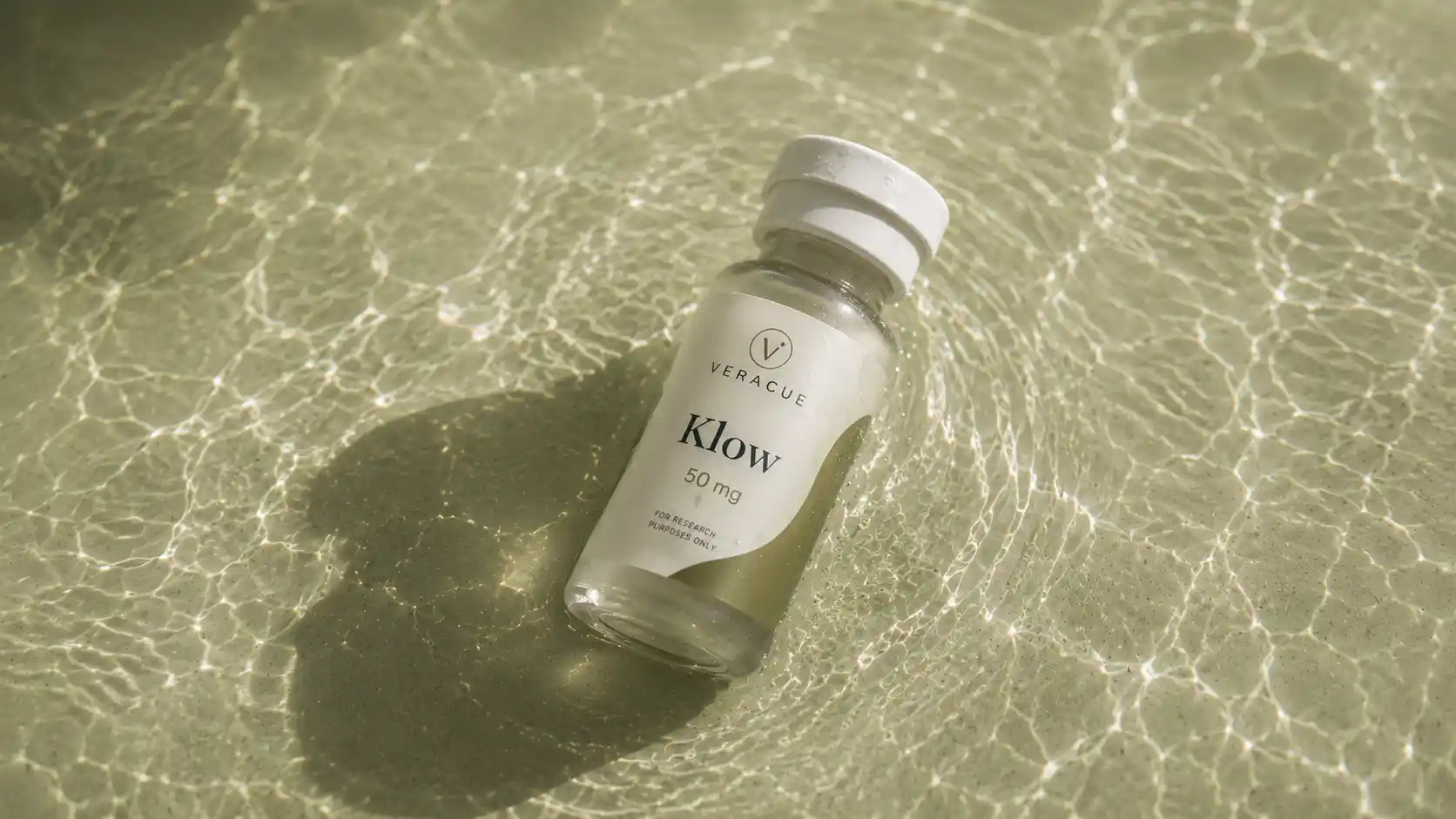
Klow
5 QuestionsA multi-compound research blend offered for laboratory study. Check the current product page and certificate of analysis for the exact composition and ratios rather than assuming.
It's built for researchers studying several compounds together in skin-biology and recovery-adjacent contexts, following the same logic as the individual compounds inside it.
Yes. The product page and its supporting documentation disclose composition and per-compound content, worth reviewing before you order.
No. It's sold strictly for laboratory research, not as a medical or pharmaceutical product for human use.
No, not for KLOW or anything else in the catalog. No dosing, administration, or human-use guidance.
Glow
5 QuestionsA multi-compound research blend built around skin-biology research, combining compounds covered individually elsewhere in this FAQ, GHK-Cu among them.
No. It's sold strictly for laboratory research, never marketed, labeled, or intended as a cosmetic or consumer skincare product.
No. We don't make aesthetic or outcome claims here; whatever the literature shows isn't a guarantee of a particular result.
No, the FDA hasn't evaluated or approved it, and we don't claim otherwise.
No, we don't provide dosing, application, or human-use guidance for it.
Glutathione
5 QuestionsA naturally occurring antioxidant tripeptide, widely studied in research on oxidative stress and cellular defense mechanisms.
No. Other companies sell consumer-supplement versions of glutathione, but ours is sold strictly for laboratory research, not as a dietary supplement.
We reference glutathione's documented role in antioxidant research literature, but we don't attach a personal-benefit or outcome claim to what we sell.
No. Ingestion or human consumption in any form falls outside its intended use; it's sold RUO.
Yes. Every batch is tested for purity and identity, and the results are on the certificate of analysis before you order.
Metabolic & Incretin Research
5 QuestionsCompounds in this category get studied for metabolic and incretin-pathway research, including receptor agonists examined for their part in energy balance and glucose regulation in preclinical models.
GLP-1, GIP, and glucagon receptor signaling come up most, alongside the downstream metabolic and energy-balance mechanisms they feed into.
No. Every compound here is sold research use only, with no intended, labeled, or approved clinical or human-use application.
Yes. Published literature spans both in vitro (cellular) and in vivo (animal-model) work, in line with standard preclinical study design.
Academic, private, and institutional researchers working on metabolic and incretin-pathway signaling use these compounds as standardized reference reagents.
Cognitive Function Research
5 QuestionsThis category centers on neuropeptides studied for how they interact with cognitive and neurological signaling pathways, in preclinical research.
Depending on the compound, research here tends to look at stress-response, neurotransmitter, or neuroprotective signaling systems.
Published research includes cognitive- and behavior-relevant endpoints in animal models; we don't run or claim any cognitive testing of our own.
Semax and Selank come up most often here, and both get their own entries earlier in this FAQ.
No. Every compound here is sold research use only, with therapeutic, psychoactive, and human use all falling outside its intended purpose.
Sleep Cycle Investigation
5 QuestionsCompounds here get studied for their tie to sleep-related biological signaling, a different question entirely from any consumer sleep-aid use.
Most research here looks at neuropeptide signaling tied to sleep-wake regulation, largely through preclinical, animal-model studies.
DSIP, the main compound here, is modeled on a peptide that occurs naturally in the body, but the version we sell is manufactured synthetically for research use.
DSIP is the compound most tied to sleep-cycle research in this catalog, and it has its own entry earlier in this FAQ.
No. These are sold strictly for laboratory research, never marketed or labeled as consumer sleep aids.
Recovery Research Peptides
5 QuestionsCompounds here get studied for tissue-repair and cellular-recovery research, including peptides examined for their part in wound-healing and regenerative signaling pathways.
Depending on the compound and study design, published research spans soft-tissue, tendon, and gastrointestinal tissue models.
TB-500 and BPC-157 are a good example: they're studied together often because their research literature overlaps on tissue-repair mechanisms.
No. These are research-use-only compounds studied in regenerative biology, not treatments approved or intended for human or veterinary use.
Researchers working on tissue-repair biology, cellular signaling, and regenerative mechanisms use these compounds as standardized research reagents.
Antioxidant & Cellular Defense Research
5 QuestionsCompounds like glutathione and GHK-Cu land in this category for their role in oxidative-stress response and cellular-defense signaling.
Antioxidant enzyme signaling and the cellular-repair mechanisms tied to oxidative stress are the pathways that come up most.
Published literature includes antioxidant-capacity testing done in laboratory settings; we reference that literature without adding outcome claims of our own.
Yes. GHK-Cu, for instance, is sometimes studied alongside other research peptides, including inside blends like GLOW, which has its own entry earlier in this FAQ.
No. These are sold research use only, with human dietary or supplemental use falling outside their intended purpose.
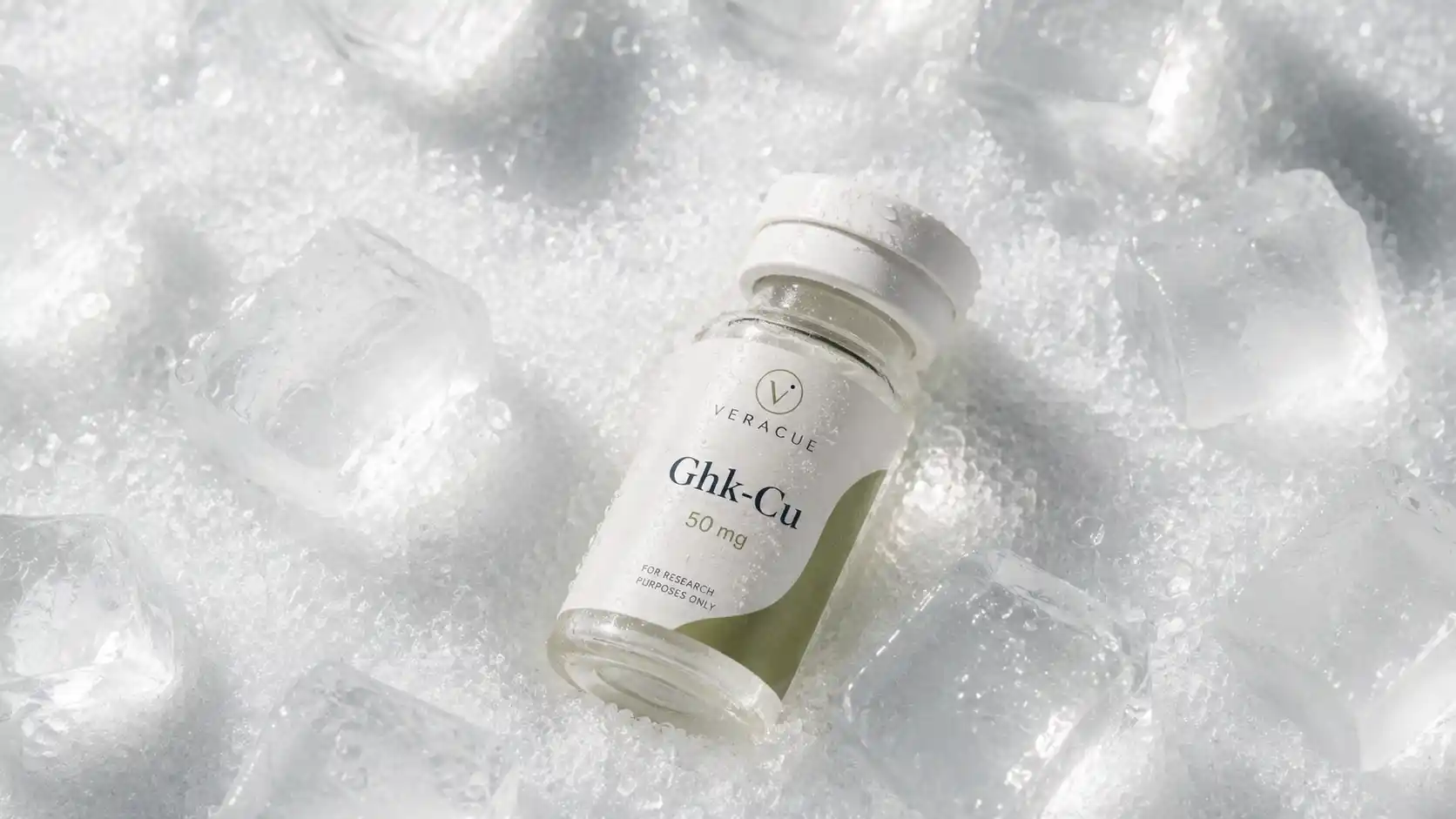
Ghk-cu Peptide Research
40 QuestionsA naturally occurring copper-binding tripeptide, glycyl-L-histidyl-L-lysine, studied extensively in dermal and cellular-repair research.
Glycine, histidine, and lysine bound to a copper ion. That copper bond is central to everything the research literature says about its biology.
It's studied for how it connects to the cellular signaling behind skin-tissue repair, an active corner of dermal-biology research.
Pre-clinical wound-healing models tie faster closure and greater tensile strength to a combination of effects: fibroblast activation, angiogenic signaling, macrophage recruitment, and matrix-protein synthesis. The copper itself also acts as a cofactor for enzymes like lysyl oxidase, which does a lot of the work cross-linking collagen.
At the cellular level, research literature ties it to signaling involved in tissue remodeling and repair within skin-cell models.
Published studies look at how it connects to collagen and elastin synthesis pathways in skin-cell models.
It shows up across a range of settings: in-vitro fibroblast and keratinocyte assays, animal wound-healing models, hair-follicle and dermal-papilla studies, post-procedure skin-recovery research, antioxidant-pathway work, and gene-expression profiling. Every one of those happens strictly under research-use-only conditions.
It's one of the better-established compounds in dermal-regeneration literature, coming up often in studies on cellular turnover and tissue remodeling.
Yes, it appears in published research on skin-aging-related endpoints, though we don't sell it as, or claim it works as, a cosmetic anti-wrinkle product.
There's a body of preclinical literature on its association with skin-elasticity markers, but findings are specific to individual studies, not a guaranteed outcome across the board.
Cosmetic-research panels and pre-clinical models trace observed changes in texture and firmness back to increased fibroblast activity, more extracellular matrix production, and better expression of barrier proteins. These stay research findings; the FDA hasn't approved any therapeutic claim built on them.
In models simulating barrier disruption, GHK-Cu has been reported to help recover stratum-corneum lipids, tight-junction proteins, and ceramide synthesis. Researchers fold these results into its broader regenerative-signaling profile.
Dermatology-research models simulating microneedling, laser treatment, and chemical peels have linked GHK-Cu application to shorter erythema duration and faster barrier recovery. These stay pre-clinical, cosmetic-research findings, not validated therapeutic claims.
Yes. It's known to interact with dermal papilla cells, and animal models along with ex-vivo follicle studies have looked at its connection to androgenic alopecia. Reported findings include larger follicle size and a longer anagen phase, though human data stays sparse and mostly cosmetic in scope.
Rodent studies and ex-vivo follicle cultures report that it stimulates dermal papilla cell proliferation, increases follicle diameter, and boosts scalp vascularization. The mechanisms proposed involve copper working as an enzyme cofactor alongside activation of the relevant signaling pathways.
Across pre-clinical models covering skin, lung, liver, and bone tissue, it's shown repair-related activity credited to restored fibroblast function, antioxidant signaling, anti-inflammatory action, and matrix-protein synthesis. That range lines up with the compound's broad effects on gene expression.
Pre-clinical injury models show nerve growth factor and vascular endothelial growth factor going up after exposure, which is why there's interest in it for nerve regeneration and angiogenesis. It's still early-stage work, limited to animal and in-vitro studies so far.
Animal-model studies have linked treatment to greater tensile strength in healed wounds, smaller scar volume, and faster closure. A few mechanisms seem to drive it: fibroblast activation, shifts in matrix-protein levels, and reduced inflammation.
Published in-vitro and animal-model work generally describes it as well-tolerated at standard research concentrations. That's not the same as established safety for human therapeutic use, which hasn't happened, and there's no FDA approval attached. Treat it like any research compound: standard lab practices and PPE apply.
In-vitro work typically stays within a 10 nM to 10 μM range, with 1 μM coming up most often as the reported working concentration. Topical animal-model studies have instead used 0.05–0.2% (w/v) formulations. Both figures come straight from the literature, not from any clinical guidance we're offering.
It's water-soluble, so sterile water, bacteriostatic water (0.9% benzyl alcohol), or neutral-pH buffered saline all work, and all three are common in research labs. Most labs prepare a 1–10 mg/mL stock solution first, then dilute it into culture medium to hit the target concentration.
Lyophilized, it's kept at −20 °C in sealed, light-protected vials with desiccant. Once reconstituted, solutions generally sit at 2–8 °C and get used within a few weeks. For anything longer-term, freezing it into aliquots avoids the degradation that comes from repeated freeze-thaw cycles.
Kept lyophilized at −20 °C under typical storage conditions, it stays stable for roughly 24 months or more. Once reconstituted and held at 2–8 °C, plan on using it within 14 to 28 days for anything sensitive to degradation.
Reversed-phase HPLC quantifies purity and confirms purity against the threshold your study requires, while LC-MS verifies identity by measuring molecular weight. A complete COA reports results from both.
Truncated sequences like Gly-His or His-Lys fragments, leftover coupling reagents and protecting groups, counterion residues, uncomplexed free GHK, and excess copper salts are the impurities worth screening for. A thorough COA quantifies each one in its impurity profile.
Lab-grade comes as a lyophilized powder with HPLC purity reported on its COA, LC-MS identity confirmation, and a full COA behind it, designated strictly for research. Cosmetic-grade copper tripeptide-1 is a different thing entirely: a finished topical formulation under cosmetic regulations, without that same analytical disclosure.
Suppliers publishing full certificates of analysis and operating under RUO labeling are the standard source in the US. When you're vetting one, check for HPLC and LC-MS documentation, batch-level transparency, and a clear RUO designation.
Look for suppliers who'll provide batch-level HPLC chromatograms, mass spectrometry traces, and a COA on request. How thorough that documentation is, how well they comply with RUO requirements, and how transparent their reporting is, that's what separates the ones worth buying from.
≥99% HPLC purity standards, full LC-MS identity confirmation, transparent COA documentation, clear RUO labeling, and responsive technical support: that's the list. Walk away from anyone unwilling to share analytical documentation or unable to trace a product back to its batch.
Vial size, how thorough the purity certification is, and each supplier's own costs all move the price. Don't just compare headline numbers; weigh cost per milligram against how much analytical documentation actually comes with it.
A complete COA: HPLC chromatogram, LC-MS identity data, batch and lot number, manufacture date, purity percentage, impurity profile, storage recommendations, and reconstitution guidance. That's what a trustworthy supplier sends with the order.
Yes, cell culture is one of the most common contexts it's studied in. Fibroblast, keratinocyte, and dermal-papilla cultures typically get dosed at 10 nM to 10 μM, with stock solutions prepared in sterile water first, then diluted into culture medium.
Large-scale human clinical evidence is still scarce, translating in-vitro concentrations into in-vivo contexts is genuinely hard, the compound is sensitive to light, heat, and alkaline pH, and purity varies by supplier. Most of what we know today comes from pre-clinical work, not human trials.
Its copper-coordinated mechanism and the breadth of its gene-expression effects are what set it apart from other signal peptides like Matrixyl, acetyl hexapeptide-8, and palmitoyl tripeptides. How it performs alongside those compounds is still an active area of research.
The FDA hasn't evaluated it for human therapeutic use, so it's sold under an RUO designation. This grade of material is meant for in-vitro studies, assay development, and pre-clinical animal-model work in qualified laboratory settings, nothing beyond that.
Yes, same molecule. GHK-Cu and copper tripeptide-1 both refer to Gly-His-Lys-Cu(II); only the naming context changes. "GHK-Cu" is what scientific literature and research suppliers call it, while "copper tripeptide-1" is its INCI name in the cosmetics industry.
Yes. Researchers pair it with other signal peptides, Matrixyl and palmitoyl tripeptides among them, as an ongoing interest within dermatological and regenerative-research literature. Whether those pairings add up or actually synergize is still an open question waiting on more mechanistic study.
Large-scale human clinical trials are still rare. Most of the published evidence comes from in-vitro studies, animal models, and smaller cosmetic-research panels instead, and it hasn't gone through standard pharmaceutical-development trials for any therapeutic indication.
Standard practice is reviewing the supplier's COA first: HPLC purity, LC-MS identity confirmation, and a documented impurity profile. For sensitive applications, some labs also run their own identity verification once the material arrives.
Yes. RUO-compliant suppliers operating under research-reagent designation supply it throughout the US, and academic or private labs with proper institutional procurement in place generally find the process straightforward.

Need Direct Technical Assistance?
Our scientific team can provide lot-specific certificates of analysis, bulk procurement pricing, and storage recommendations.
All peptide compounds supplied by Veracue are intended strictly for controlled laboratory research and analytical evaluation in academic or institutional settings. Products are labeled Research Use Only (RUO) and are not intended for human or veterinary use, medical diagnosis, or therapeutic application.