NAD+ and AHK-Cu in Metabolic and Longevity Research: A Deep Dive
A research overview of NAD+ and AHK-Cu covering mitochondrial metabolism, sirtuin activation, copper-peptide signaling, and laboratory handling protocols.

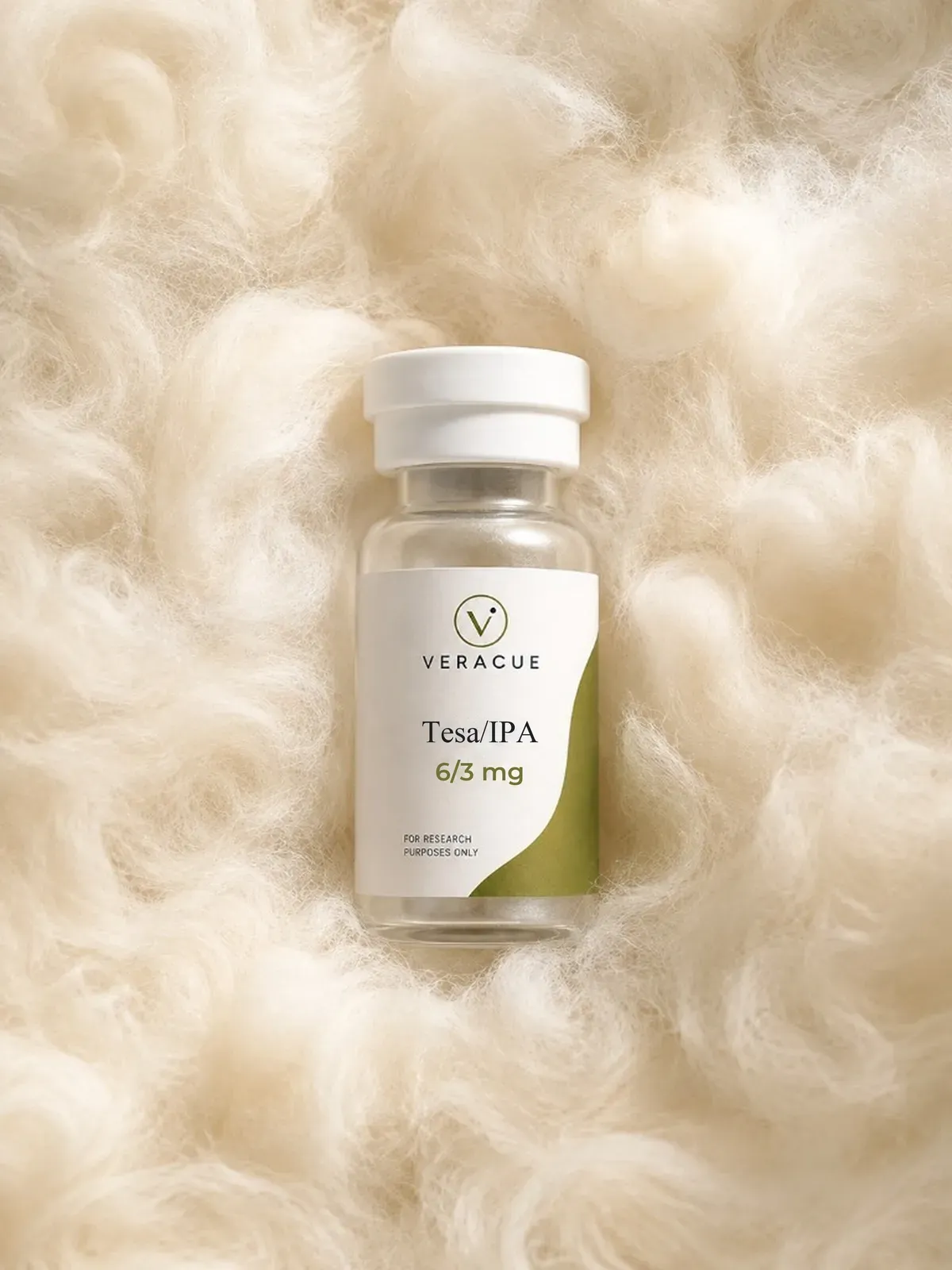
Tesa/IPA is a two-peptide research blend of tesamorelin, a 44-residue GHRH analog (CAS 218949-48-5, about 5,136 g/mol), and ipamorelin, the pentapeptide Aib-His-D-2-Nal-D-Phe-Lys-NH2 (CAS 170851-70-4, 711.9 g/mol). It is easy to confuse with either single peptide, so a certificate should confirm both. Vials come as 6 mg/3 mg and 13 mg/3 mg, tesamorelin over ipamorelin, and are for laboratory research use only, not for human or veterinary use.
Ask for the analytical documentation of any lot.
HPLC is the method used to measure purity
Ask for the report for a specific lot through the contact page
Supplied for laboratory research use only
Mass spectrometry is the method used to confirm identity
Tesa/IPA is a research blend of two separate peptides, tesamorelin and ipamorelin. Tesamorelin is a 44-residue analog of growth hormone-releasing hormone (GHRH), and ipamorelin is a five-residue peptide studied at the ghrelin receptor. The two are not chemically related, and Veracue supplies the blend for laboratory research only.
The vial label reads Tesa/IPA followed by two numbers, such as 6/3 mg. The first number is the tesamorelin content and the second is the ipamorelin content. Each component keeps its own identity, so this page describes them one at a time.
| Product name | Tesa/IPA (tesamorelin + ipamorelin) |
| Components | Tesamorelin (TH9507) and ipamorelin |
| Vial sizes | 6 mg/3 mg and 13 mg/3 mg (tesamorelin mg / ipamorelin mg) |
| Tesamorelin identity | C221H366N72O67S, about 5,136 g/mol, CAS 218949-48-5 |
| Ipamorelin identity | C38H49N9O5, 711.9 g/mol, CAS 170851-70-4 |
| Research designation | Research Use Only |
Physical form, vehicle, storage conditions, purity and lot results are reported on each lot’s documentation and can be requested through the contact page.
Tesamorelin (research synonym TH9507) is a synthetic 44-residue peptide built on the GHRH(1-44) sequence. It carries an N-terminal trans-3-hexenoyl group on the tyrosine residue, a modification that increases resistance to enzymatic breakdown compared with the unmodified sequence. In assays it is studied as an agonist at the GHRH receptor (GHRHR).
Ipamorelin (research synonym NNC-26-0161) is a synthetic pentapeptide with the sequence Aib-His-D-2-Nal-D-Phe-Lys-NH2 and a C-terminal amide. It is studied as a selective agonist at the ghrelin receptor, also called the growth hormone secretagogue receptor (GHS-R1a). It is not a GHRH-pathway molecule, so it belongs to a different compound class from tesamorelin.
| Attribute | Tesamorelin | Ipamorelin |
|---|---|---|
| Molecular class | 44-residue GHRH(1-44) analog with N-terminal hexenoyl group | 5-residue pentapeptide |
| Sequence | Full residue order in the PubChem record (CID 16137828) | Aib-His-D-2-Nal-D-Phe-Lys-NH2 |
| Molecular formula | C221H366N72O67S | C38H49N9O5 |
| Molecular weight | About 5,136 g/mol | About 711.9 g/mol |
| CAS number | 218949-48-5 | 170851-70-4 |
| PubChem CID | 16137828 | 9831659 |
| Receptor studied | GHRH receptor (GHRHR) | Ghrelin / GHS-R1a |
| Synonym | TH9507 | NNC-26-0161 |
The table compares identity only. It does not rank the two peptides, and neither is a variant of the other.
Tesamorelin research centers on GHRH-receptor signaling, and ipamorelin research centers on the separate ghrelin-receptor pathway. Because these are different receptors with different signaling routes, findings about one peptide do not automatically describe the other.
No. A result obtained with tesamorelin alone says nothing on its own about the pair, and the same is true for ipamorelin. The reference material for this blend is molecular identity and receptor-level description for each component, and nothing on this page describes a combined effect.
They all point to the same two peptides. Tesa/IPA is the shorthand printed on the Veracue vial, and the other spellings are common search phrasing. None of the names states a ratio, so the per-vial milligram figures on the label are the part to rely on. Listings that write “tesamorelin+pamorelin” contain a typing error and mean ipamorelin.
This page reports molecular reference information and general research context. It cannot establish what is in a particular vial. Veracue does not provide dosing, administration or usage guidance of any kind.
A blend certificate has more to check than a single-peptide one. It should confirm the identity of both tesamorelin and ipamorelin in the same lot, not just one of them. A certificate that covers only one component says nothing about the presence or purity of the other.
| COA item | What it helps establish |
|---|---|
| Lot number | Which production run the results describe. It should match the vial label. |
| Identity of tesamorelin | Whether the measured mass fits the tesamorelin reference mass of about 5,136 g/mol. |
| Identity of ipamorelin | Whether the measured mass fits the ipamorelin reference mass of about 711.9 g/mol. |
| Purity and method | The chromatographic purity value and the method behind it, ideally stated for each peptide. |
| Quantity of each peptide | The milligrams of tesamorelin and ipamorelin, so they can be compared with the label, for example 6 mg/3 mg. |
| Testing laboratory and test date | Who ran the analysis and how recent it is. |
| Formulation covered | Whether the report describes this blend, not a generic single-peptide sheet. |
Certificates vary between laboratories, so treat this as what a COA may include rather than a fixed checklist. Veracue confirms a field only when the lot certificate reports it, and the certificate page explains how to request lot documentation.
HPLC helps assess chromatographic purity, and mass spectrometry helps assess molecular identity and mass. Neither one alone establishes every aspect of material quality. In a blend, the chromatogram should show a separate peak for each peptide, and the mass result should match each expected mass separately.
| Component | Reference mass | Formula |
|---|---|---|
| Tesamorelin | About 5,136 g/mol | C221H366N72O67S |
| Ipamorelin | About 711.9 g/mol | C38H49N9O5 |
The two masses sit far apart, roughly 5,136 against 712, so their signals should not be confused. An overall purity percentage can also hide a shortfall in one component, which is why a value for each peptide is more informative than a single blended figure. Observed m/z values depend on charge state and adduct conditions, so read them against the method reported with the spectrum.
Match each component to its identifiers: tesamorelin at C221H366N72O67S with CAS 218949-48-5, and ipamorelin at C38H49N9O5 with CAS 170851-70-4. Those identifiers describe the molecules, not a vial. Confirming a lot takes analytical data tied to that lot number, with an identity result for each peptide and a quantity for each.
Purity describes how much of the detected material, by a stated method, is the intended compound and not an impurity. For a blend it is most useful when reported for each peptide separately.
Then it is not confirmed. Physical form, storage conditions and other formulation details are reported on each lot’s documentation, and you can ask for anything missing through the contact page.
Ask the Veracue team about available documentation for a specific lot, or review the certificate library.

Tesa/IPA is supplied for laboratory research, scientific investigation and analytical characterization only. It is not a drug, cosmetic, supplement or food, and it is not intended for human or veterinary use, or for ingestion, injection, inhalation or any form of administration. It has not been evaluated by the FDA. This page contains no dosing, administration or usage guidance of any kind. See the Medical Disclaimer and the Terms and Conditions for sitewide policies.

RESEARCH PEPTIDE
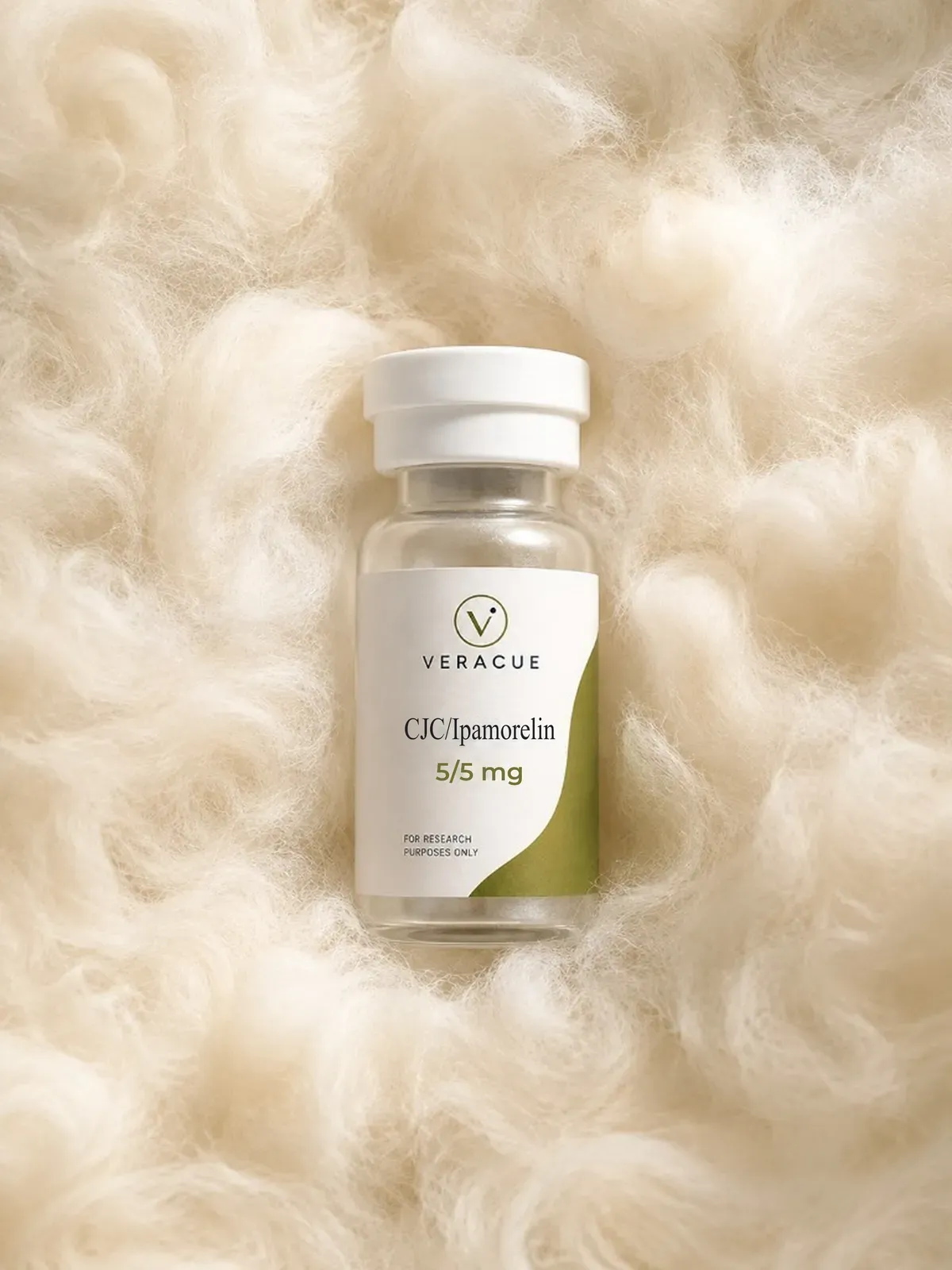
Mod GRF 1-29 plus Ipamorelin in a 5/5 mg vial, for research use only. The two peptides differ by about 2656 Da, so a mass reading separates them.

RESEARCH PEPTIDE
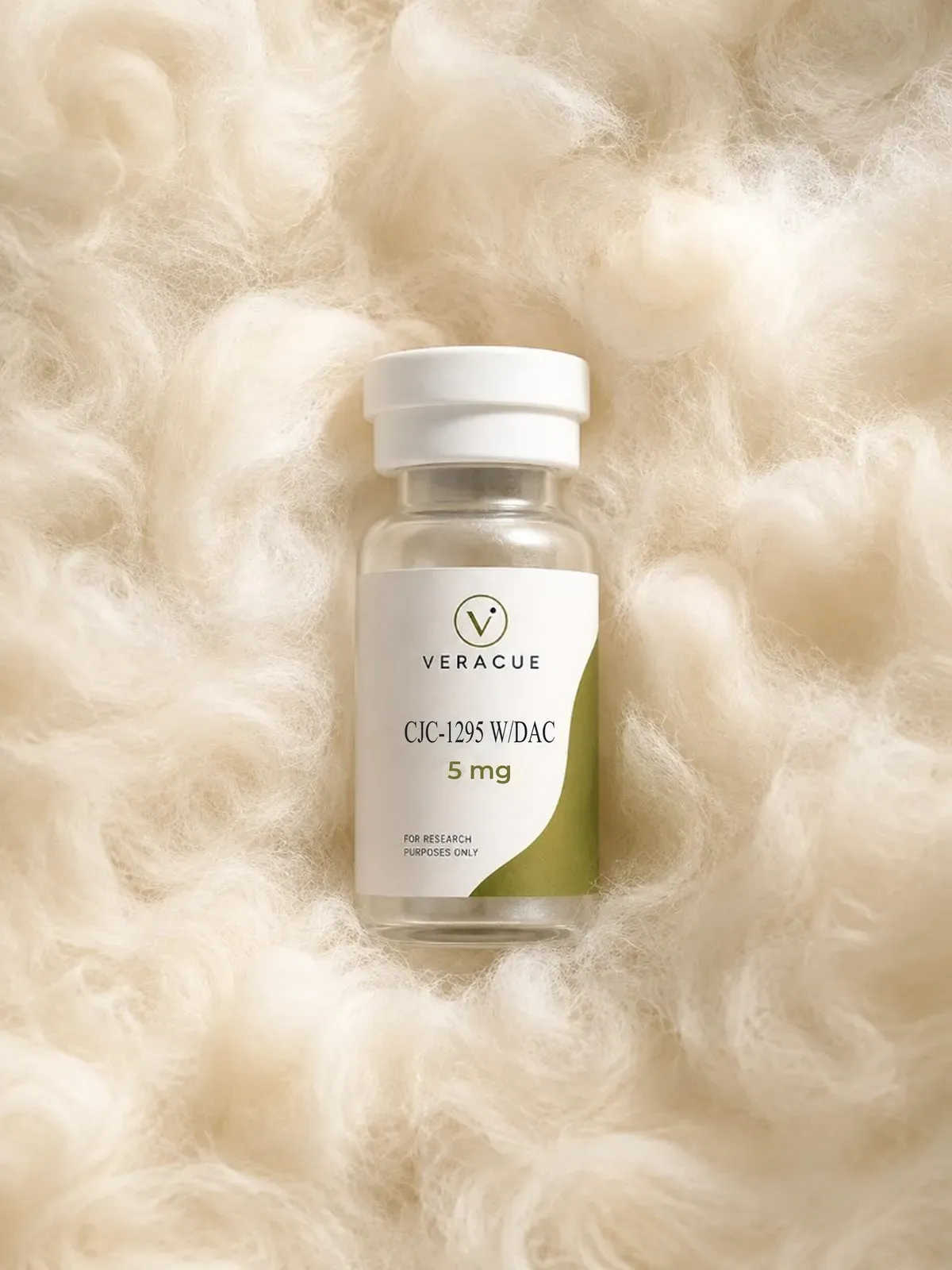
Check the mass: CJC-1295 W/DAC is C165H269N47O46, about 3647.2 g/mol (CAS 446262-90-4), not 3367.9 like its unmodified core. Research use only.

RESEARCH PEPTIDE
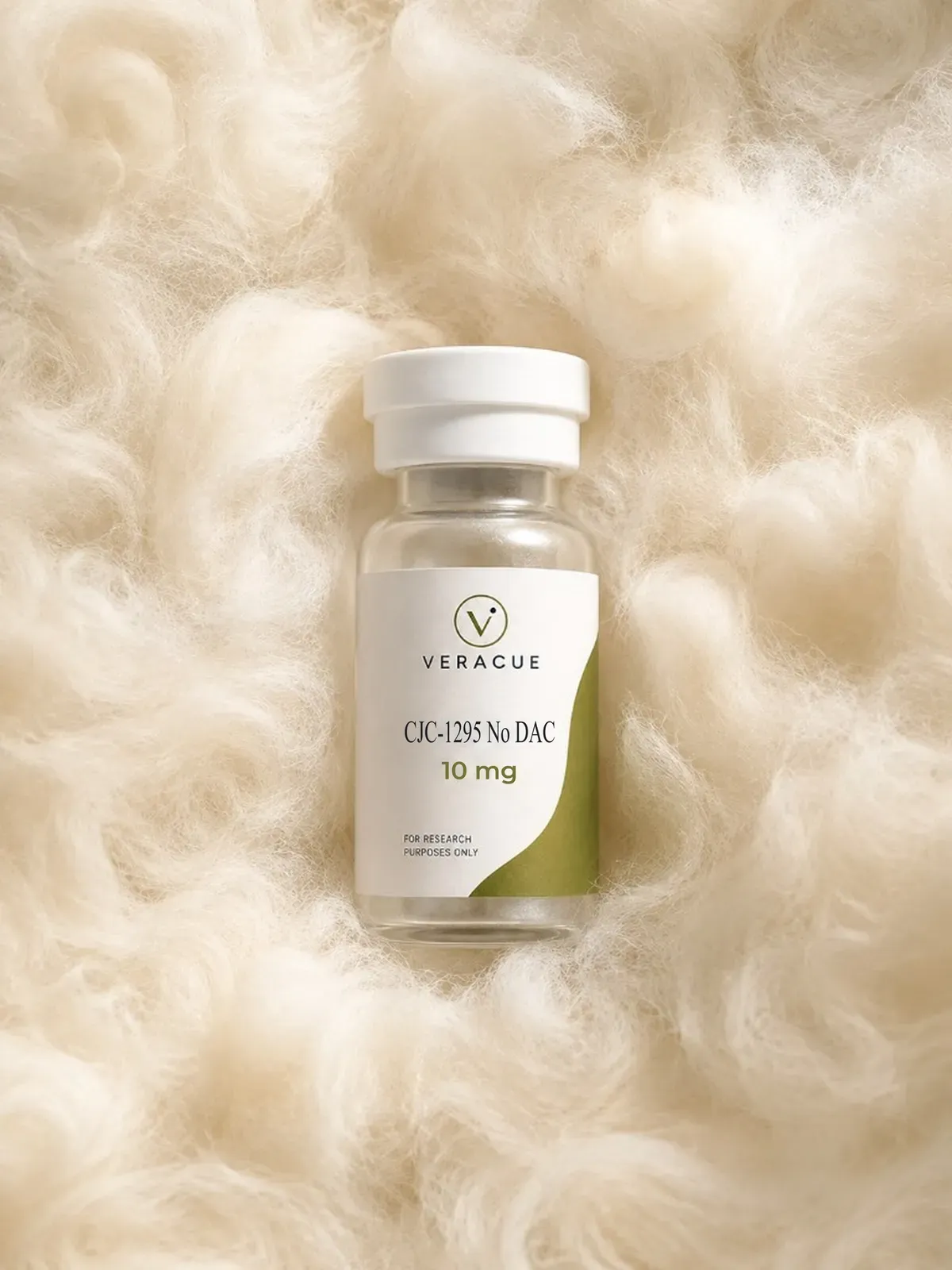
Which CJC-1295 is it? This is the 29-residue peptide with no DAC group (C152H252N44O42, about 3367.9 g/mol). Sold in 10 mg, for research use only.

RESEARCH PEPTIDE
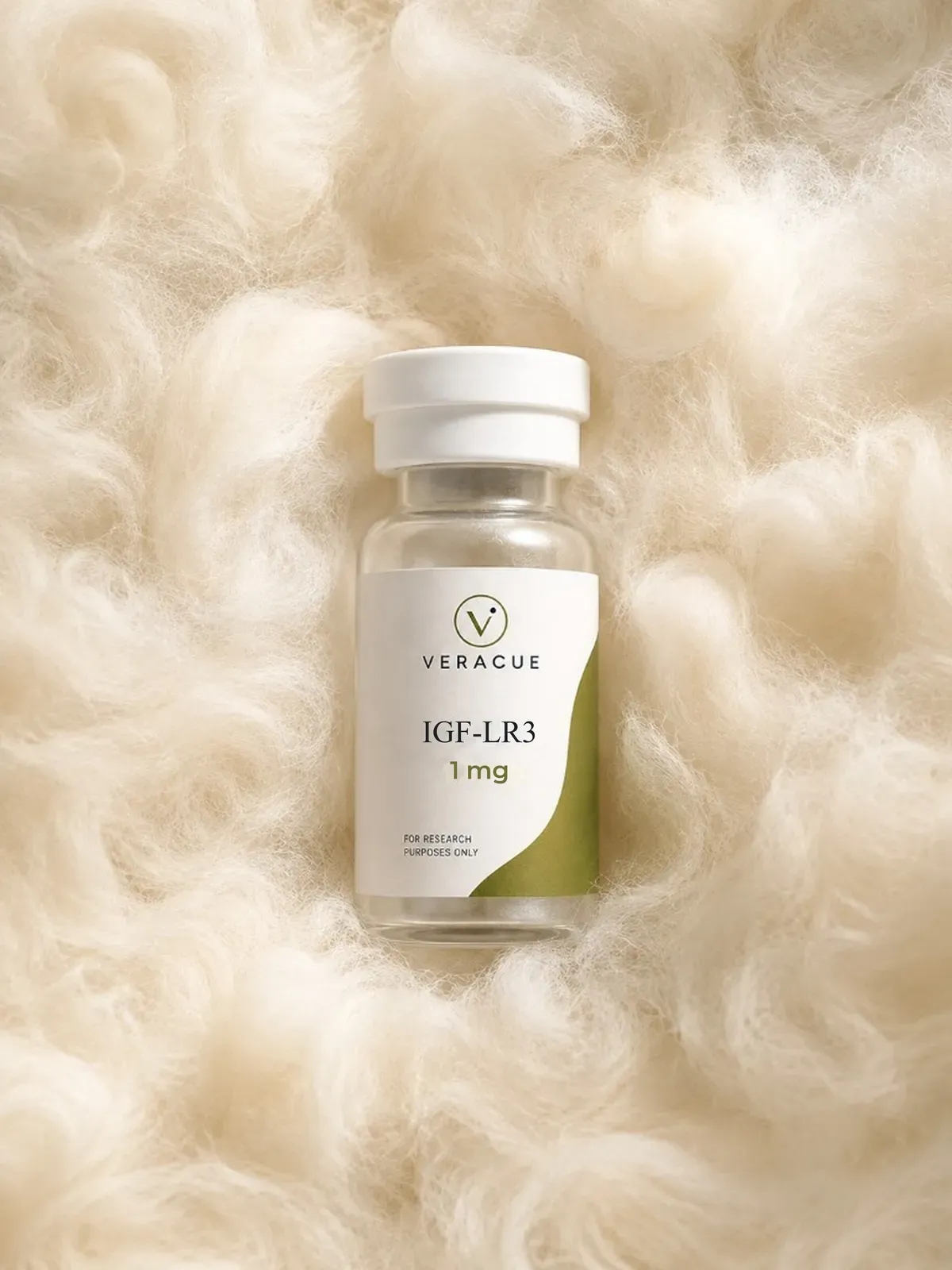
IGF-LR3 is an 83-residue analog, longer than native IGF-1 (CAS 143045-27-6). Read the identity and COA notes. 1 mg vial, research use only.