NAD+ and AHK-Cu in Metabolic and Longevity Research: A Deep Dive
A research overview of NAD+ and AHK-Cu covering mitochondrial metabolism, sirtuin activation, copper-peptide signaling, and laboratory handling protocols.

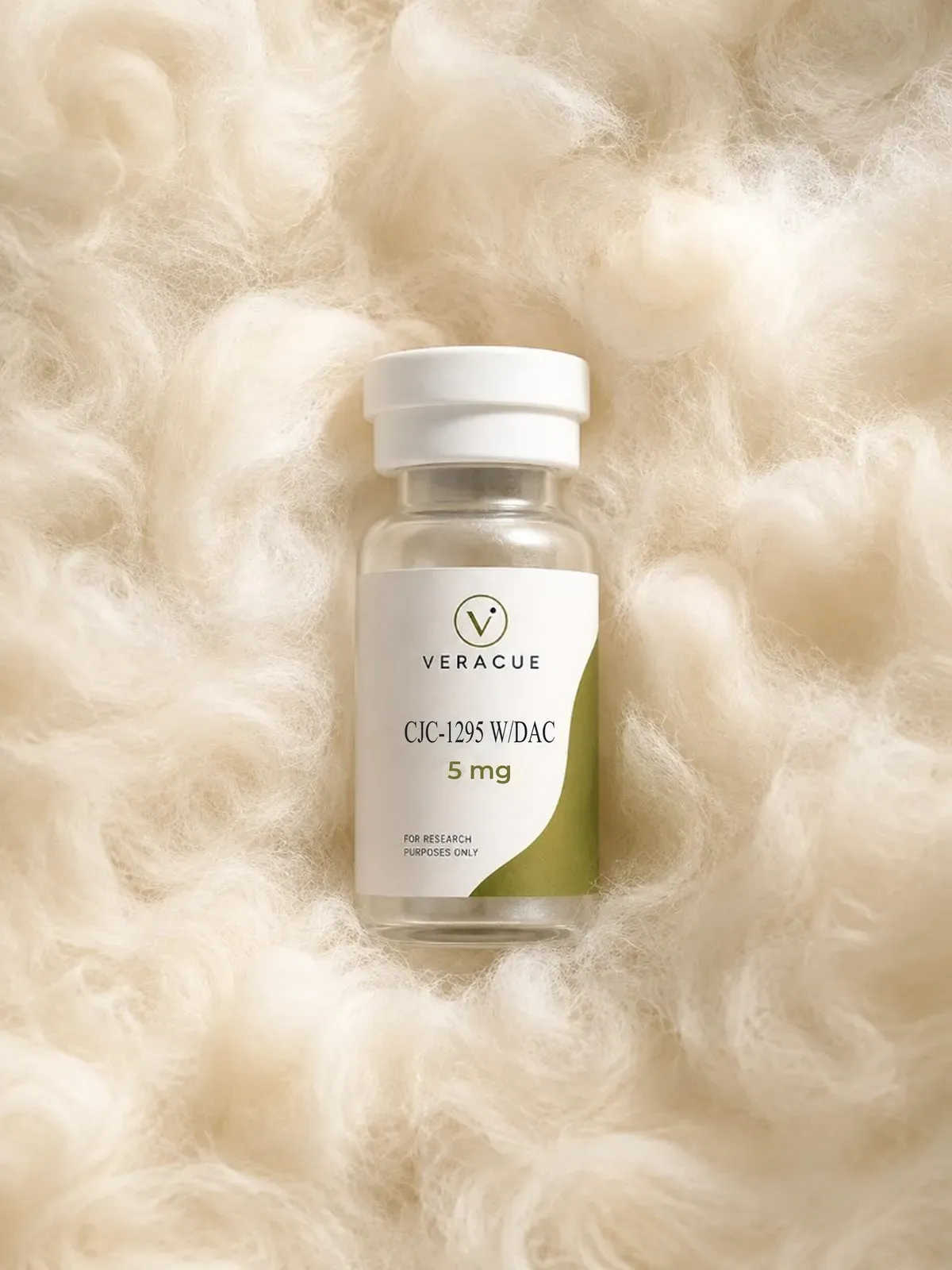
CJC-1295 W/DAC is a 30-residue synthetic peptide: the GHRH(1-29) analog YADAIFTQSYRKVLAQLSARKLLQDILSR, with D-alanine at position 2, extended by a C-terminal lysinamide whose side chain carries a maleimidopropionyl albumin-binding group known as the Drug Affinity Complex. Its formula is C165H269N47O46, average mass about 3647.2 g/mol, CAS 446262-90-4. That added group makes it roughly 279 Da heavier than the unmodified 29-residue peptide at 3367.9 g/mol, so a mass reading separates the two. Veracue supplies CJC-1295 W/DAC in a 5 mg vial, strictly for laboratory research use only.
Ask for the analytical documentation of any lot.
HPLC is the method used to measure purity
Ask for the report for a specific lot through the contact page
Supplied for laboratory research use only
Mass spectrometry is the method used to confirm identity
CJC-1295 W/DAC is a synthetic peptide of thirty residues. Its backbone is a modified version of the first 29 amino acids of growth hormone-releasing hormone, GHRH(1-29), and the thirtieth residue, a C-terminal lysinamide, carries the part that gives the compound its name: a 3-maleimidopropionyl group sold under the trademark Drug Affinity Complex, or DAC. The maleimide end of that group is thiol-reactive, and the group was designed to bind a free thiol on albumin.
The same molecule is written CJC-1295 DAC, CJC-1295 with DAC and DAC:GRF. Across the supplier market the bare name CJC-1295 is also attached to the version that lacks the DAC group, so the extra group, and the mass it adds, is the quickest way to tell which compound a label really describes.
| Product name | CJC-1295 W/DAC (also CJC-1295 DAC, CJC-1295 with DAC, DAC:GRF) |
| Molecule type | Synthetic peptide, 30 residues, with a lysine-linked maleimidopropionyl group |
| Residues 1 to 29 | Tyr-D-Ala-Asp-Ala-Ile-Phe-Thr-Gln-Ser-Tyr-Arg-Lys-Val-Leu-Ala-Gln-Leu-Ser-Ala-Arg-Lys-Leu-Leu-Gln-Asp-Ile-Leu-Ser-Arg (YADAIFTQSYRKVLAQLSARKLLQDILSR) |
| Residue 30 | Lysine, C-terminal amide, 3-maleimidopropionyl on the side-chain amine |
| Molecular formula (free peptide) | C165H269N47O46 |
| Molecular weight (average) | About 3647.2 g/mol |
| CAS Registry Number | 446262-90-4 |
| UNII | 62RC32V9N7 |
| PubChem CID | 91971820 |
| Size offered | 5 mg vial |
| Research designation | Research Use Only |
Formula, mass and registry numbers describe the free peptide as a reference and are not a Veracue lot result. Chemical form, purity, lot number and storage details are given on each lot’s own documentation, which the contact page explains how to request.
Start from native GHRH(1-29), the chain used in sermorelin. Four positions differ in CJC-1295 W/DAC and a thirtieth residue is added. Each change is a place where a look-alike material can go wrong, which is why they are worth knowing.
| Position | Native GHRH(1-29) | CJC-1295 W/DAC | Relevance to identity checks |
|---|---|---|---|
| 2 | L-Ala | D-Ala | Same mass as the L form, so mass alone cannot confirm it |
| 8 | Asn | Gln | One extra CH2 group, about 14 Da heavier |
| 15 | Gly | Ala | One extra CH2 group, about 14 Da heavier |
| 27 | Met | Leu | About 18 Da lighter, and it removes the only sulfur atom |
| 30 | Not present | Lys with a maleimidopropionyl side chain | Adds about 279.3 Da to the 29-residue core |
Added up, the four substitutions leave the 29-residue core at C152H252N44O42, about 3367.9 g/mol. The lysinamide and maleimidopropionyl extension then takes the molecule to C165H269N47O46, about 3647.2 g/mol. The two formulas differ by C13H17N3O4.
Counting the sequence gives five leucines, four alanines (one of them D-alanine), three each of arginine, glutamine and serine, and one to three of the remaining residues. There is no cysteine, so the peptide has no thiol of its own for the maleimide to react with, and no methionine or tryptophan, the residues analysts most often watch for oxidation. Three arginines, two free lysines and the N-terminal amine outweigh the only two acidic residues, both aspartates, so the chain is net positive at neutral pH.
DAC stands for Drug Affinity Complex. Chemically it is a 3-maleimidopropionyl group attached to the side-chain amine of the C-terminal lysine. A maleimide reacts readily with a free thiol to form a covalent thioether bond, and in this design the intended partner is a free thiol on albumin. For an analyst the practical point is simpler: the group is a defined, reactive part of the molecule, and its presence, absence or alteration shows up directly in the measured mass.
| Feature | CJC-1295 W/DAC | Unmodified 29-residue core | Sermorelin |
|---|---|---|---|
| Residues | 30 | 29 | 29 |
| Molecular formula | C165H269N47O46 | C152H252N44O42 | C149H246N44O42S |
| Average mass | About 3647.2 g/mol | About 3367.9 g/mol | About 3357.9 g/mol |
| Position 2 | D-Ala | D-Ala | L-Ala |
| Maleimidopropionyl group | Present | Absent | Absent |
| CAS Registry Number | 446262-90-4 | Separate entries that vary between supplier catalogs | 86168-78-7 |
A reading near 3647 fits the DAC form. A reading near 3368 under a W/DAC label points to the unmodified core instead, a gap of roughly 279 Da that an ordinary mass spectrometer resolves with ease.
CJC-1295 is studied as a ligand for the GHRH receptor, a G protein-coupled receptor on pituitary somatotroph cells that signals mainly through adenylyl cyclase and cyclic AMP. Because the bare name covers more than one molecule, a paper or a supplier sheet should be matched to this compound by sequence, formula and CAS number, and findings reported for the unmodified form should not be carried across to the DAC form. Reports also do not always say whether a free peptide or a salt was used, and a salt changes the formula weight. Veracue offers molecular reference information here and provides no dosing, administration or usage guidance of any kind.

A certificate describes one lot, so the first check is that its lot number matches the vial. For a peptide that carries a reactive modification, a few items deserve extra attention.
| Item on the certificate | Why it matters for this peptide |
|---|---|
| Observed mass | Should sit near 3647.2 g/mol for the free peptide. A value near 3367.9 indicates the unmodified core. |
| Chemical form | Free peptide, acetate or another salt. The form changes the formula weight used to compare masses. |
| HPLC trace and area percent | Shows chromatographic purity only, not which molecule the main peak is. |
| Sequence evidence | Tandem MS fragments support residue order but do not separate D-Ala from L-Ala by themselves. |
| Chirality check | Chiral amino acid analysis, or comparison with a reference standard, is the way to support the D-alanine at position 2. |
| Net peptide content | Separates peptide from counterions and water, a different figure from HPLC purity. |
| Test date and laboratory | Ties the result to a named laboratory and a date. |
Results and storage details are reported on each lot’s own documentation, and the certificate page explains how to request it.
At about 3647 g/mol the peptide is unlikely to appear as one peak at its neutral mass. Electrospray spectra of a peptide this size, with this many basic sites, usually contain several multiply charged ions. On an average-mass basis the 5+ ion falls near m/z 730.4 and the 6+ ion near m/z 608.9, and software converts such ions back to a neutral mass for comparison with the reference value.
Because a maleimide can react with a thiol or open its ring by taking up water, a spectrum may also contain minor species shifted by the mass of an added thiol or by about 18 Da. Those are worth noticing, and they are one more reason to read the whole spectrum instead of a single number.
No. A sharp main peak shows that most of the detected material behaves alike, not that it is the DAC peptide. Look for a mass result from the same lot, reported as observed against expected mass, alongside the purity figure.
That figure matches the 29-residue core without the lysine-linked maleimidopropionyl group, not CJC-1295 W/DAC. A label that says DAC next to that mass is worth raising with the supplier before any work begins.
Not on its own. D-alanine and L-alanine have identical mass, so the spectrum cannot distinguish them. Chiral amino acid analysis or a reference comparison can supply that evidence.
Ask the Veracue team about the documentation available for a given lot, or browse the certificate library.
CJC-1295 W/DAC is supplied for laboratory research and analytical characterization only. It is not intended for human or veterinary use, or for ingestion, injection or any form of administration, and it is not a drug, dietary supplement, cosmetic or food. Veracue provides no dosing, administration or usage guidance of any kind and makes no pharmacokinetic claims for this material. Purchasers must be qualified researchers or institutions and must use the material in line with all applicable laws. See the Medical Disclaimer and the Terms and Conditions for sitewide policies.

RESEARCH PEPTIDE
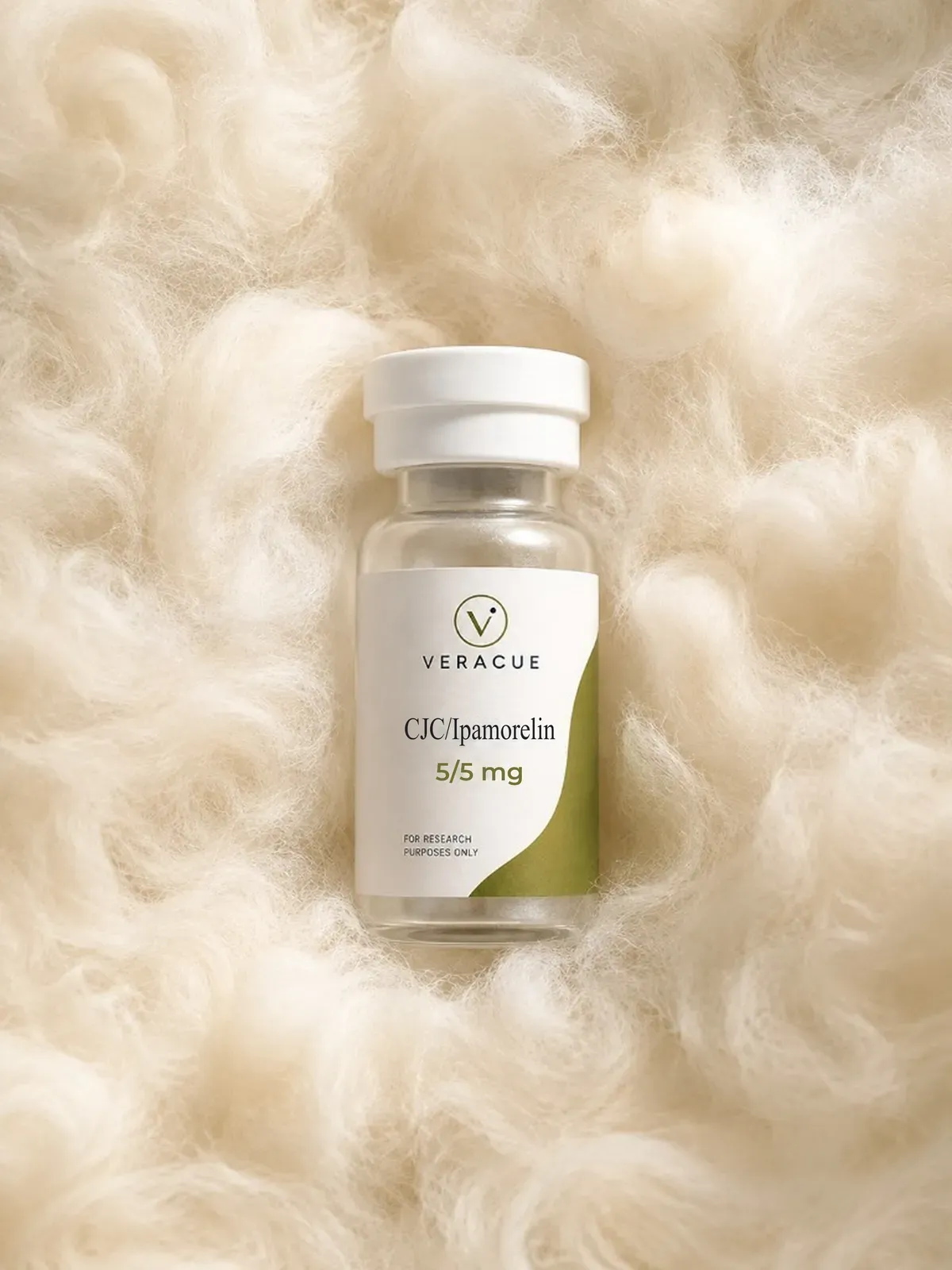
Mod GRF 1-29 plus Ipamorelin in a 5/5 mg vial, for research use only. The two peptides differ by about 2656 Da, so a mass reading separates them.

RESEARCH PEPTIDE
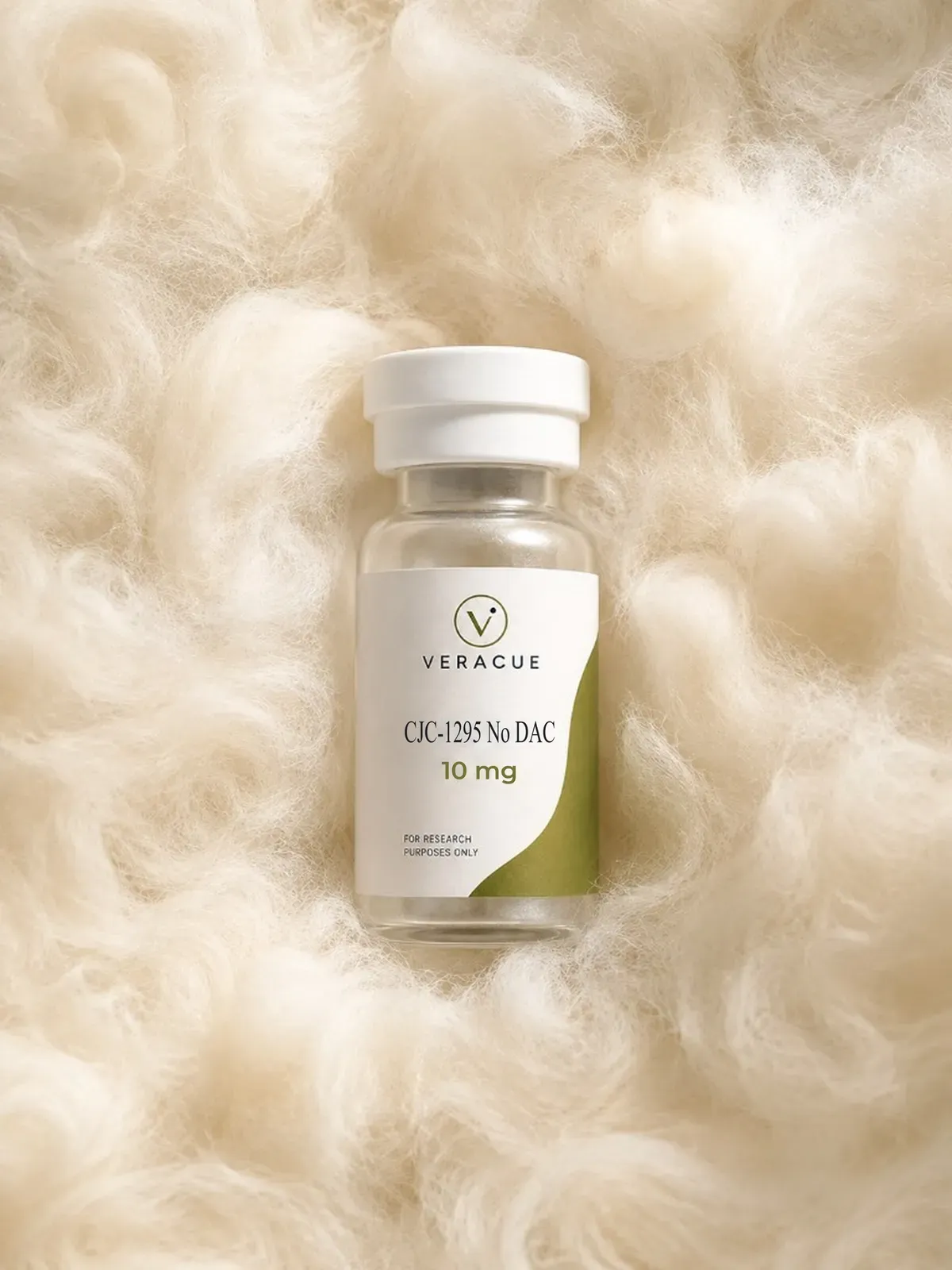
Which CJC-1295 is it? This is the 29-residue peptide with no DAC group (C152H252N44O42, about 3367.9 g/mol). Sold in 10 mg, for research use only.

RESEARCH PEPTIDE
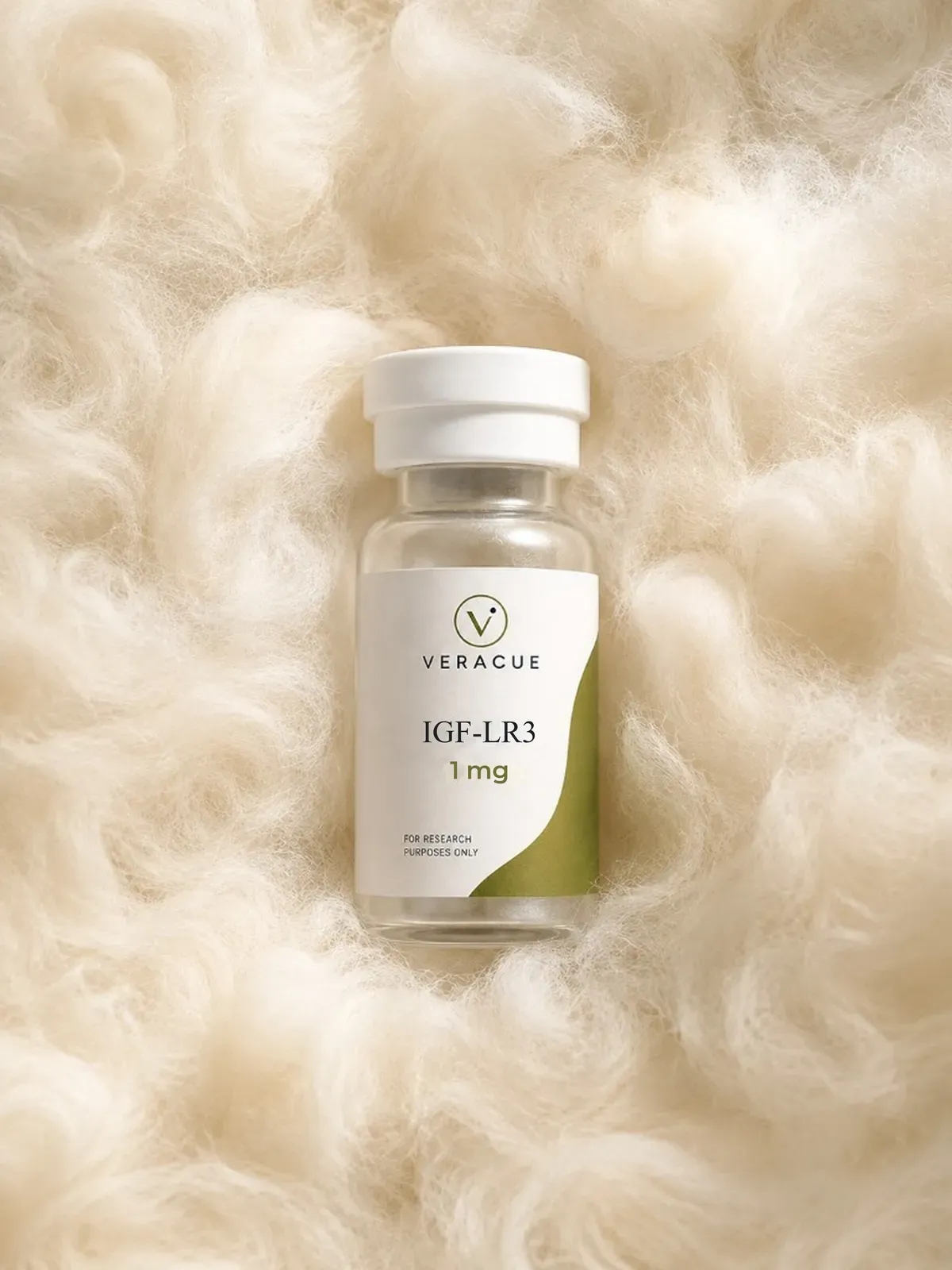
IGF-LR3 is an 83-residue analog, longer than native IGF-1 (CAS 143045-27-6). Read the identity and COA notes. 1 mg vial, research use only.

RESEARCH PEPTIDE
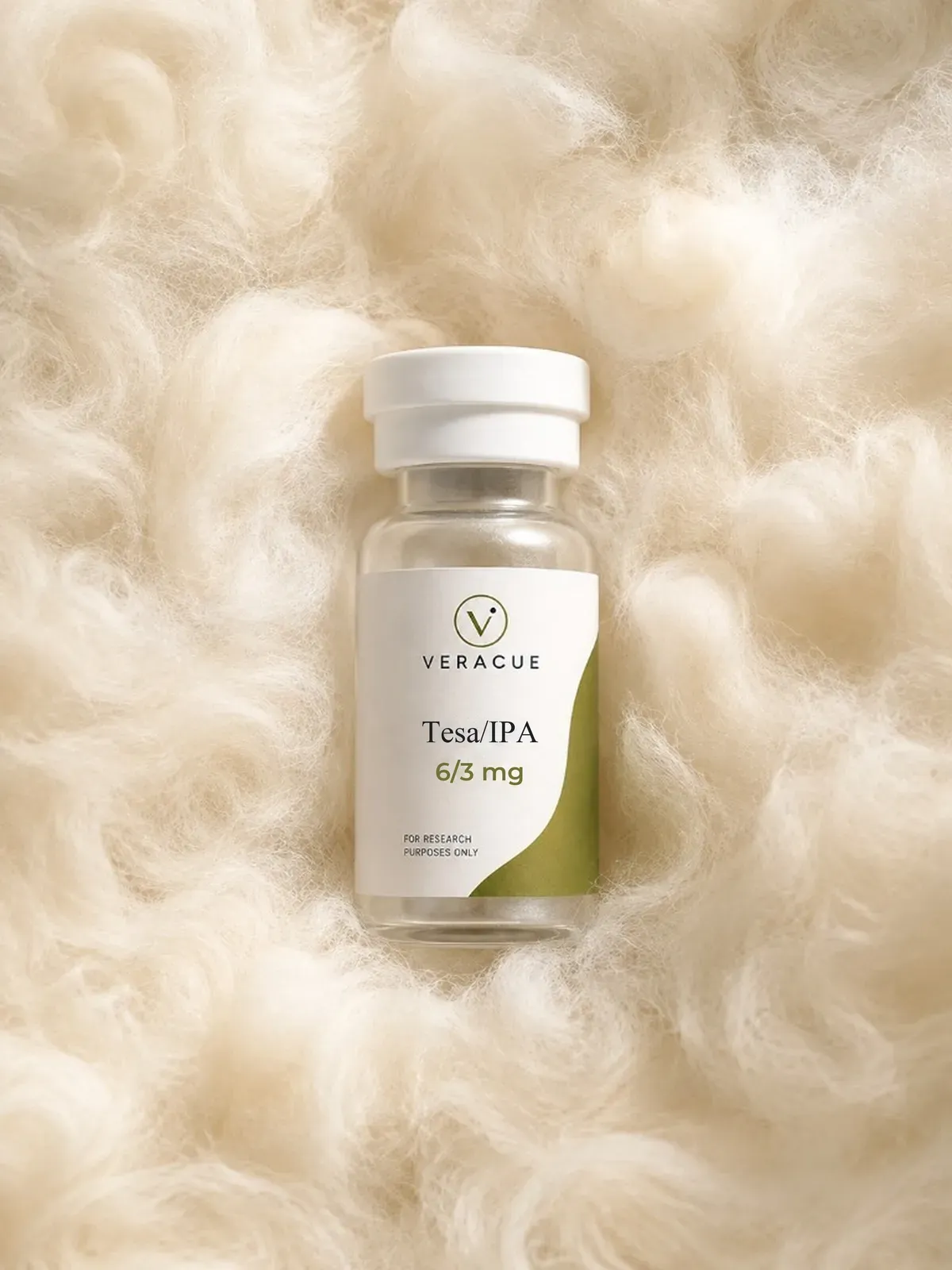
Tesa/IPA is two peptides in one vial, tesamorelin and ipamorelin, so a COA should confirm both. 6/3 and 13/3 mg vials, research use only.