NAD+ and AHK-Cu in Metabolic and Longevity Research: A Deep Dive
A research overview of NAD+ and AHK-Cu covering mitochondrial metabolism, sirtuin activation, copper-peptide signaling, and laboratory handling protocols.

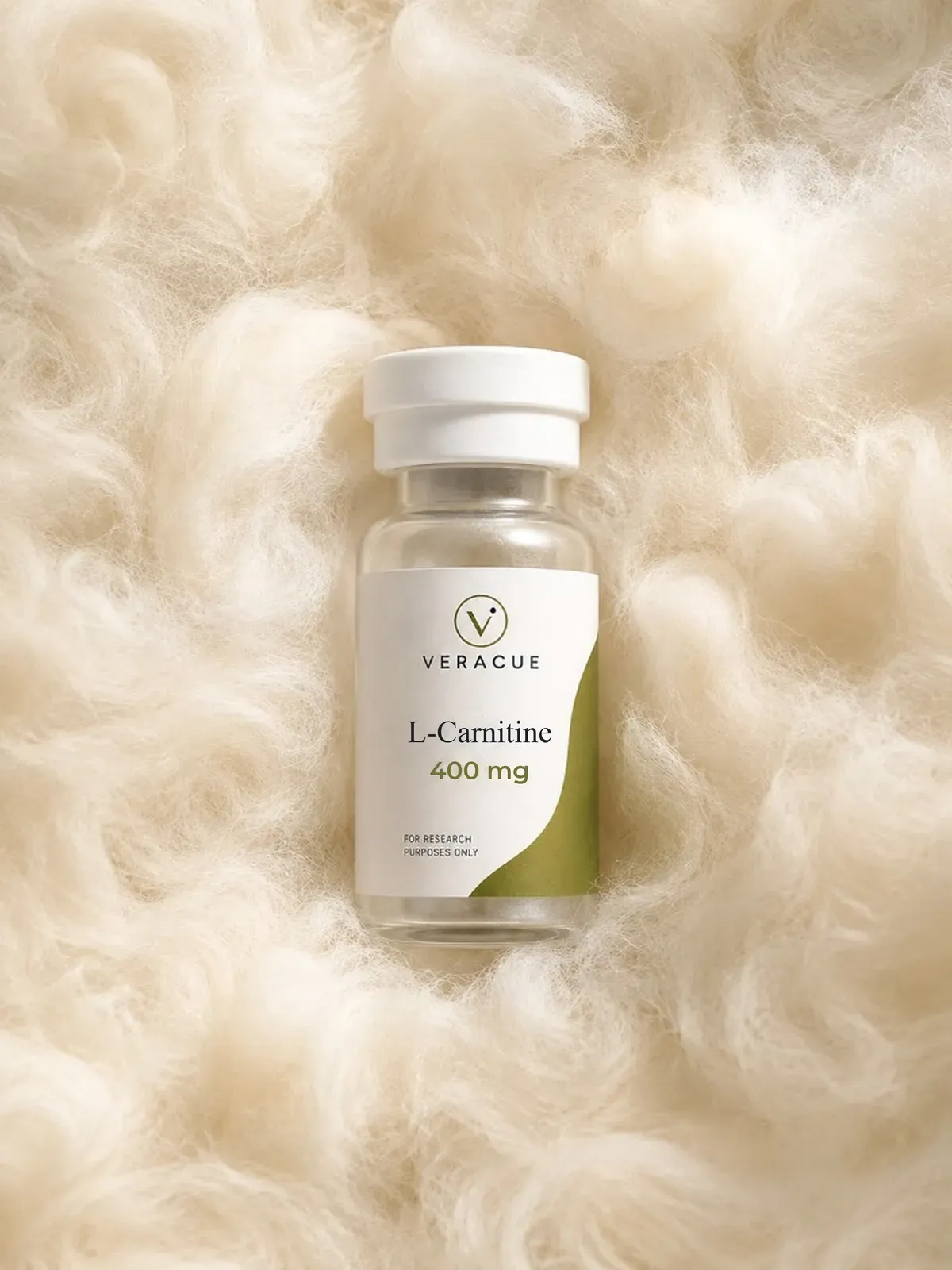
L-Carnitine (levocarnitine) is a small molecule, not a peptide: a zwitterionic quaternary ammonium compound with the formula C7H15NO3, an average mass of 161.20 g/mol and CAS 541-15-1. It is the (R)-enantiomer of carnitine, so the L form is what the name refers to. In the laboratory it appears as a reference in carnitine shuttle and acylcarnitine assay work. A 400 mg vial is offered for research use only.
Ask for the analytical documentation of any lot.
HPLC is the method used to measure purity
Ask for the report for a specific lot through the contact page
Supplied for laboratory research use only
Mass spectrometry is the method used to confirm identity
L-Carnitine, also called levocarnitine, is the naturally occurring L-form of carnitine: a small quaternary ammonium compound with the formula C7H15NO3 and an average molecular weight of 161.20 g/mol. It is a single small molecule, not a peptide, with no amino acid chain and no peptide bonds. Veracue supplies it for laboratory research only.
Its best-known role in the laboratory is transport. Long-chain fatty acids cannot enter the mitochondrial matrix on their own, so carnitine carries their acyl groups across the inner membrane. That relay is called the carnitine shuttle, and it makes carnitine a standard reference point in studies of mitochondrial metabolism, fatty-acid oxidation and carnitine transport.
| Product name | L-Carnitine (levocarnitine) |
| Chemical type | Small molecule, not a peptide |
| Molecular formula | C7H15NO3 |
| Molecular weight (average) | 161.20 g/mol |
| Exact mass | 161.1052 Da, calculated |
| CAS Registry Number | 541-15-1 |
| PubChem CID | 10917 |
| Stereochemistry | One stereocenter; the L-form is the (R)-enantiomer |
| Research designation | Research Use Only |
These values describe the reference molecule from the PubChem record. Form or salt, physical state, purity or assay, analytical methods and storage conditions are reported on each lot’s documentation and can be requested through the contact page.
The systematic name is (R)-3-carboxy-2-hydroxy-N,N,N-trimethyl-1-propanaminium, inner salt, with InChIKey PHIQHXFUZVPYII-ZCFIWIBFSA-N. It is a zwitterion with one stereocenter, and the L-form is the (R)-enantiomer. Cells build it from the amino acids lysine and methionine, but that origin does not make it a peptide.
| Form | Formula | Molecular weight | CAS |
|---|---|---|---|
| L-Carnitine (levocarnitine) | C7H15NO3 | 161.20 g/mol | 541-15-1 |
| L-Carnitine hydrochloride | C7H16ClNO3 | 197.66 g/mol | 6645-46-1 |
| L-Carnitine L-tartrate (2:1) | C18H36N2O12 | 472.49 g/mol | 36687-82-8 |
| Acetyl-L-carnitine | C9H17NO4 | 203.24 g/mol | 3040-38-8 |
Salts and derivatives have their own formulas and weights, so a molecular weight alone cannot tell you which form a material is. Related forms are not automatically equivalent to free L-carnitine.
Acetyl-L-carnitine is the O-acetyl ester of L-carnitine (C9H17NO4, 203.24 g/mol against 161.20). In acylcarnitine profiling, free carnitine is reported as C0 and acetyl-L-carnitine as the short-chain species C2. The two are linked through metabolism, but each has its own literature, so findings about one do not carry over to the other.
Mitochondria cannot import long-chain acyl-CoA directly, so the acyl group is handed to carnitine and carried across. Three proteins do the work:
Free carnitine then returns to the cytoplasm through CACT for another round. Medium- and short-chain fatty acids largely follow a different route, which is one reason one-line descriptions of carnitine miss most of the biochemistry. Carnitine also helps handle excess acyl groups and keeps free coenzyme A available.
| Research area | What it looks at |
|---|---|
| Mitochondrial metabolism | Carnitine sits upstream of β-oxidation. Acylcarnitine levels reflect the balance of acyl-CoA to free coenzyme A inside mitochondria. |
| Fatty-acid oxidation | Long-chain oxidation depends on the shuttle, and researchers also examine how it is regulated, for example through malonyl-CoA inhibition of CPT1. |
| Carnitine transport | Cells accumulate carnitine through the high-affinity, sodium-driven OCTN2 transporter, encoded by SLC22A5. Transport assays use carnitine as the substrate. |
| Acylcarnitine and metabolomics | Acylcarnitines are esters of carnitine with fatty acids of different chain lengths. Laboratories profile them by tandem mass spectrometry, reporting free carnitine as C0 and the esters by chain length. |
These are areas in which the molecule is studied. They describe the science, not an outcome from Veracue material.
Published studies do not validate a specific Veracue lot. Only lot documentation does. This page provides no dosing, administration or usage guidance.

A certificate of analysis ties a lot to measured results, so these fields matter most. Certificates vary between laboratories, so treat this as what a COA may include rather than a fixed checklist.
| COA field | What to look for |
|---|---|
| Material identity | The name and CAS number should match the compound you intend to use. |
| Form / salt | Free L-carnitine, the hydrochloride, the tartrate and acetyl-L-carnitine have different formulas. Confirm which one the certificate describes. |
| Lot number | It should match the lot on your vial or order. |
| Assay or purity, if reported | Note the value, the basis it is reported on (as received or anhydrous) and whether a specification appears beside it. |
| Analytical method | The certificate should name the method actually used, such as titration, HPLC or mass spectrometry. |
| Testing date and laboratory | Confirm when the analysis was done and who performed it, if reported. |
A molecular formula found in PubChem is reference information, not a lot-specific quality result. Veracue confirms a field only when the lot certificate reports it.
Peptide-style checks such as sequence confirmation do not apply here. Look for identity, assay and form instead, as you would for any small-molecule reagent. A molecular weight is easy to look up, but it is reference information about the molecule and not a lot result. Materials with the same molecular weight can still differ in form, water content or purity.
| Value | Figure |
|---|---|
| Average molecular weight | 161.20 g/mol |
| Calculated exact mass | 161.1052 Da |
| CAS for free L-carnitine | 541-15-1 |
| CAS for the hydrochloride | 6645-46-1 |
| CAS for the L-tartrate (2:1) | 36687-82-8 |
Match the CAS number and formula on the documentation to the form you intend, and compare like with like because formula weights differ between forms.
Formula, weight and biochemistry are molecule-level. Purity, form, storage and test results belong to a specific lot and come only from its documentation. A statement that traces to neither of those sources deserves caution until you can confirm it.
Lot documentation is available through the certificates page. If the certificate for your lot is not listed there yet, you can request it through the contact page.
Veracue Labs offers L-Carnitine for laboratory research only. It is not a drug, dietary supplement, food or cosmetic, and it is not intended for human or veterinary use, ingestion, injection or any form of administration. This page contains no dosing, administration or usage guidance, and its statements have not been evaluated by the FDA. See the Medical Disclaimer and the Terms and Conditions for sitewide policies.

RESEARCH PEPTIDE
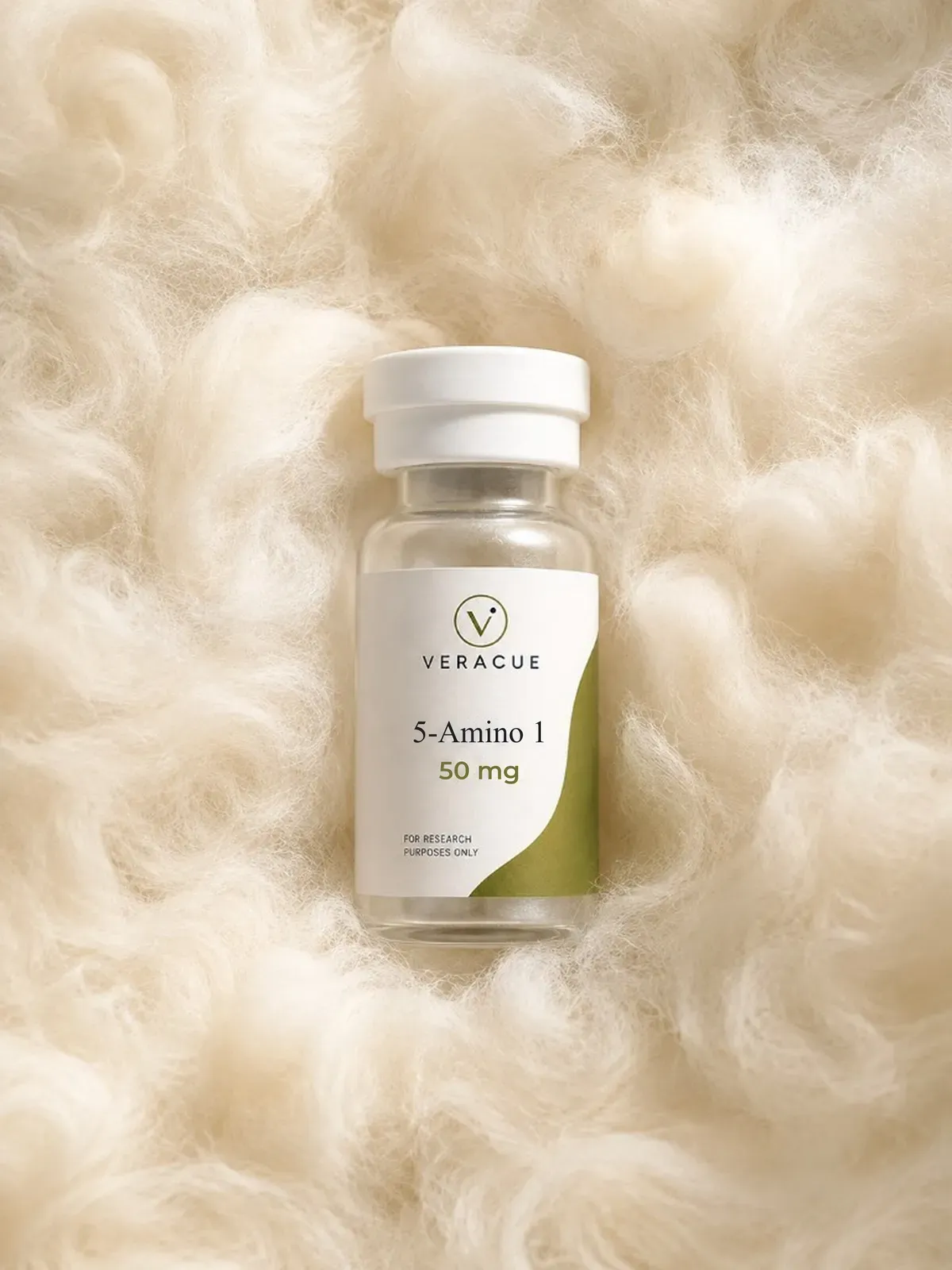
Not a peptide: 5-Amino-1MQ is a quinolinium cation, C10H11N2+ (159.21 g/mol); its iodide salt is 286.11. Check the form. Laboratory research, 50 mg.

RESEARCH PEPTIDE
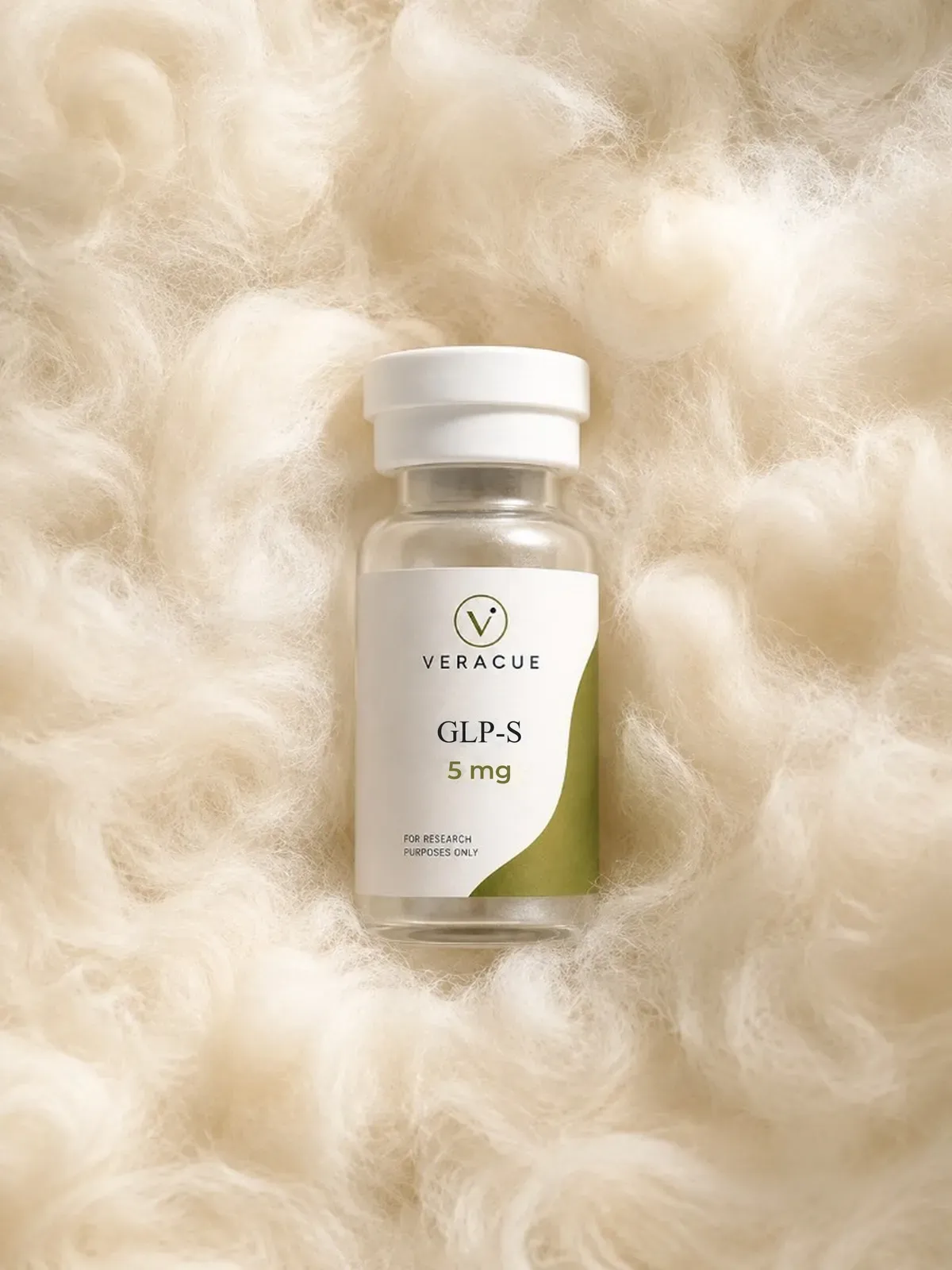
GLP-S is a 31-residue GLP-1 analog with a C18 diacid on lysine 26 (C187H291N45O59, CAS 910463-68-2). Available from 5 to 30 mg, research use only.

RESEARCH PEPTIDE
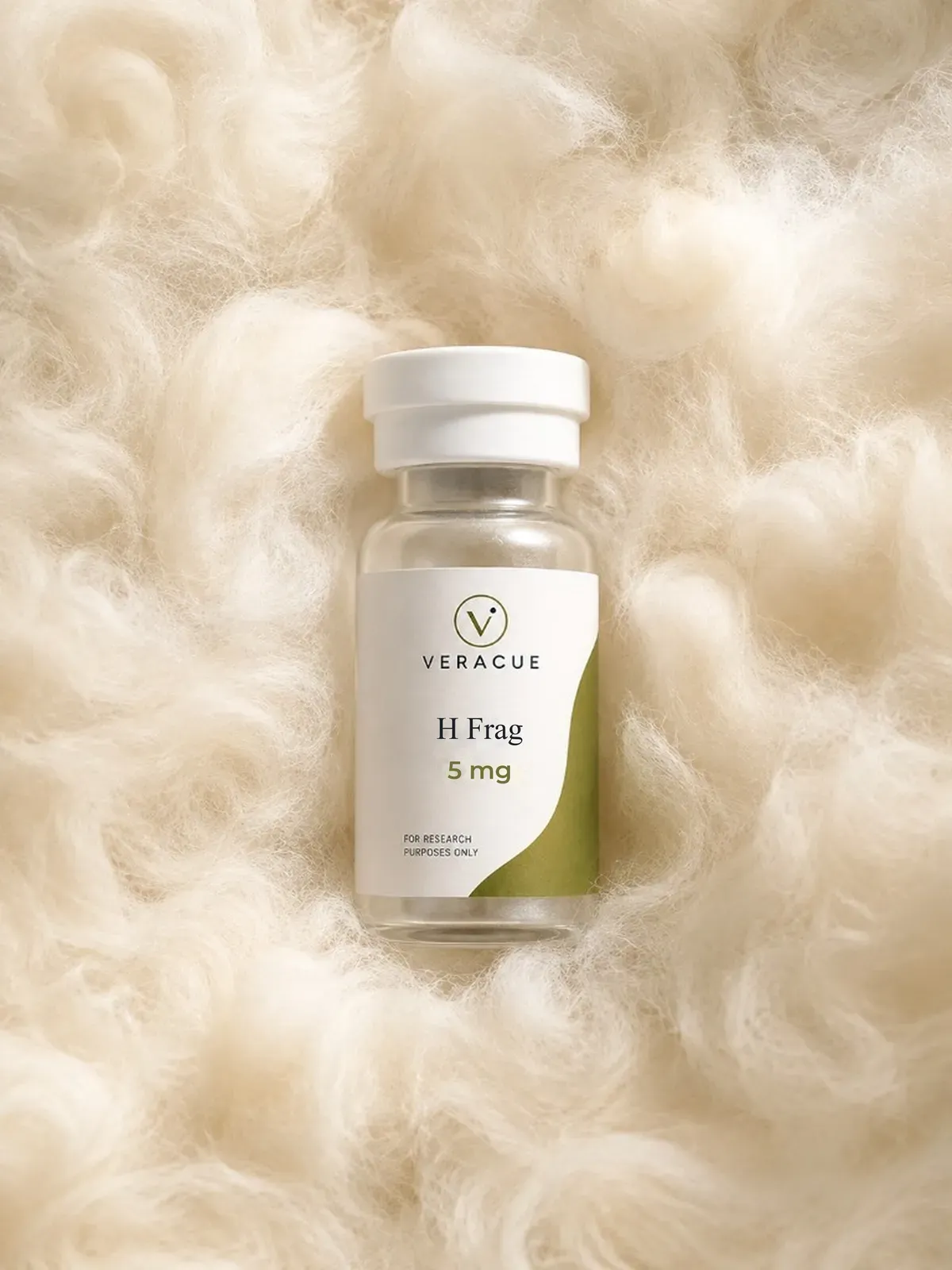
Is H-Frag just AOD 9604 under another name? No. It opens with Phe, not Tyr, and weighs 1799.1 g/mol (CAS 66004-57-7). A 5 mg vial for laboratory research.

RESEARCH PEPTIDE
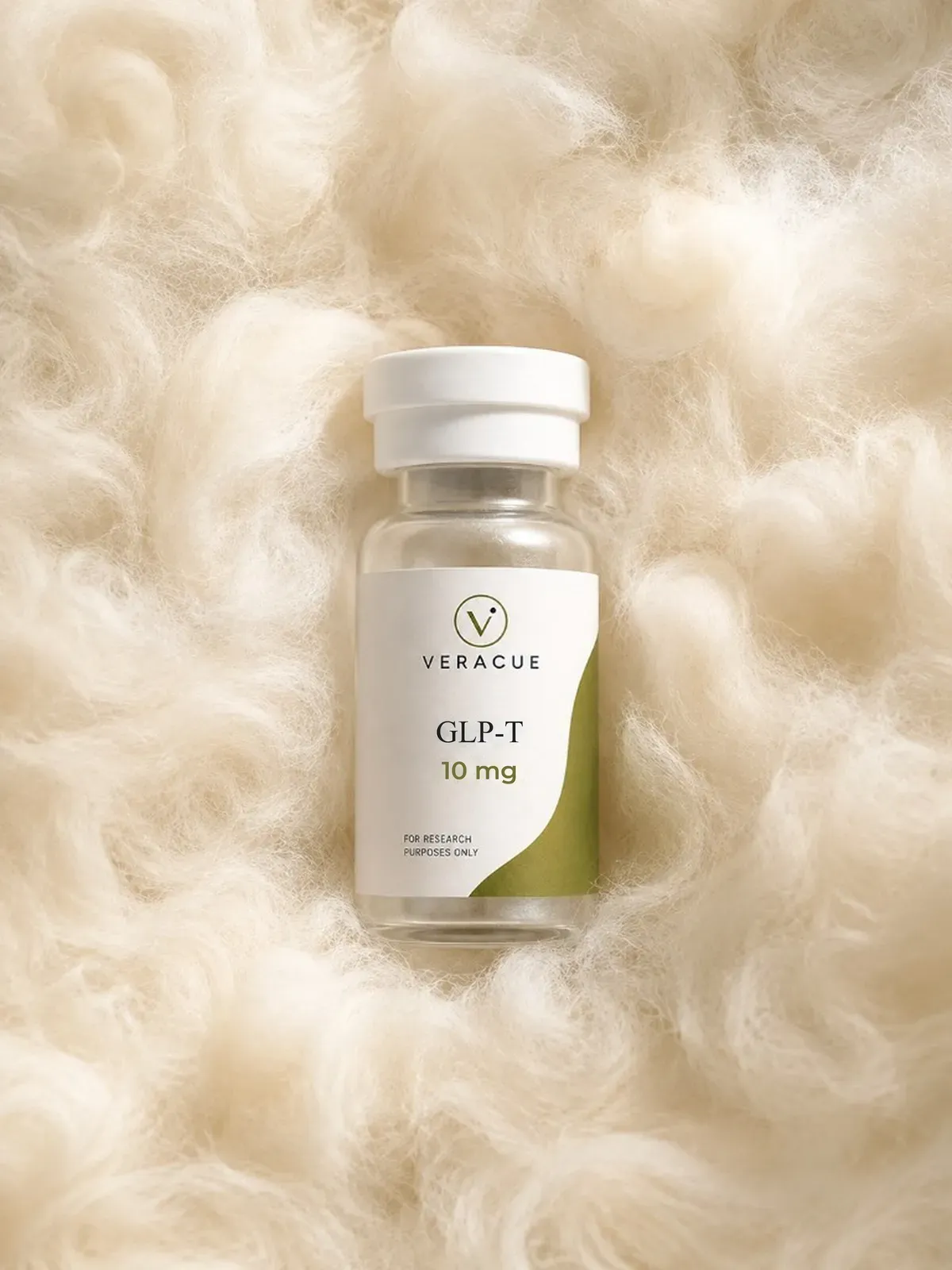
GLP-T (LY3298176) is a 39-residue peptide with a C20 fatty diacid, CAS 2023788-19-2. See the COA notes. 10 to 60 mg, research use only.