NAD+ and AHK-Cu in Metabolic and Longevity Research: A Deep Dive
A research overview of NAD+ and AHK-Cu covering mitochondrial metabolism, sirtuin activation, copper-peptide signaling, and laboratory handling protocols.

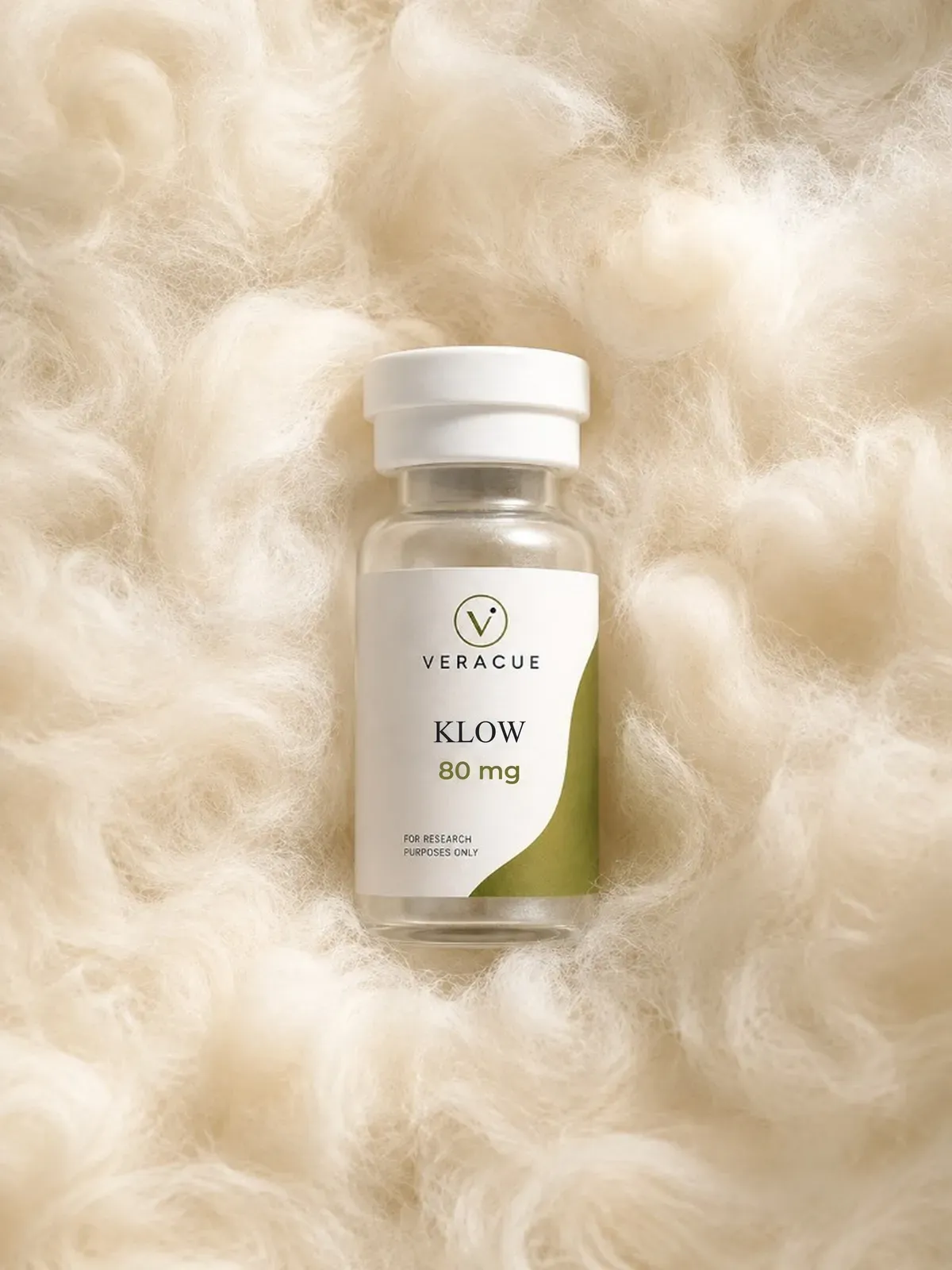
KLOW is a multi-component research blend, not a single peptide, offered as an 80 mg vial. Listings that use the name most often describe four separate components: KPV (Lys-Pro-Val), GHK-Cu (the copper(II) complex of Gly-His-Lys), BPC-157 (a pentadecapeptide) and TB-500 (a thymosin beta-4 fragment or the full-length protein). Because it is a mixture, no single sequence or molecular weight applies to it, and it is easily confused with any one component or with the Glow blend. Supplied for laboratory research use only, not for human or veterinary use.
Ask for the analytical documentation of any lot.
HPLC is the method used to measure purity
Ask for the report for a specific lot through the contact page
Supplied for laboratory research use only
Mass spectrometry is the method used to confirm identity
KLOW is a blend name used in the research-peptide market, not a single peptide molecule. It labels several separate peptides supplied together in one vial, and each keeps its own identity inside the mixture. Veracue supplies it as an 80 mg research vial for laboratory use only.
A single peptide name points to one sequence, one formula and one molecular weight. KLOW points to a mixture, so none of those apply to the blend as a whole. Combining the components does not create a new molecule.
| Product name | KLOW (research blend) |
| Product type | Multi-component research blend |
| Size offered | 80 mg |
| Components most often named in listings | KPV, GHK-Cu, BPC-157 and TB-500 |
| Single sequence or molecular weight | None applies, because the product is a mixture |
| Research designation | Research Use Only |
Component amounts, ratio, physical form, excipients, purity and lot results are reported on each lot’s documentation and can be requested through the contact page.
The four components below are the ones most often named in listings that use the KLOW name. Each is a distinct molecule, and the descriptions cover identity only.
KPV is a tripeptide made of lysine, proline and valine. Its sequence corresponds to the C-terminal region of alpha-melanocyte-stimulating hormone.
GHK-Cu is the copper(II) complex of the tripeptide glycyl-L-histidyl-L-lysine. It is a peptide-copper complex, not an unmodified peptide, so both the peptide identity and the copper content need to be specified.
BPC-157 is a synthetic pentadecapeptide, meaning a chain of fifteen amino acids. Its sequence corresponds to a partial sequence of a larger protein found in gastric juice.
TB-500 is a market term whose meaning can vary between suppliers. It can refer to a short synthetic fragment of thymosin beta-4 or, in some listings, to the full-length protein. The exact species should be taken from the product documentation or lot-specific analytical record rather than assumed from the label.
| Component | Molecular class | Identity note |
|---|---|---|
| KPV | Tripeptide (Lys-Pro-Val) | Corresponds to the C-terminal region of alpha-melanocyte-stimulating hormone |
| GHK-Cu | Peptide-copper complex | Copper(II) complex of Gly-His-Lys; copper content is its own measurement |
| BPC-157 | Pentadecapeptide | Synthetic; partial sequence of a larger protein found in gastric juice |
| TB-500 | Thymosin beta-4 fragment or full-length protein | Species varies between suppliers and should be confirmed from lot documentation |
No. Each component has its own separate literature, tied to its own models and materials. A finding for one peptide answers a question about that peptide, not about a four-component mixture, and no direct study of the KLOW combination was identified. Nothing here describes a combined effect.
Not necessarily. KLOW and Glow are market blend names whose compositions can vary by supplier. Market usage often distinguishes KLOW by the addition of KPV, but that is not a universal formulation, so compare documentation rather than names.
It gives molecular identity and general research context for the components most often associated with the name. It cannot establish what is in a particular vial. Veracue does not provide dosing, administration or usage guidance of any kind.
A blend certificate has to answer more questions than a single-peptide one, because one headline number cannot describe several molecules. It should name the lot, identify every component and make clear which component each result refers to. Identity and purity are different measurements produced by different methods, and both should be named rather than implied.
| COA element | What it tells you | What it does not establish |
|---|---|---|
| Lot or batch number | Links the report to one production lot | Anything at all unless it matches the vial label |
| Component identities | Which molecules the report says are present | That each is present at the stated amount |
| Component-level results | How each individual component performed under test | Blend-level behavior in solution |
| Named analytical methods | How each result was produced and under what conditions | Comparability with a result produced under different conditions |
| HPLC purity | Share of detected signal in the stated peak or peaks | Identity or component amounts |
| Mass spectrometry and identity data | Whether observed masses match the expected species | Purity, or how much material is present |
| Purity scope (blend or component) | Whether the number covers the mixture or one ingredient | Component-level certainty, if the figure is blend-level |
| Testing laboratory and date | Who tested the lot and when | Independence, unless the relationship is disclosed |
| Formulation and net content | What else is in the vial and how much material it holds | How that content divides across components |
A generic certificate for one component does not prove the identity, composition or purity of the finished blend. Certificates vary between laboratories, so treat this as what a COA may include, and see the certificate page for how lot documentation is published.
HPLC helps assess chromatographic purity, and mass spectrometry helps assess molecular identity and mass. Neither one alone establishes every aspect of quality. In a blend, each component should have its own identity result and its own method.
The components do not share analytical behavior. A small tripeptide, a copper complex, a fifteen-residue peptide and a thymosin beta-4 fragment or larger protein differ in size and chemistry. For the copper complex, copper content should be confirmed as its own measurement rather than assumed from the peptide result alone.
It should. If a component is missing from the report, its presence is not confirmed by that document.
Check it against the label. A report only describes the lot it names.
The report should say which. A single blended percentage can hide a shortfall in one component, so a value for each is more informative.
Then it is not confirmed. Physical form, storage conditions and other formulation details are reported on each lot’s documentation, and you can ask for anything missing through the contact page.
Ask the Veracue team about available documentation for a specific lot, or review the certificate library.

KLOW is supplied for laboratory research, scientific investigation and analytical characterization only. It is not a drug, cosmetic, supplement or food, and it is not intended for human or veterinary use, or for ingestion, injection, inhalation or any form of administration. It has not been evaluated by the FDA. This page contains no dosing, administration or usage guidance of any kind. Handle the material as a laboratory chemical, with appropriate protective equipment and institutional safety practice. See the Medical Disclaimer and the Terms and Conditions for sitewide policies.

RESEARCH PEPTIDE
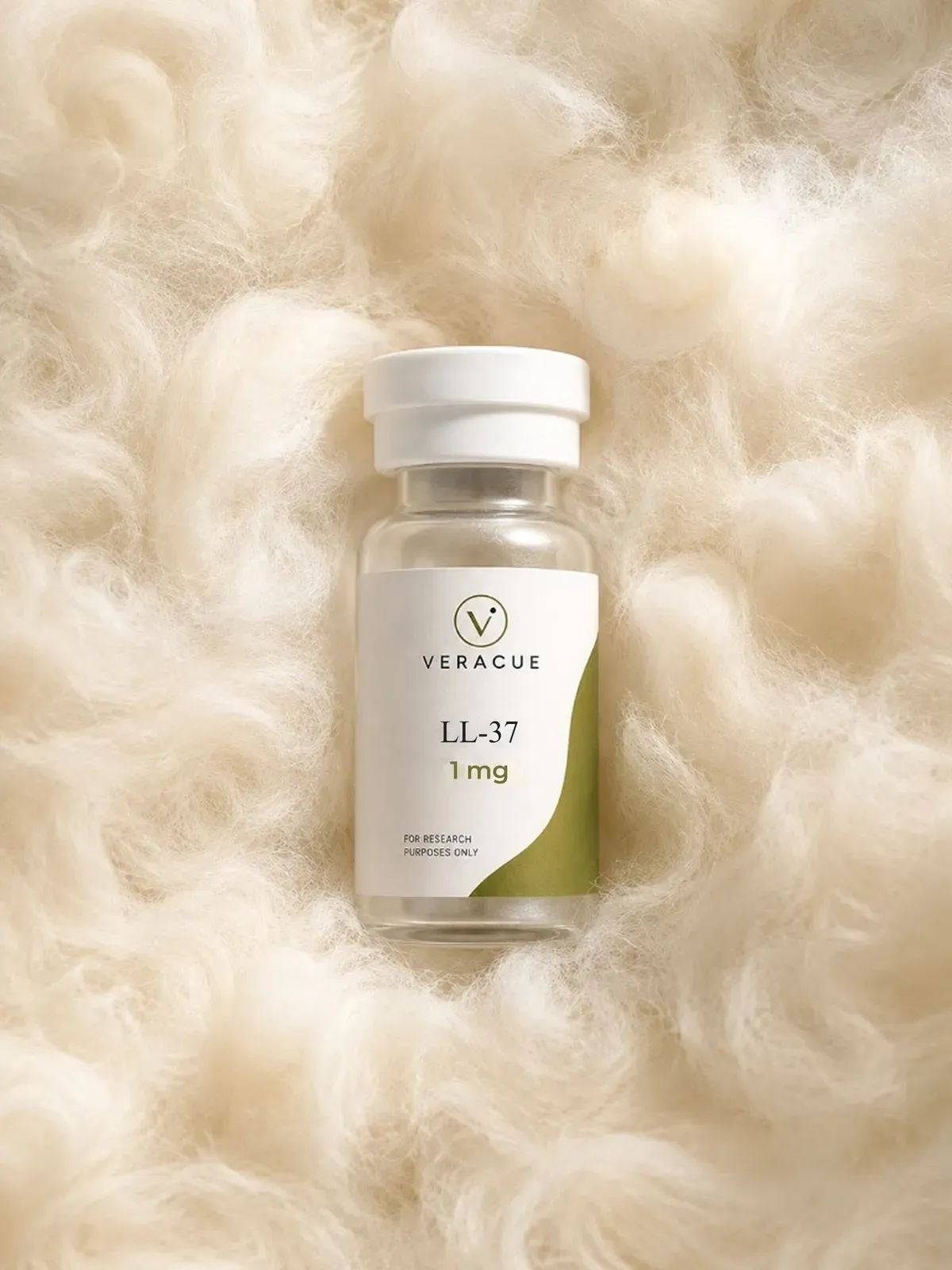
LL-37 or hCAP-18? The vial holds the 37-residue peptide (C205H340N60O53, about 4493.3 g/mol), not the precursor. 1 mg, laboratory research only.

RESEARCH PEPTIDE
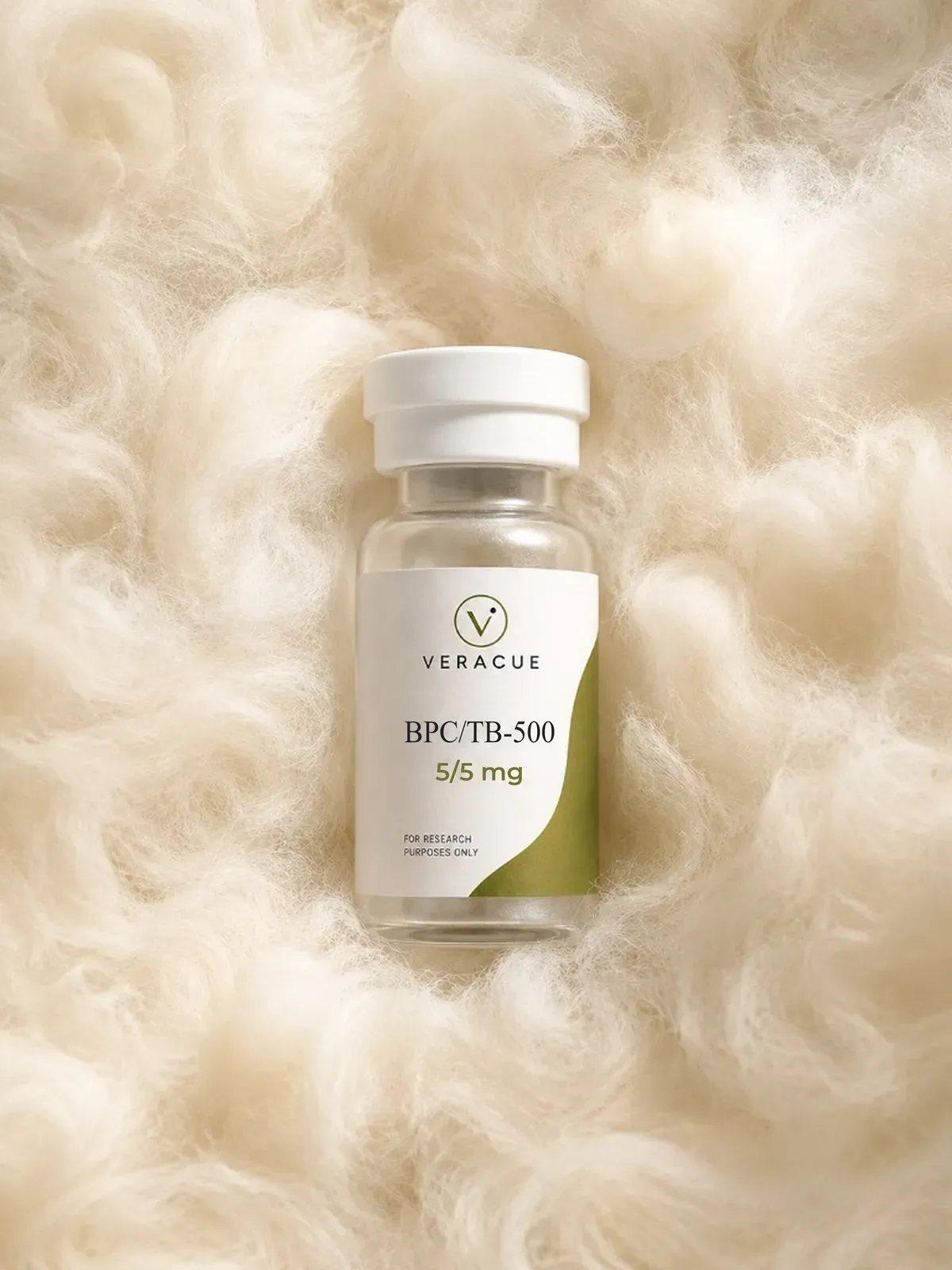
Two peptides in one vial: BPC-157 (GEPPPGKPADDAGLV) and acetylated TB-500 (Ac-LKKTETQ), each with its own CAS number. 5/5 and 10/10 mg, research use only.

RESEARCH PEPTIDE
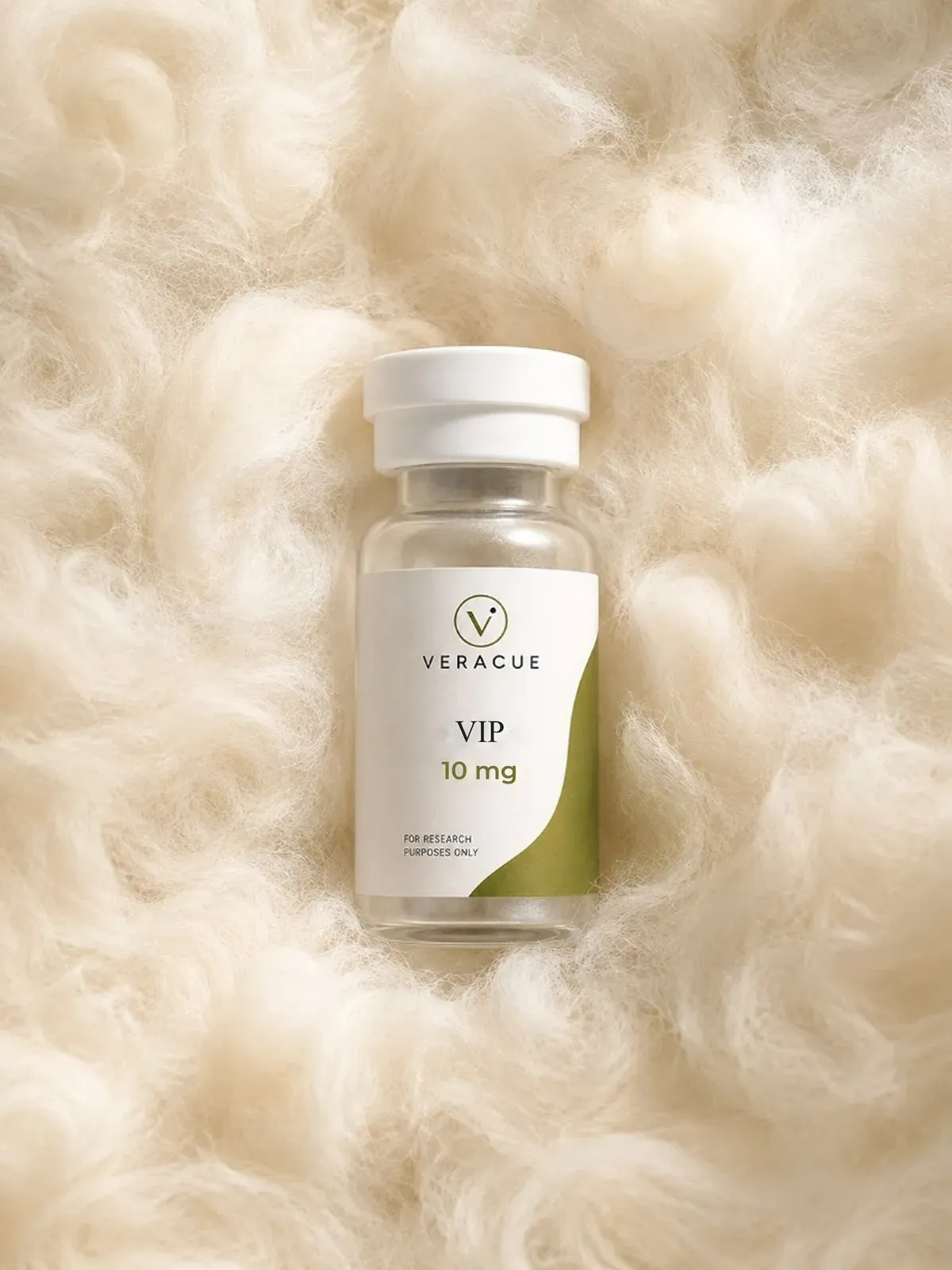
Is VIP the same as PACAP? No. It is a 28-residue amidated peptide, C147H238N44O42S, CAS 40077-57-4. Research use only; supplied as a 10 mg vial.

RESEARCH PEPTIDE
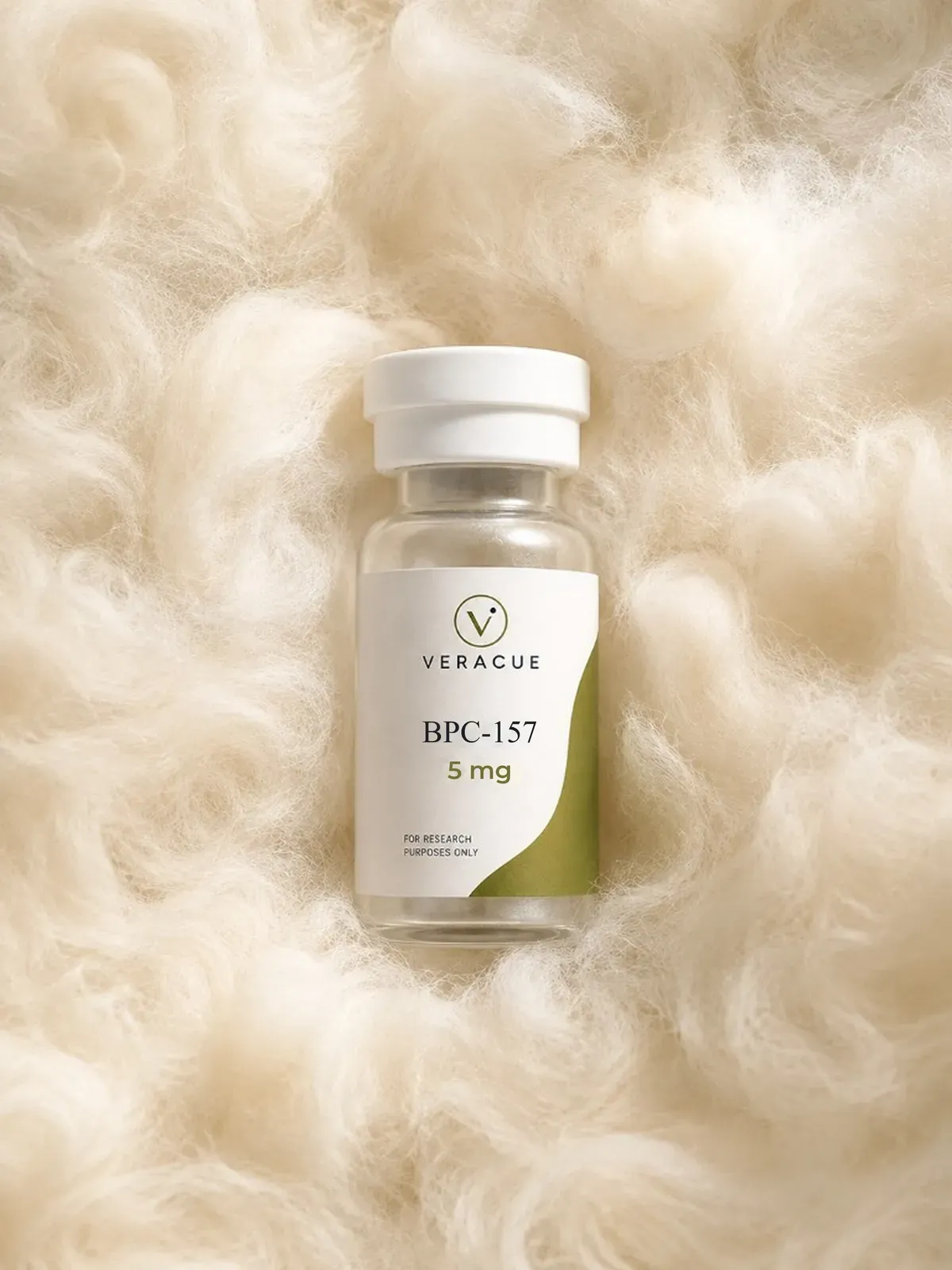
Is BPC-157 a blend or one peptide? It is a single 15-residue molecule, GEPPPGKPADDAGLV (CAS 137525-51-0). Sold in 5 and 10 mg for research use only.