NAD+ and AHK-Cu in Metabolic and Longevity Research: A Deep Dive
A research overview of NAD+ and AHK-Cu covering mitochondrial metabolism, sirtuin activation, copper-peptide signaling, and laboratory handling protocols.

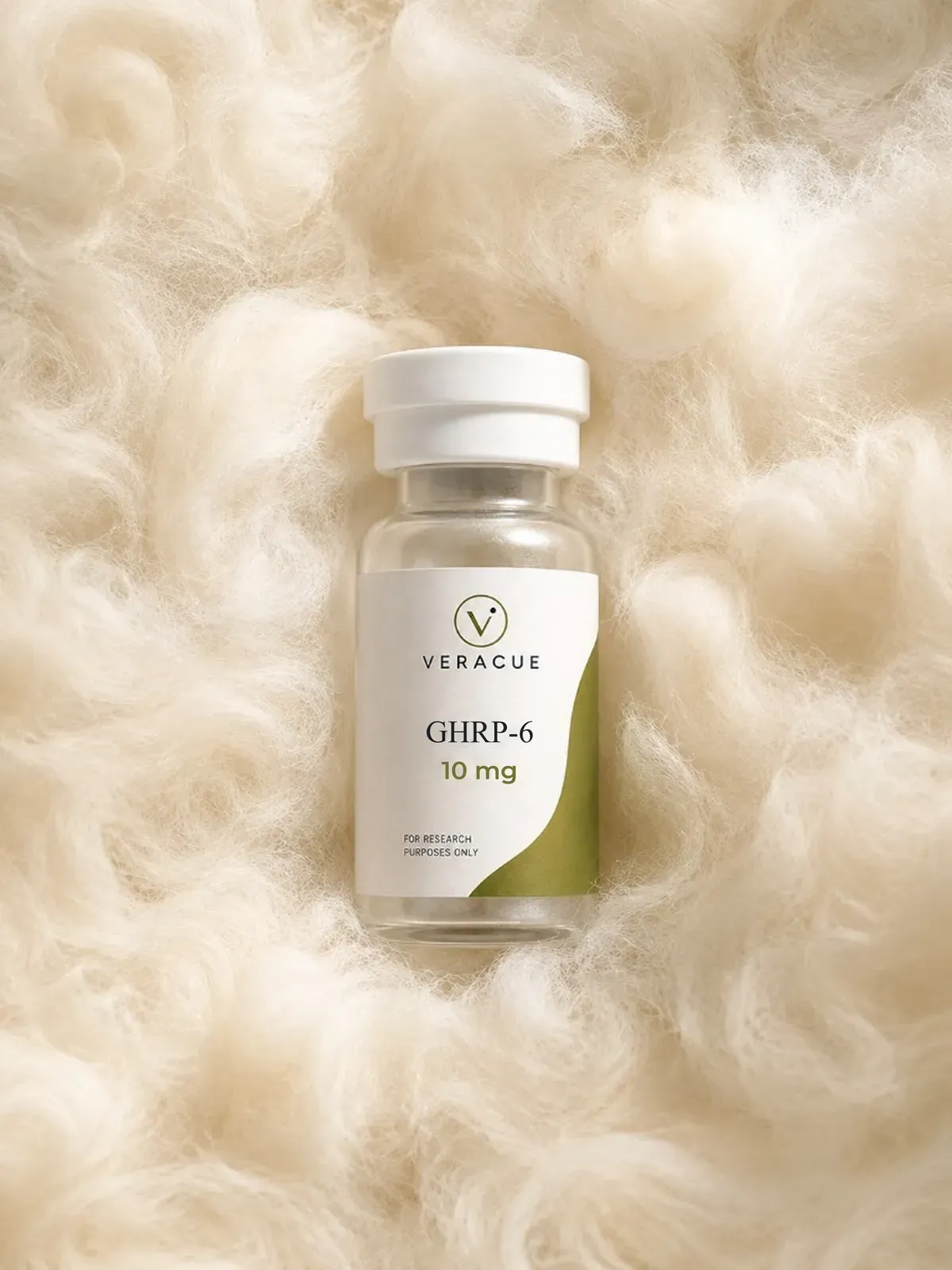
GHRP-6, also called growth hormone-releasing hexapeptide or SKF-110679, is a six-residue synthetic peptide with the sequence His-D-Trp-Ala-Trp-D-Phe-Lys-NH2. The free peptide is C46H56N12O6 at 872.45 g/mol (CAS 87616-84-0). In secretagogue research it is used as a reference ligand for the ghrelin receptor, GHS-R1a, and it is often set beside GHRP-2. It is sold as a 10 mg vial for research use only.
Ask for the analytical documentation of any lot.
HPLC is the method used to measure purity
Ask for the report for a specific lot through the contact page
Supplied for laboratory research use only
Mass spectrometry is the method used to confirm identity
GHRP-6 (growth hormone-releasing hexapeptide) is a synthetic six-amino-acid peptide with the sequence His-D-Trp-Ala-Trp-D-Phe-Lys-NH2. It binds the ghrelin receptor, GHS-R1a, and is used in the lab as a reference compound for secretagogue receptor pharmacology. Its formula is C46H56N12O6, its molecular weight is 872.45 g/mol for the free peptide, and its CAS number is 87616-84-0.
GHRP-6 was one of the first members of the GHRP family, which grew out of enkephalin-derived screening work in the 1980s. Its receptor was later identified as GHS-R1a, the same receptor that binds the endogenous hormone ghrelin. Veracue supplies GHRP-6 as a lyophilized research material, strictly for laboratory use.
| Product name | GHRP-6 |
| Full name | Growth hormone-releasing peptide-6 (growth hormone-releasing hexapeptide) |
| Developmental code | SKF-110679 |
| Sequence | His-D-Trp-Ala-Trp-D-Phe-Lys-NH2 (C-terminally amidated hexapeptide) |
| Molecular formula | C46H56N12O6 (free peptide) |
| Molecular weight | 872.45 g/mol (free peptide) |
| CAS Registry Number | 87616-84-0 (free peptide); 145177-42-0 listed for the acetate salt in supplier chemical databases |
| Peptide class | Synthetic growth hormone secretagogue (GHRP family) |
| Receptor target | GHS-R1a (ghrelin receptor) |
| Form | Lyophilized powder |
| Research designation | Research Use Only |
Reference data for the free peptide. A salt form such as acetate or TFA changes the measured molecular weight because the counter-ion mass is included.
Salt form, net peptide content, purity and lot results are reported on the documentation for each lot. Request lot documentation through the contact page.
GHRP-6 is also written GHRP 6 and is known by the developmental code SKF-110679. The free peptide carries CAS 87616-84-0, and supplier chemical databases list CAS 145177-42-0 for the acetate salt. Checking a certificate of analysis against these identifiers is a quick first test of whether it describes the right material.
GHRP-6 is a C-terminally amidated hexapeptide, His-D-Trp-Ala-Trp-D-Phe-Lys-NH2. Two of its residues are D-amino acids, D-Trp and D-Phe, which is a feature of the whole GHRP family. Its formula is C46H56N12O6 and its molecular weight is 872.45 g/mol as the free peptide.
Published pharmacology describes GHRP-6 as a GHS-R1a agonist. GHS-R1a is the same receptor that binds endogenous ghrelin, and it is expressed on pituitary somatotrophs and on a subset of hypothalamic arcuate-nucleus neurons. Receptor activation engages Gq and phospholipase-C signaling with downstream calcium mobilization, a route distinct from the cAMP-driven signaling used by GHRH-receptor agonists.
Laboratory model work has also reported CD36 as a secondary binding site for GHRP-6, studied in a different experimental context from its pituitary receptor activity.
GHRP-2 and GHRP-6 are the two most-referenced compounds in the growth hormone secretagogue literature. They are related, not interchangeable, and the comparison below is descriptive, not a ranking.
| Parameter | GHRP-6 | GHRP-2 |
|---|---|---|
| Sequence | His-D-Trp-Ala-Trp-D-Phe-Lys-NH2 | D-Ala-D-2-Nal-Ala-Trp-D-Phe-Lys-NH2 |
| Molecular weight | 872.45 g/mol (free peptide) | About 818 g/mol (free peptide) |
| Generation | First-generation GHRP | Second-generation GHRP |
| Receptor | GHS-R1a; CD36 reported as a secondary target | GHS-R1a |
| Structural difference | His and D-Trp at positions 1 and 2 | D-Ala and D-2-Nal at positions 1 and 2 |
Study systems and assay methods differ across the published papers, so figures from one study are not directly interchangeable with another.
CJC-1295, sermorelin and tesamorelin act on the GHRH receptor, a separate receptor system on the same pituitary somatotroph cells. GHS-R1a agonists such as GHRP-6 are reported to engage Gq, phospholipase-C and calcium signaling, while GHRH-receptor agonists are reported to engage Gs, adenylate-cyclase and cAMP signaling. This describes receptor-level relationships only. Veracue does not provide combination protocols.
The names look alike and both act at GHS-R1a, so they are often mixed up.
No. They are structurally distinct hexapeptides that share a receptor. GHRP-6 and GHRP-2 differ at the first two positions of the sequence, and they have different molecular weights.
Researcher takeaway: A shared receptor does not make two peptides the same material.
A single named target can hide a more complicated binding picture.
Its primary documented target is GHS-R1a, the receptor that endogenous ghrelin activates. CD36 has also been reported as an additional binding site in laboratory models, studied in a different experimental context.
Researcher takeaway: Keep the primary receptor and the secondary site in separate boxes.
Both activate the same receptor, so the terms sometimes get swapped.
No. Ghrelin is the endogenous 28-amino-acid hormone that GHS-R1a naturally responds to, while GHRP-6 is a synthetic hexapeptide that activates the same receptor. The two are structurally distinct molecules.
Researcher takeaway: Same receptor, different molecules.
Both groups are described as growth hormone secretagogues, which blurs the line between them.
GHRP-6 acts on GHS-R1a, a receptor pharmacologically separate from the GHRH receptor used by CJC-1295, sermorelin and tesamorelin. The two receptors signal through different intracellular routes.
Researcher takeaway: Different receptor, different signaling pathway.

Certificates vary between laboratories and testing programs, so treat this as what a COA may include rather than a fixed checklist.
| COA item | What it helps establish |
|---|---|
| Product name / identifier | What material the report refers to |
| Lot number | Links the report to a specific batch |
| HPLC purity | Reverse-phase chromatography data showing chemical purity and any truncated or related sequences |
| Mass spectrometry result | Whether the measured molecular mass matches the expected sequence |
| Net peptide content and salt form | How much of the vial content is peptide, and which counter-ion is present |
| Test date | Establishes when testing occurred |
| Laboratory | Identifies who performed the analysis |
HPLC alone does not prove identity, and mass spectrometry alone does not prove purity. A COA also does not establish sterility, endotoxin levels or biological activity in a particular assay, since activity is confirmed in the researcher’s own experimental work. If a lot-specific certificate is available, use it as the primary source for that lot’s reported results. The certificate page explains how to request lot documentation.
The calculated molecular weight of GHRP-6 (872.45 g/mol for the free peptide, from formula C46H56N12O6) is not the same as an observed LC-MS m/z value, because instruments typically report ions with one or more charges and adducts can shift peaks. Salt form matters too. Acetate and TFA forms report a higher nominal weight because the counter-ion mass is included, and net peptide content is different from total vial mass. Confirm the charge state and processing method behind any mass figure, and check whether it refers to the free peptide or a salt.
A name on a label tells you what a material is called, not what it is.
Identity comes from analytical data compared with a defined reference. For GHRP-6, the reference is the hexapeptide sequence His-D-Trp-Ala-Trp-D-Phe-Lys-NH2 and its formula, C46H56N12O6. Mass spectrometry can support that match, whereas a clean chromatography peak only shows the sample is uniform.
Researcher takeaway: Ask which reference and which method a report used.
A certificate is only useful if you know what each line can and cannot show.
Look for a product identifier, lot number, HPLC purity with its method, a mass spectrometry identity result, net peptide content and salt form. Then confirm the lot number matches the vial in hand, because a generic or catalog-wide document does not describe a specific lot.
Researcher takeaway: Read a COA for method, lot and identity basis, not just the percentage.
A product page can read like a guarantee, but the material in a vial is a specific lot.
Identity, purity, salt form and physical form belong to the lot record, and a report for one lot does not describe another. The product page provides molecular and research context, while lot documentation provides the analytical results for that particular material. The certificate page explains how to request it.
Researcher takeaway: Use the page to understand the molecule and the lot record to understand the material.
Ask the Veracue team about available documentation for a specific lot, or review the certificate library.
GHRP-6 is supplied for laboratory research use only and is not intended for human or veterinary use, ingestion, injection or any form of administration. It has not been evaluated by the FDA and is not intended to diagnose, treat, cure or prevent any disease. This page does not provide dosing, administration or usage guidance of any kind. See the Medical Disclaimer and the Terms and Conditions for sitewide policies.

RESEARCH PEPTIDE
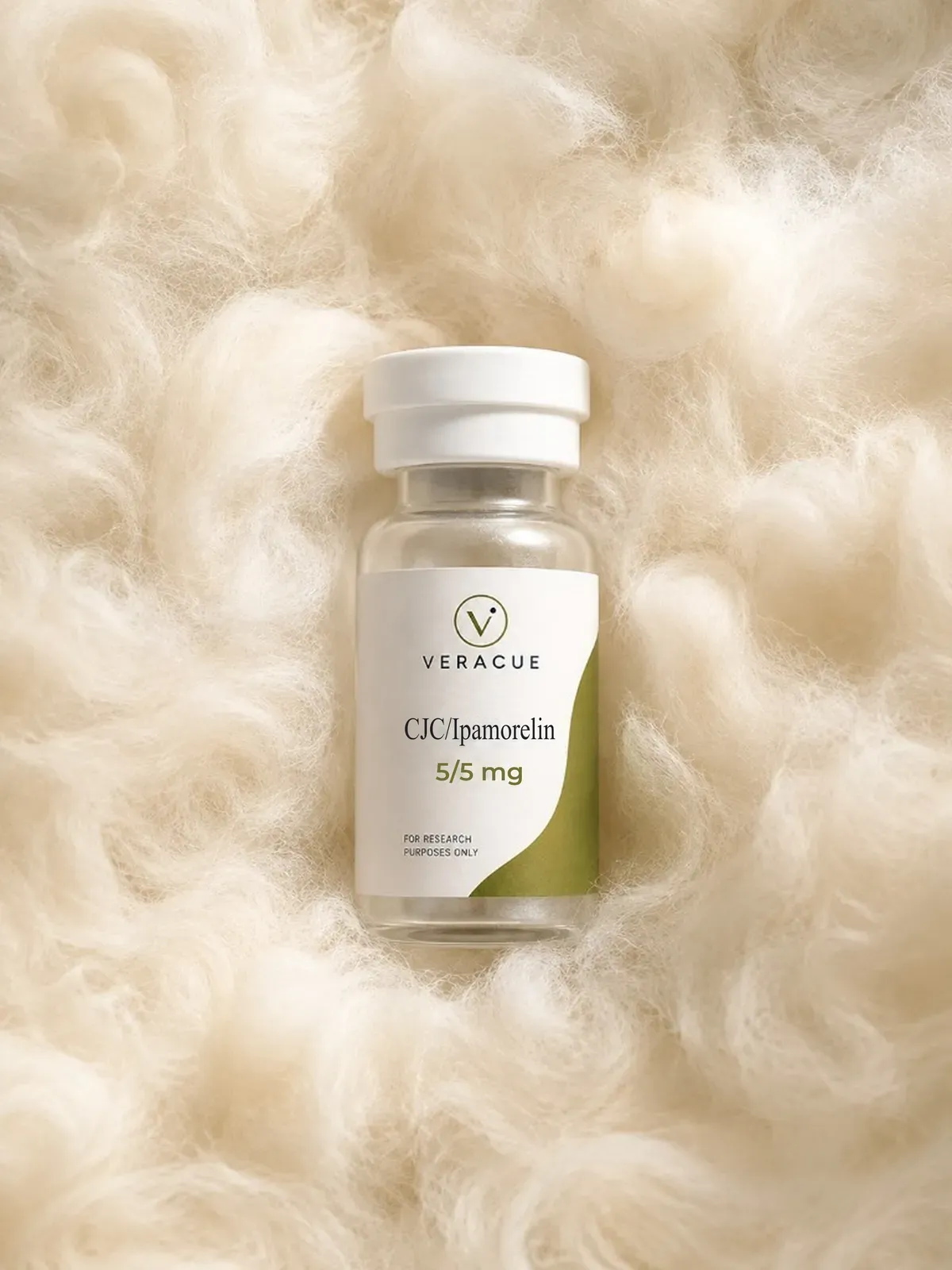
Mod GRF 1-29 plus Ipamorelin in a 5/5 mg vial, for research use only. The two peptides differ by about 2656 Da, so a mass reading separates them.

RESEARCH PEPTIDE
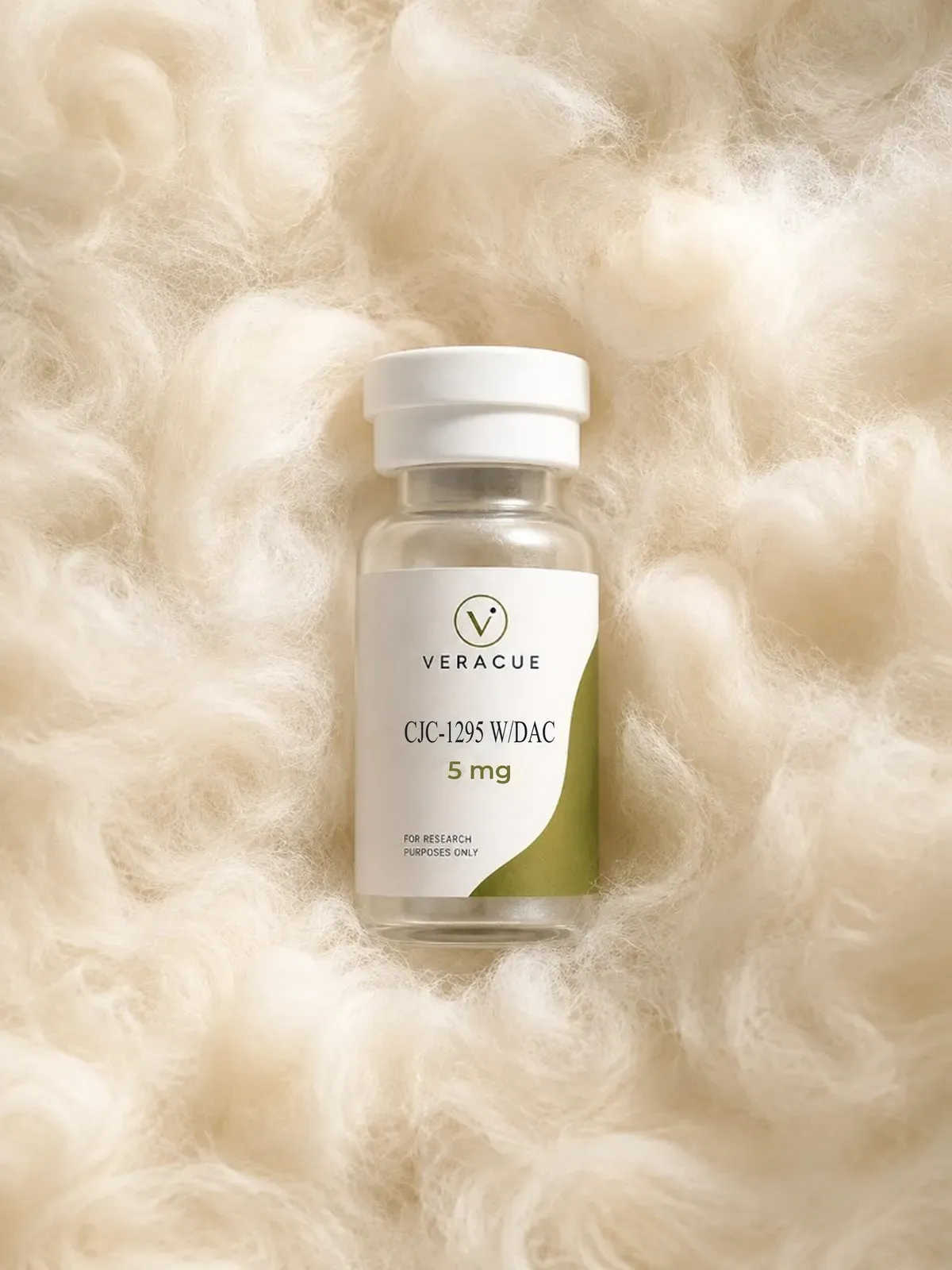
Check the mass: CJC-1295 W/DAC is C165H269N47O46, about 3647.2 g/mol (CAS 446262-90-4), not 3367.9 like its unmodified core. Research use only.

RESEARCH PEPTIDE
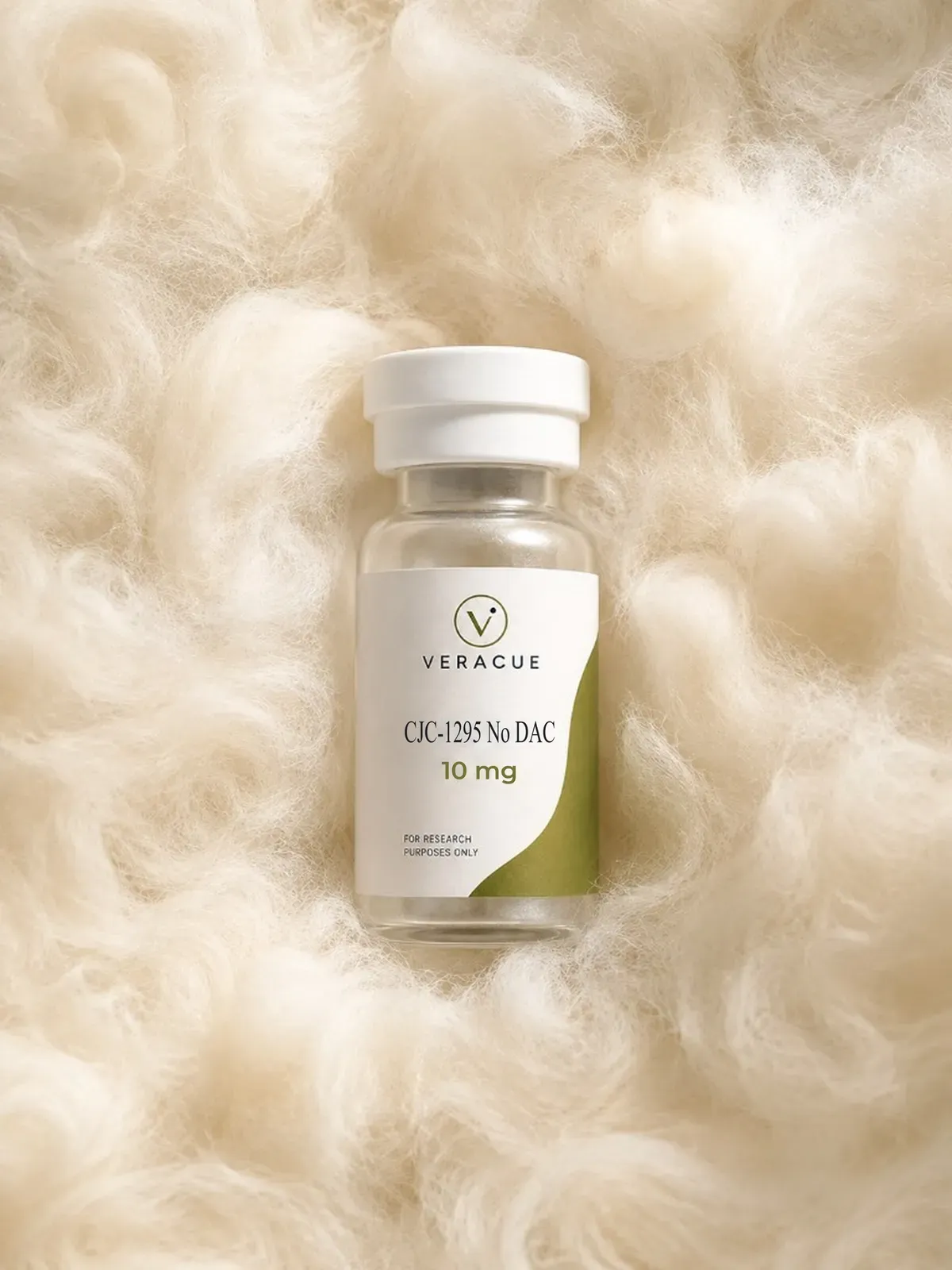
Which CJC-1295 is it? This is the 29-residue peptide with no DAC group (C152H252N44O42, about 3367.9 g/mol). Sold in 10 mg, for research use only.

RESEARCH PEPTIDE
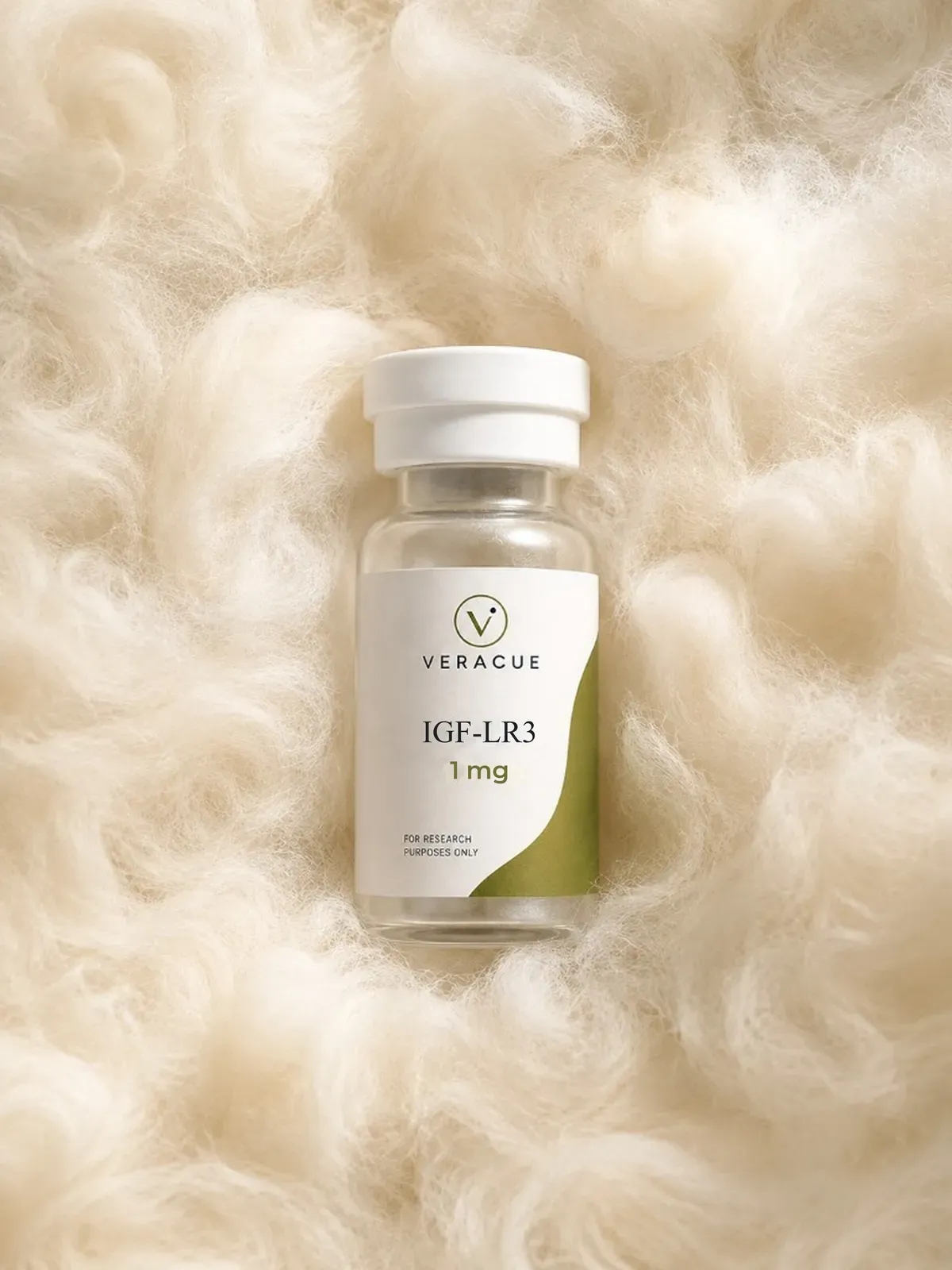
IGF-LR3 is an 83-residue analog, longer than native IGF-1 (CAS 143045-27-6). Read the identity and COA notes. 1 mg vial, research use only.