NAD+ and AHK-Cu in Metabolic and Longevity Research: A Deep Dive
A research overview of NAD+ and AHK-Cu covering mitochondrial metabolism, sirtuin activation, copper-peptide signaling, and laboratory handling protocols.

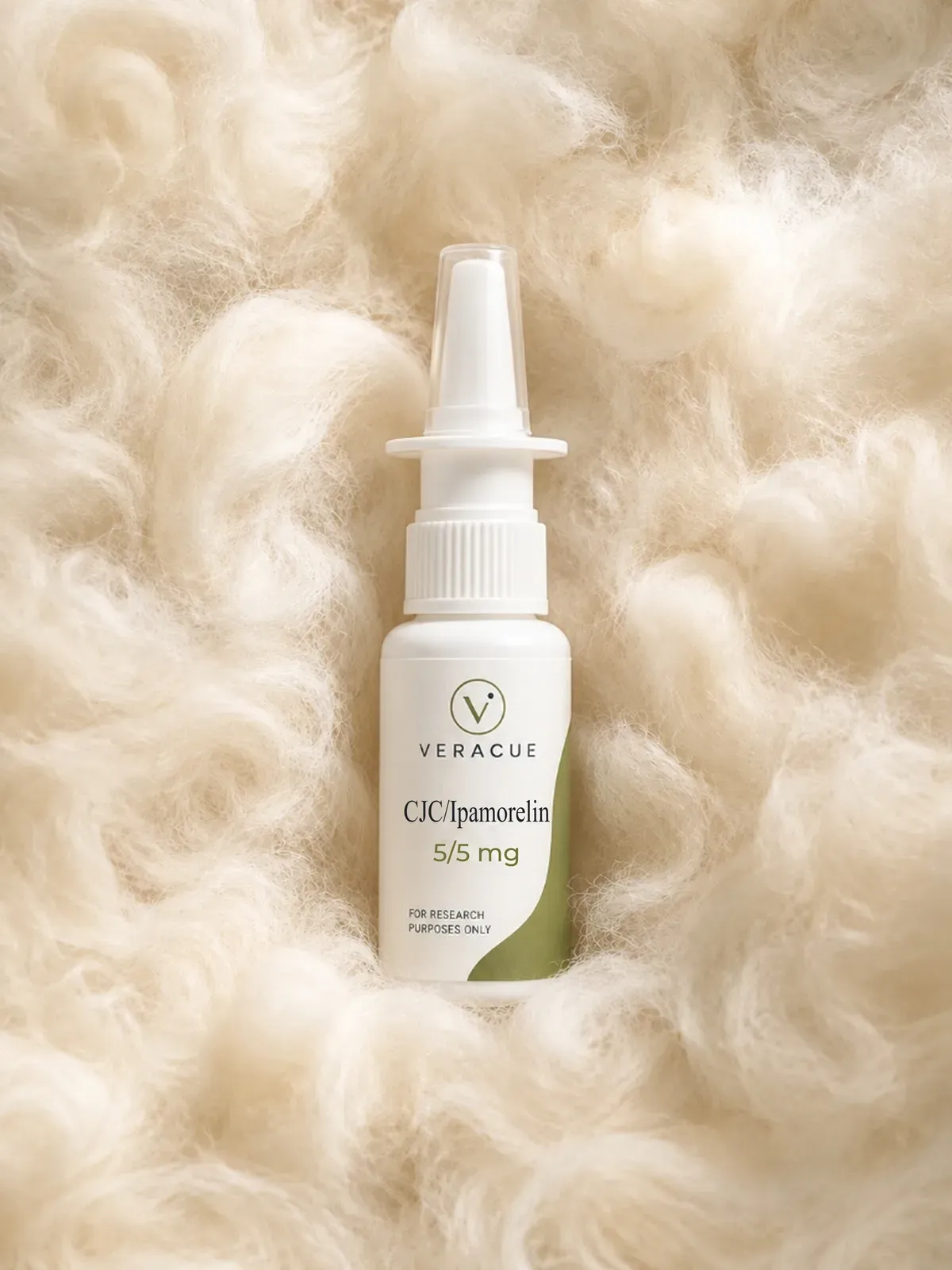
CJC/Ipamorelin Spray is a spray-dispensed pairing of two unrelated peptides. The first, CJC-1295 No DAC (Mod GRF 1-29), is a tetrasubstituted analog of the first 29 residues of growth hormone-releasing hormone, with D-alanine at position 2, the formula C152H252N44O42, an average mass near 3367.9 g/mol and CAS 863288-34-0. The second, Ipamorelin, is a five-residue synthetic chain, Aib-His-D-2-Nal-D-Phe-Lys-NH2, with the formula C38H49N9O5, an average mass near 711.85 g/mol and CAS 170851-70-4. Each bottle is labeled 5/5 mg, meaning 5 mg of each peptide, and contains 45 sprays per bottle, sold for laboratory research use only.
Ask for the analytical documentation of any lot.
HPLC is the method used to measure purity
Ask for the report for a specific lot through the contact page
Supplied for laboratory research use only
Mass spectrometry is the method used to confirm identity
| Product name | CJC/Ipamorelin Spray (CJC-1295 No DAC plus Ipamorelin) |
| Packaging | 45 sprays per bottle, spray-dispensed |
| Label strength | 5/5 mg, with 5 mg of each peptide |
| CJC-1295 No DAC sequence | YADAIFTQSYRKVLAQLSARKLLQDILSR-NH2, with D-alanine at position 2 |
| CJC-1295 No DAC formula and mass | C152H252N44O42, average mass about 3367.9 g/mol |
| CJC-1295 No DAC CAS Registry Number | 863288-34-0 (446036-97-1 is also listed) |
| Ipamorelin sequence | Aib-His-D-2-Nal-D-Phe-Lys-NH2 |
| Ipamorelin formula and mass | C38H49N9O5, average mass about 711.85 g/mol |
| Ipamorelin CAS Registry Number | 170851-70-4 |
| Research designation | Research Use Only |
Fill volume, concentration and the carrier liquid are not part of the listing data, and documentation can be requested through the contact page for anyone who needs them.
One bottle holds two chemically unrelated peptides. CJC-1295 No DAC is a long chain that follows the first 29 residues of growth hormone-releasing hormone (GHRH), while Ipamorelin is a five-residue chain with no sequence relationship to GHRH at all. The product name packs both into one shorthand, so the identity data on this listing is kept separate for each.
The 5/5 mg on the label gives one figure per peptide, so a bottle carries 5 mg of the CJC peptide and 5 mg of Ipamorelin. The 45-spray count is a packaging count, and nothing on this listing states how much peptide a single spray delivers.
The name CJC-1295 is used for two different compounds that share one 29-residue backbone. The bottle holds the shorter one, the No DAC peptide, which stops at residue 29 and is also sold as Mod GRF 1-29. The other compound adds a single lysine that carries a maleimidopropionyl group known as the Drug Affinity Complex (DAC).
| Feature | No DAC (in this bottle) | With DAC (a different compound) |
|---|---|---|
| Residues | 29 | 30 |
| Molecular formula | C152H252N44O42 | C165H269N47O46 |
| Average mass | About 3367.9 g/mol | About 3647.2 g/mol |
| CAS Registry Number | 863288-34-0 (446036-97-1 is also listed) | 446262-90-4 |
| Added group | None | Maleimidopropionyl on a C-terminal lysine |
A measured mass near 3368 g/mol fits the No DAC peptide, while a reading near 3647 g/mol would point to the other compound.
Ipamorelin is a synthetic chain of five residues, Aib-His-D-2-Nal-D-Phe-Lys-NH2, closed with a C-terminal amide. Aminoisobutyric acid (Aib) and D-2-naphthylalanine are not among the twenty standard amino acids, and the phenylalanine is the D isomer, so histidine and lysine are the only standard L-amino acids in the chain. Its formula is C38H49N9O5 and its CAS number is 170851-70-4.
The GHRH receptor, which CJC-1295 No DAC binds, sits on pituitary somatotroph cells and works mostly through adenylyl cyclase and cAMP. Ipamorelin belongs to a separate arm of the field: it is studied at GHS-R1a, the ghrelin receptor, which couples mainly to phospholipase C and calcium.
Because the receptors and the downstream routes differ, a result for one peptide does not carry over to the other. A comparator for either one starts with the pathway under study, and each peptide should be named in methods by its sequence or CAS number.
Counted up, the edits gain three CH2 groups and lose one sulfur, which leaves the peptide about 10 Da above Sermorelin, at 3367.9 against 3357.9 g/mol. Because D-alanine adds no atoms, that 10 Da gap says nothing about the configuration at position 2.
The chain is made of five leucines and four alanines, with three glutamines, three serines and three arginines, two tyrosines, two lysines, two aspartic acids and two isoleucines, and a single phenylalanine, threonine and valine. Eight common residues never appear: cysteine, methionine, tryptophan, glycine, asparagine, proline, histidine and glutamic acid. With no cysteine there is no disulfide bond, and with no methionine or tryptophan the usual oxidation-prone residues are absent.
A finding that comes from CJC-1295 No DAC alone, or from Ipamorelin alone, describes that peptide in that experimental system. It does not describe the pair, and nothing on the listing claims a combined effect. This section is molecular reference material, and there is no dosing, administration or usage guidance anywhere in it.

Peptides of this size ionize in electrospray as several charge states, so a spectrum shows a ladder of peaks and not a single line at the neutral mass. These are calculated average-mass values, each equal to the reference mass plus a proton for every charge:
The look-alikes land elsewhere. CJC-1295 with DAC (about 3647.2 g/mol) shows its 4+ ion near m/z 912.8, which is easy to spot, while Sermorelin (about 3357.9 g/mol) shows it near 840.5, only 2.5 units from the No DAC peptide, so separating those two takes a calibrated instrument. Salt forms and sodium or potassium adducts shift the observed peaks, so convert an observed value to a neutral mass first. A matching mass supports identity and says nothing about purity, and instrument-reported monoisotopic values usually read lower.
A lot document describes only the lot it names, so the first check is whether its lot number matches the one on the bottle. Fill volume, concentration and carrier are lot matters and not listing data, and the 45-spray count says how many sprays a bottle holds, not how much peptide each one delivers. For a two-peptide product, look for a separate identity result and amount for each peptide, plus the chemical form, the date of testing and the laboratory behind it.
Requests for documentation go through the contact page.
No. A label states a name and two figures, not a structure. The measured mass of each peptide is what ties a bottle to the sequences and formulas listed here.
The name CJC-1295 covers both a 29-residue and a 30-residue compound. A reading near 3368 fits the No DAC peptide, a reading near 3647 describes a molecule about 279 Da heavier, and one near 3358 would be Sermorelin.
No. D and L forms share the same atoms, so D-Ala2 in CJC-1295 No DAC and D-2-Nal and D-Phe in Ipamorelin are invisible to a mass reading. Chiral amino acid analysis or a reference comparison is the way to support them.
Each bottle of CJC/Ipamorelin Spray holds research material for laboratory work. It is not a medicine, a supplement, a cosmetic or a food, and it is not intended for use by or on people or animals. There is no dosing, administration or usage guidance of any kind anywhere in this listing. Only qualified researchers and institutions may order it, and they remain responsible for lawful handling. For sitewide policy, see the Medical Disclaimer and the Terms and Conditions.

RESEARCH PEPTIDE
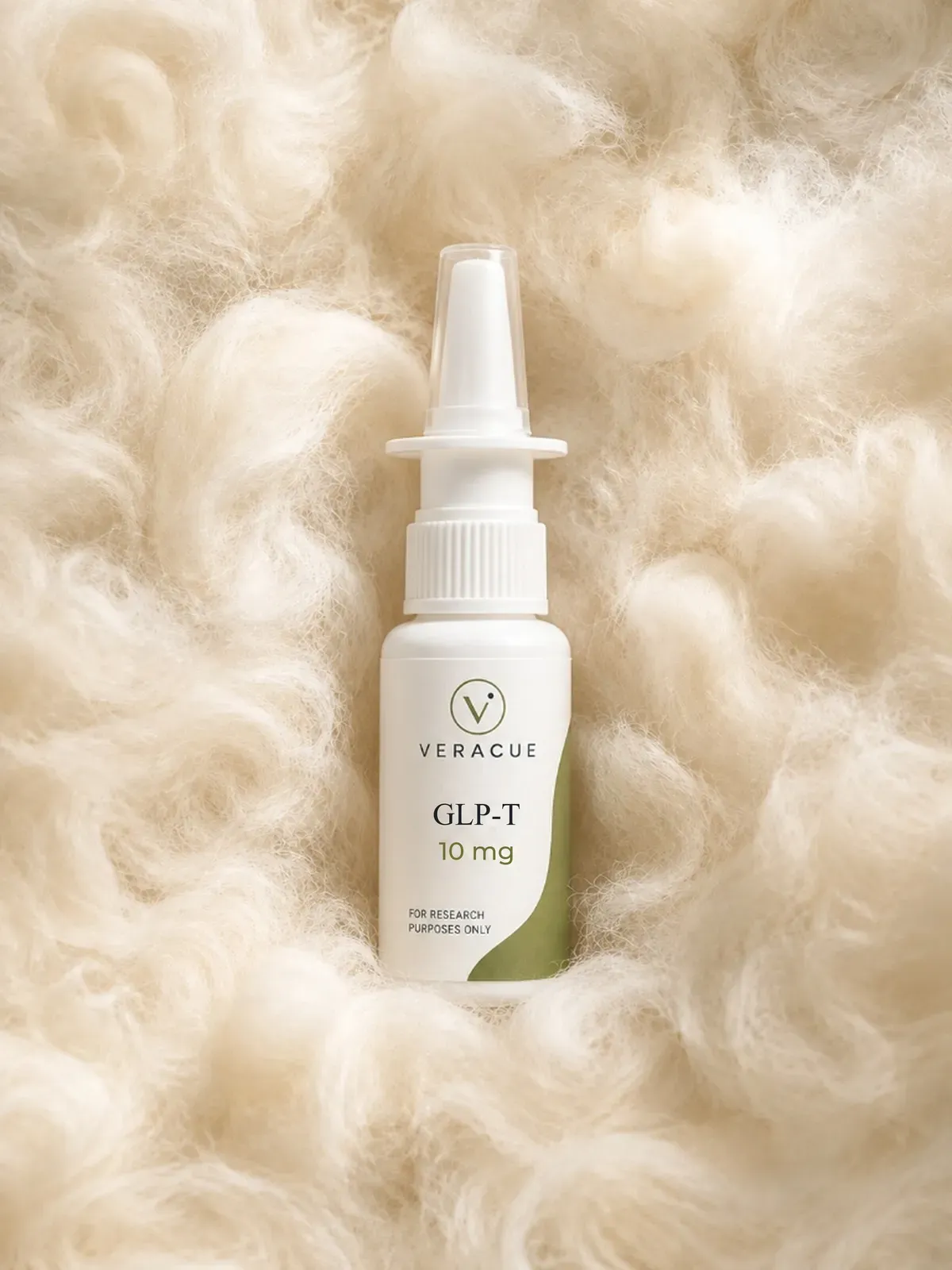
GLP-T Spray pairs a 39-residue peptide, LY3298176 (CAS 2023788-19-2), with a C20 diacid on lysine 20. 10 to 60 mg, research use only, 45 sprays a bottle.

RESEARCH PEPTIDE
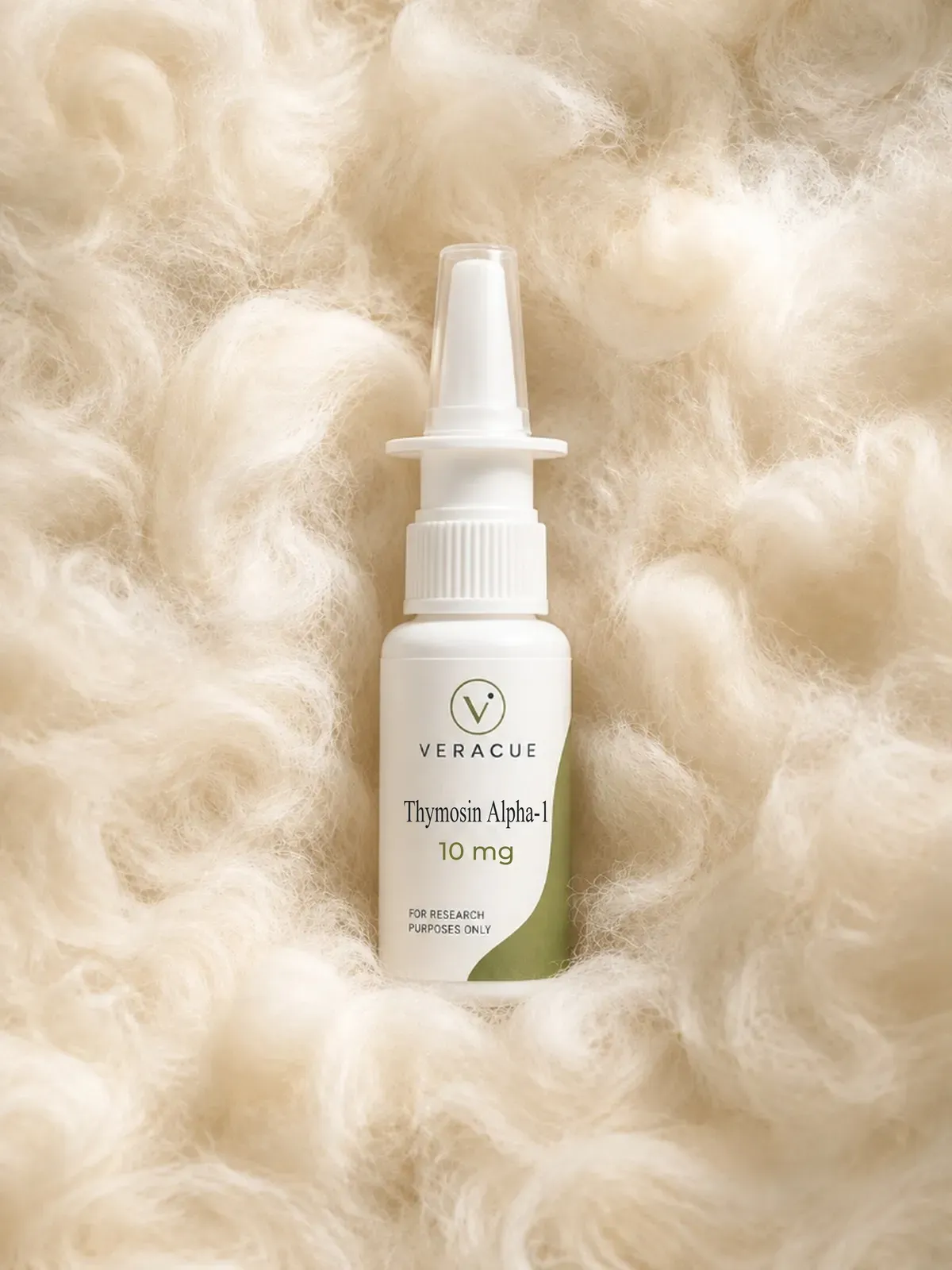
A 28-residue, N-acetylated peptide at 3108.3 g/mol, spray-dispensed in a 10 mg bottle with 45 sprays. Supplied for research use only.

RESEARCH PEPTIDE
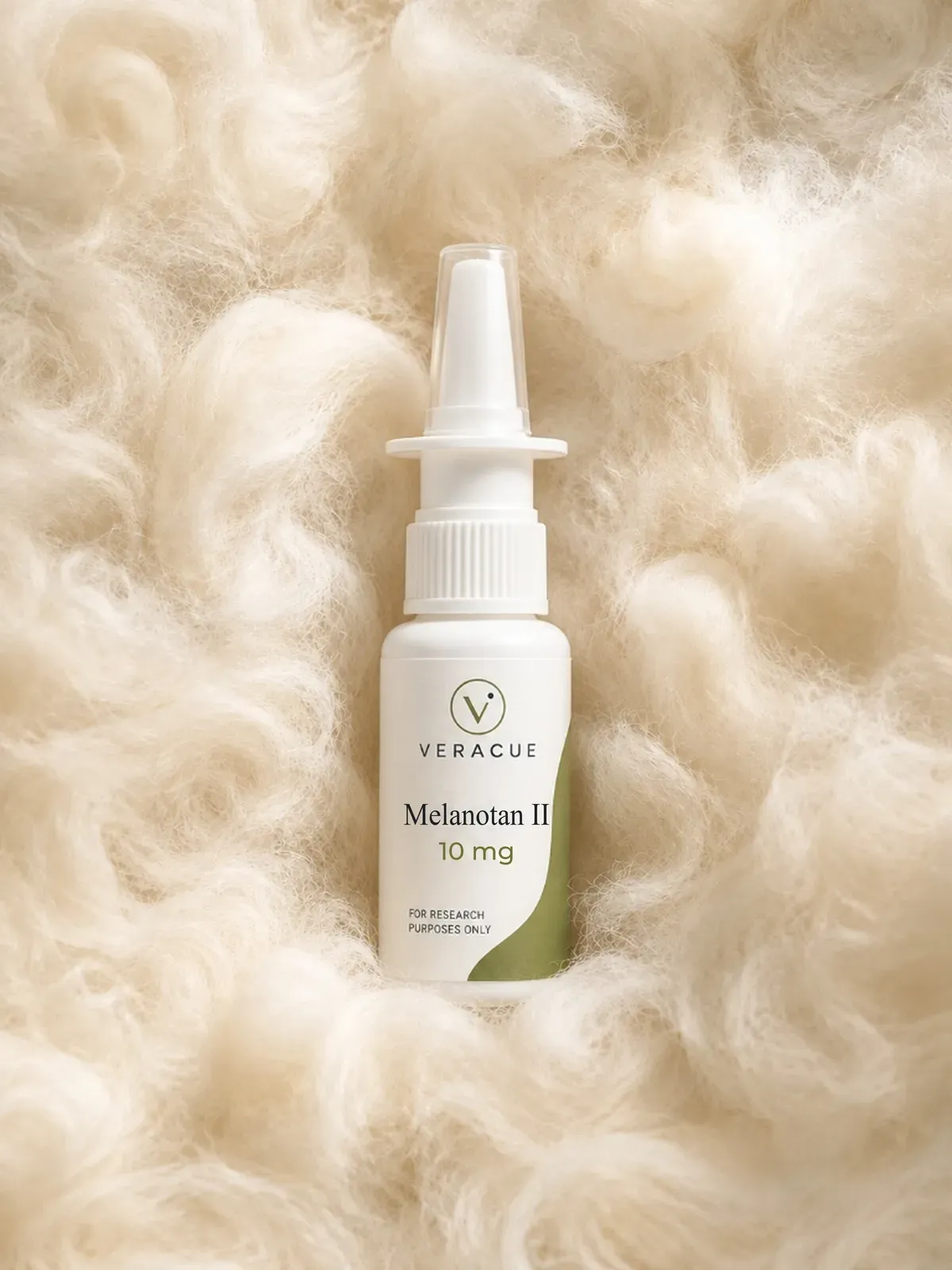
Seven residues, a lactam ring and an amide terminus: Melanotan II, CAS 121062-08-6, in a 10 mg bottle of 45 sprays. Laboratory research only.

RESEARCH PEPTIDE
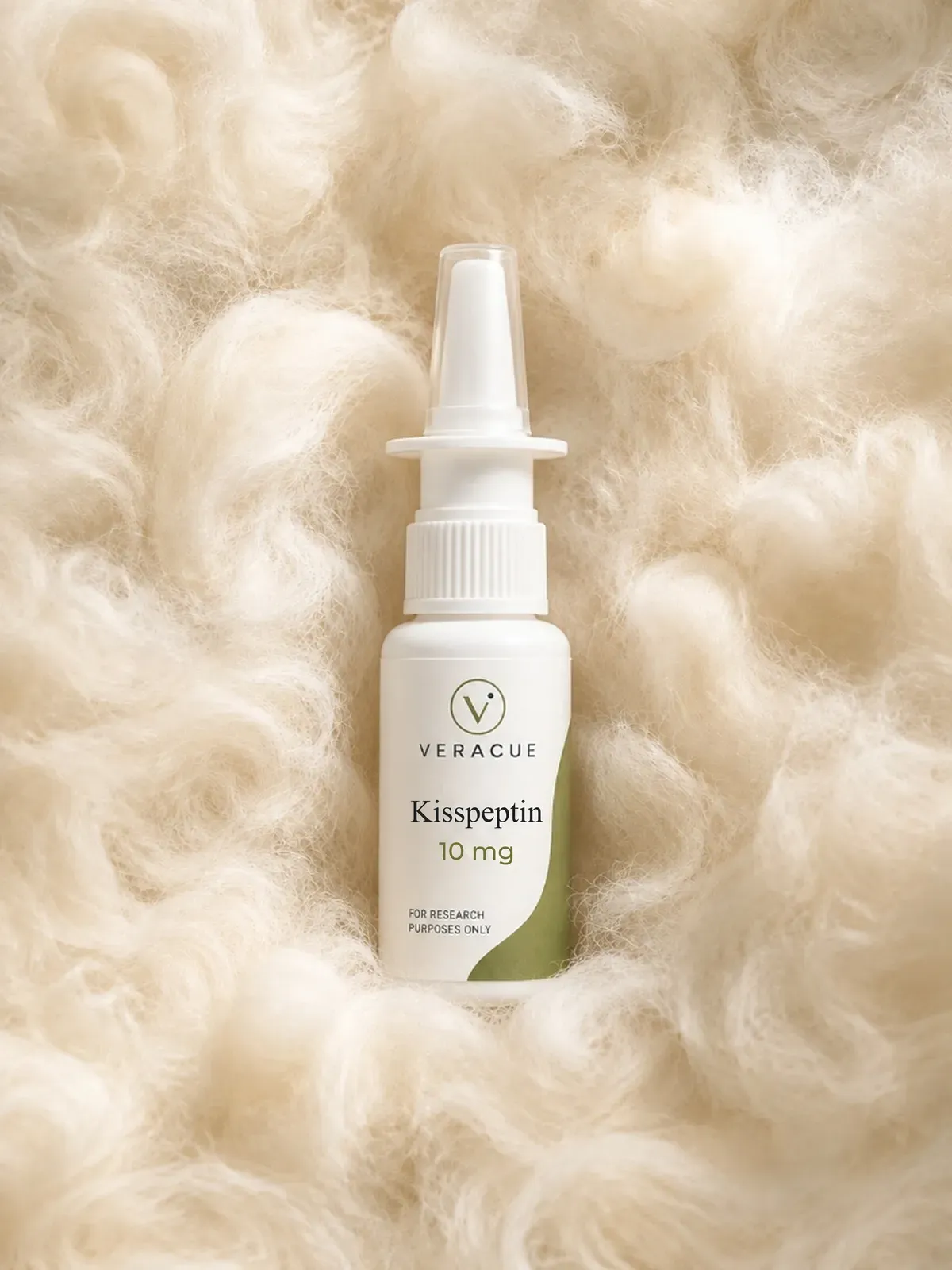
Ten residues, mass 1302.45 g/mol, CAS 374675-21-5: kisspeptin-10 in a 10 mg bottle with 45 sprays, offered for research use only.