NAD+ and AHK-Cu in Metabolic and Longevity Research: A Deep Dive
A research overview of NAD+ and AHK-Cu covering mitochondrial metabolism, sirtuin activation, copper-peptide signaling, and laboratory handling protocols.

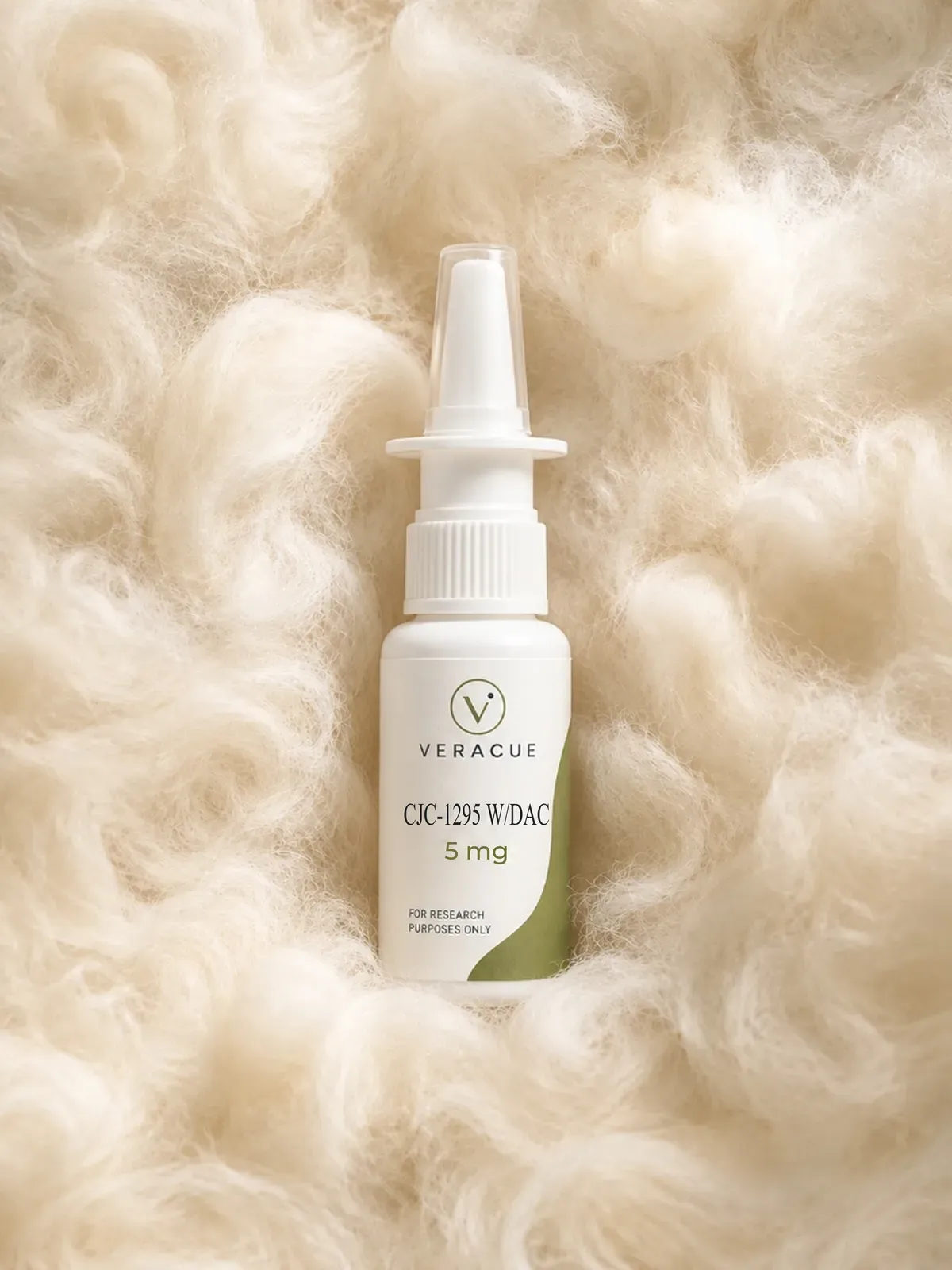
CJC-1295 W/DAC Spray is spray-dispensed CJC-1295 W/DAC, a 30-residue GHRH(1-29) analog: the chain YADAIFTQSYRKVLAQLSARKLLQDILSR, with D-alanine at position 2, followed by a C-terminal lysinamide that carries a 3-maleimidopropionyl group on its side chain. Reference values are formula C165H269N47O46, average mass about 3647.2 g/mol, CAS 446262-90-4 and PubChem CID 91971820. It comes as a 5 mg bottle with 45 sprays per bottle. Veracue supplies it strictly for laboratory research use only.
Ask for the analytical documentation of any lot.
HPLC is the method used to measure purity
Ask for the report for a specific lot through the contact page
Supplied for laboratory research use only
Mass spectrometry is the method used to confirm identity
| Product name | CJC-1295 W/DAC Spray (peptide also written CJC-1295 DAC or DAC:GRF) |
| Format | Spray-dispensed bottle |
| Strength | 5 mg |
| Sprays per bottle | 45 sprays per bottle |
| Peptide length | 30 residues: a 29-residue GHRH(1-29) analog plus a C-terminal lysinamide |
| Core sequence | YADAIFTQSYRKVLAQLSARKLLQDILSR, with D-alanine at position 2 |
| Modification | 3-maleimidopropionyl group (the Drug Affinity Complex) on the side chain of the C-terminal lysine |
| Molecular formula (free peptide) | C165H269N47O46 |
| Molecular weight (average) | About 3647.2 g/mol |
| CAS Registry Number | 446262-90-4 |
| UNII | 62RC32V9N7 |
| PubChem CID | 91971820 |
| Research designation | Research Use Only |
The bottle holds CJC-1295 W/DAC, an analog of growth hormone-releasing hormone assembled from the first 29 amino acids of the native sequence with four substitutions, then extended by a single lysine that carries a maleimide-based group called the Drug Affinity Complex. The extra lysine is why the chain count reads 30 rather than 29.
Bottles come in one 5 mg strength with 45 sprays per bottle. Concentration, fill volume, chemical form and lot results are reported on each lot’s own documentation, which can be requested through the contact page.
Three layers make up the molecule. The first is the native GHRH(1-29) chain. The second is a set of four changes to it: D-alanine in place of L-alanine at position 2, glutamine for asparagine at 8, alanine for glycine at 15 and leucine for methionine at 27. The third is a thirtieth residue, lysine, joined at the C-terminus as an amide and bearing a 3-maleimidopropionyl group on its side-chain amine.
The four substitutions were introduced in the published design of this analog to improve resistance to enzymatic breakdown while keeping receptor binding. The added group, the Drug Affinity Complex, is a maleimide intended to bond covalently with a free thiol on albumin.
| Residue | Count | Positions |
|---|---|---|
| Leucine | 5 | 14, 17, 22, 23, 27 |
| Alanine | 4 | 2 (D-form), 4, 15, 19 |
| Arginine | 3 | 11, 20, 29 |
| Glutamine | 3 | 8, 16, 24 |
| Lysine | 3 | 12, 21, 30 (side chain carries the DAC group) |
| Serine | 3 | 9, 18, 28 |
| Tyrosine | 2 | 1, 10 |
| Aspartic acid | 2 | 3, 25 |
| Isoleucine | 2 | 5, 26 |
| Phenylalanine | 1 | 6 |
| Threonine | 1 | 7 |
| Valine | 1 | 13 |
No cysteine, methionine or tryptophan appears anywhere in the chain. Lysine 30 is counted above, but its side-chain amine is acylated, so the positive charge at neutral pH comes from lysines 12 and 21, the three arginines and the N-terminal amine, set against two aspartates.
| Feature | CJC-1295 W/DAC | CJC-1295 without DAC | Sermorelin | Tesamorelin |
|---|---|---|---|---|
| Chain length | 30 residues | 29 residues | 29 residues | 44 residues |
| Molecular formula | C165H269N47O46 | C152H252N44O42 | C149H246N44O42S | C221H366N72O67S |
| Average mass | About 3647.2 g/mol | About 3367.9 g/mol | About 3357.9 g/mol | About 5135.9 g/mol |
| Residue 2 | D-Ala | D-Ala | L-Ala | L-Ala |
| Added group | Maleimidopropionyl on a C-terminal lysine | None | None | N-terminal trans-3-hexenoyl |
| CAS Registry Number | 446262-90-4 | Separate entries that vary between supplier catalogs | 86168-78-7 | 218949-48-5 (free base) |
The table covers structure and identifiers only and ranks nothing.
CJC-1295 is studied as a GHRH-receptor ligand. That receptor is a G protein-coupled receptor found on pituitary somatotroph cells, and it signals mainly through adenylyl cyclase and cyclic AMP. Naming the exact molecule by sequence or CAS number in methods sections keeps results attributable to the right compound.
Start by matching the lot number on the bottle to the certificate, then read four things in order.
The certificate page explains how to request lot documentation.
A 3647 g/mol peptide with this many basic sites is expected to carry several charges in electrospray, so the spectrum shows a ladder of ions rather than one peak at the neutral mass.
| Charge state | Approximate m/z (average mass) |
|---|---|
| 3+ | 1216.7 |
| 4+ | 912.8 |
| 5+ | 730.4 |
| 6+ | 608.9 |
These values come from the 3647.2 reference mass plus one proton per charge, and instrument-reported monoisotopic values usually read lower. Peaks that fall far from this ladder suggest a different molecule, such as the 3367.9 g/mol unmodified core.
A maleimide reacts with thiols and can also open its ring by taking up water, which adds about 18 Da. Either event leaves the rest of the peptide intact but shifts the measured mass. A clean spectrum at the expected value therefore supports a molecule with its maleimide intact, while shifted companion peaks are a reasonable question to put to the laboratory.
D-alanine and L-alanine have identical mass, so a mass spectrum cannot tell them apart. Chiral amino acid analysis or a comparison with a reference standard is what supports the D form.
A free peptide and its salt forms share one sequence but not one formula weight. Without the stated form, a mass-based calculation can carry a silent error.
Contact the Veracue team about the documentation available for a specific lot.

CJC-1295 W/DAC Spray is sold to qualified researchers and institutions for laboratory research and analytical work. It is not for human or veterinary use, it must not be ingested, injected or administered in any form, and it is not a drug, supplement, cosmetic or food. The listing carries molecular and analytical reference information only, and Veracue provides no dosing, administration or usage guidance of any kind. Buyers are responsible for handling the material in line with applicable law and their institution’s policies. Sitewide policies are set out in the Medical Disclaimer and the Terms and Conditions.

RESEARCH PEPTIDE
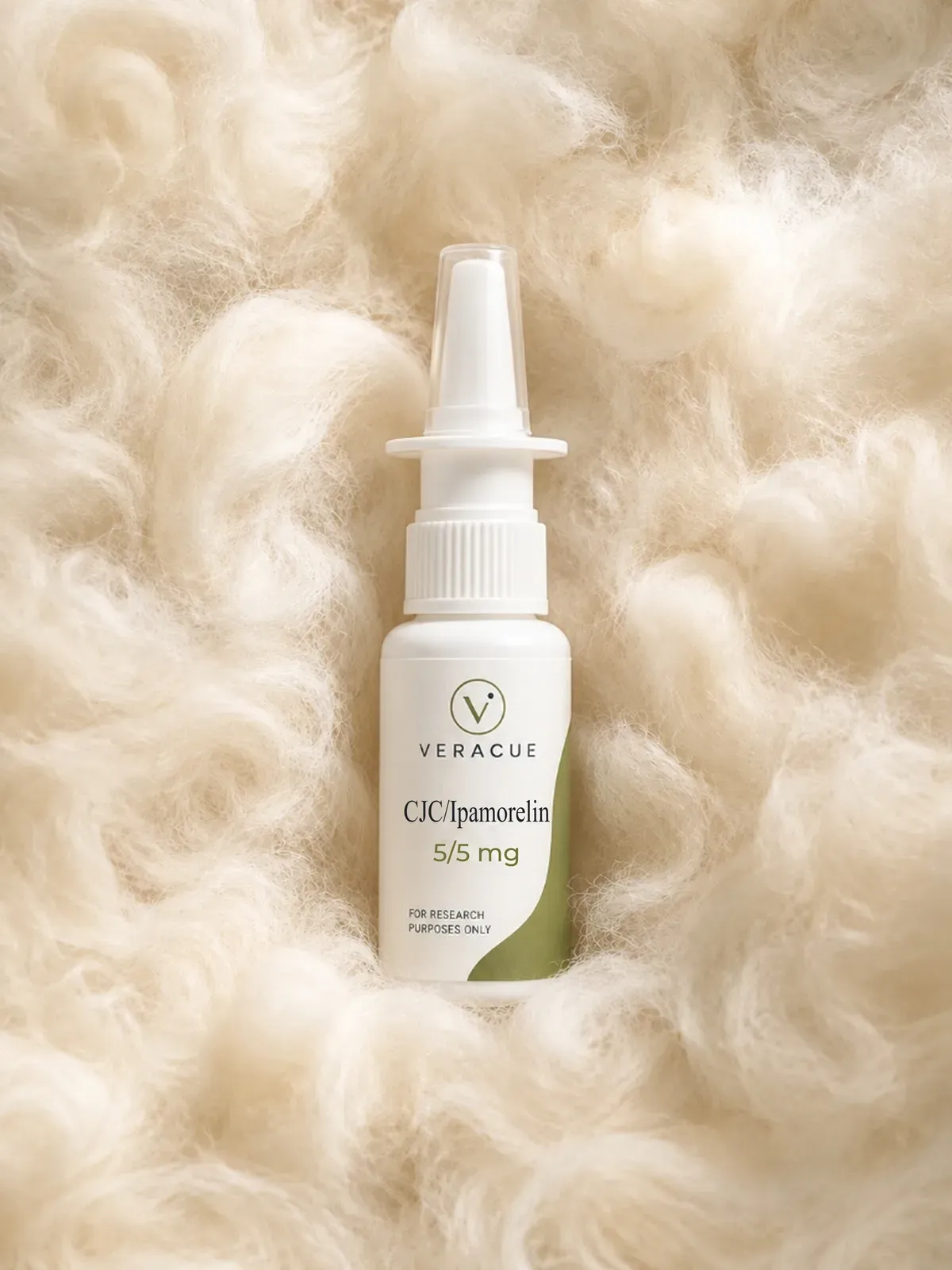
Spray bottle pairing a 29-residue GHRH analog with the pentapeptide Ipamorelin, 5 mg of each and 45 sprays per bottle. Laboratory research use only.

RESEARCH PEPTIDE
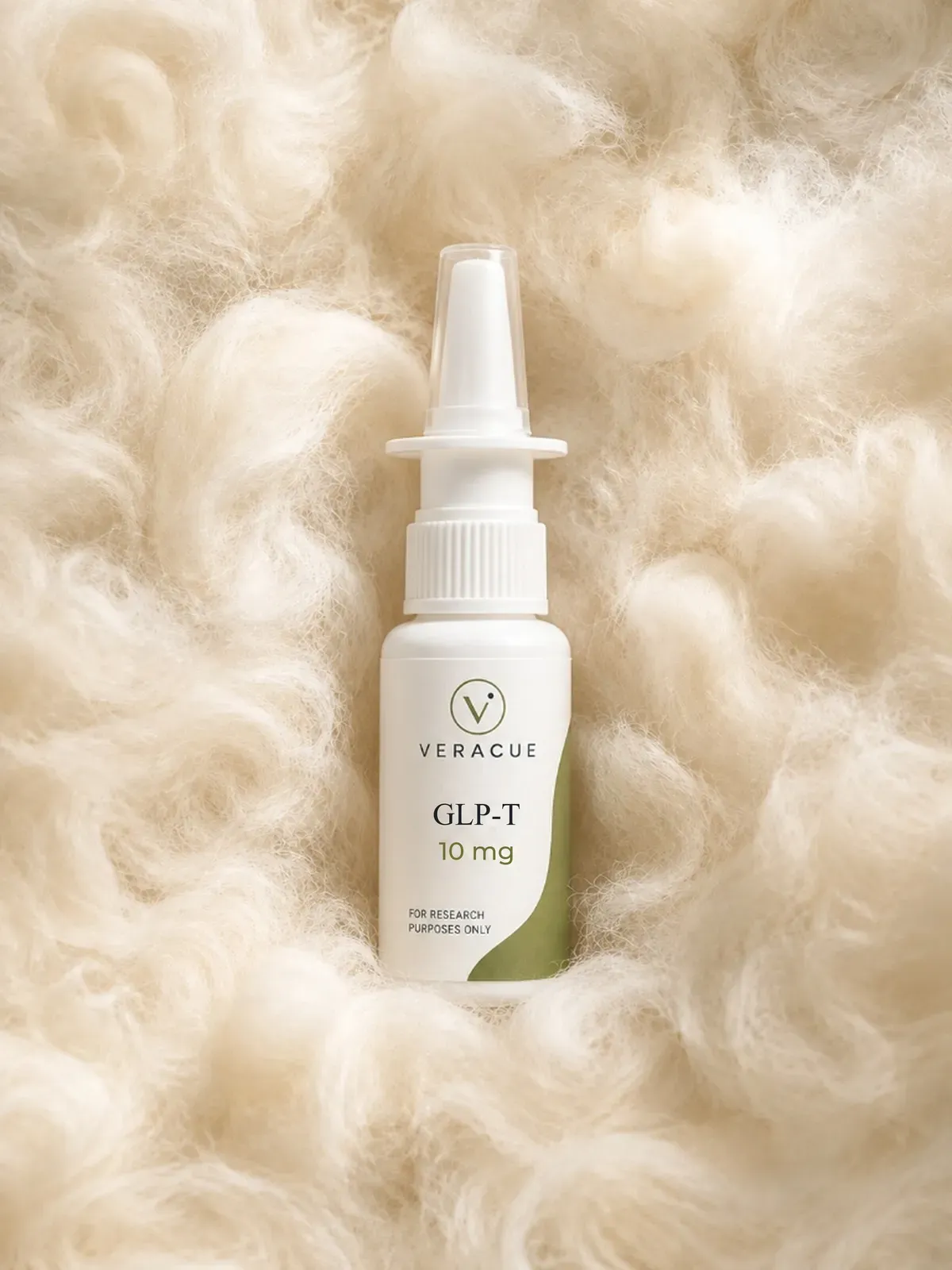
GLP-T Spray pairs a 39-residue peptide, LY3298176 (CAS 2023788-19-2), with a C20 diacid on lysine 20. 10 to 60 mg, research use only, 45 sprays a bottle.

RESEARCH PEPTIDE
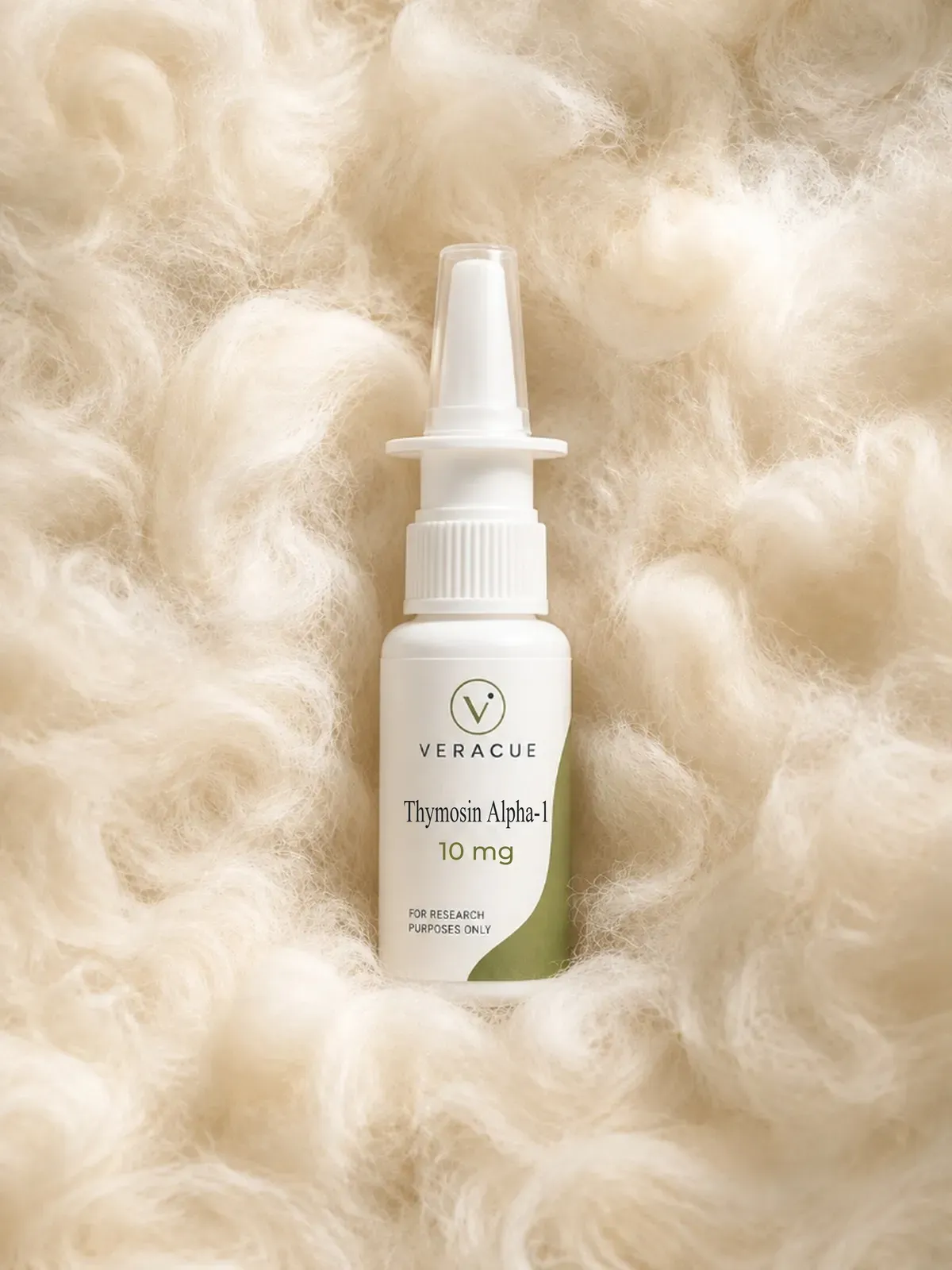
A 28-residue, N-acetylated peptide at 3108.3 g/mol, spray-dispensed in a 10 mg bottle with 45 sprays. Supplied for research use only.

RESEARCH PEPTIDE
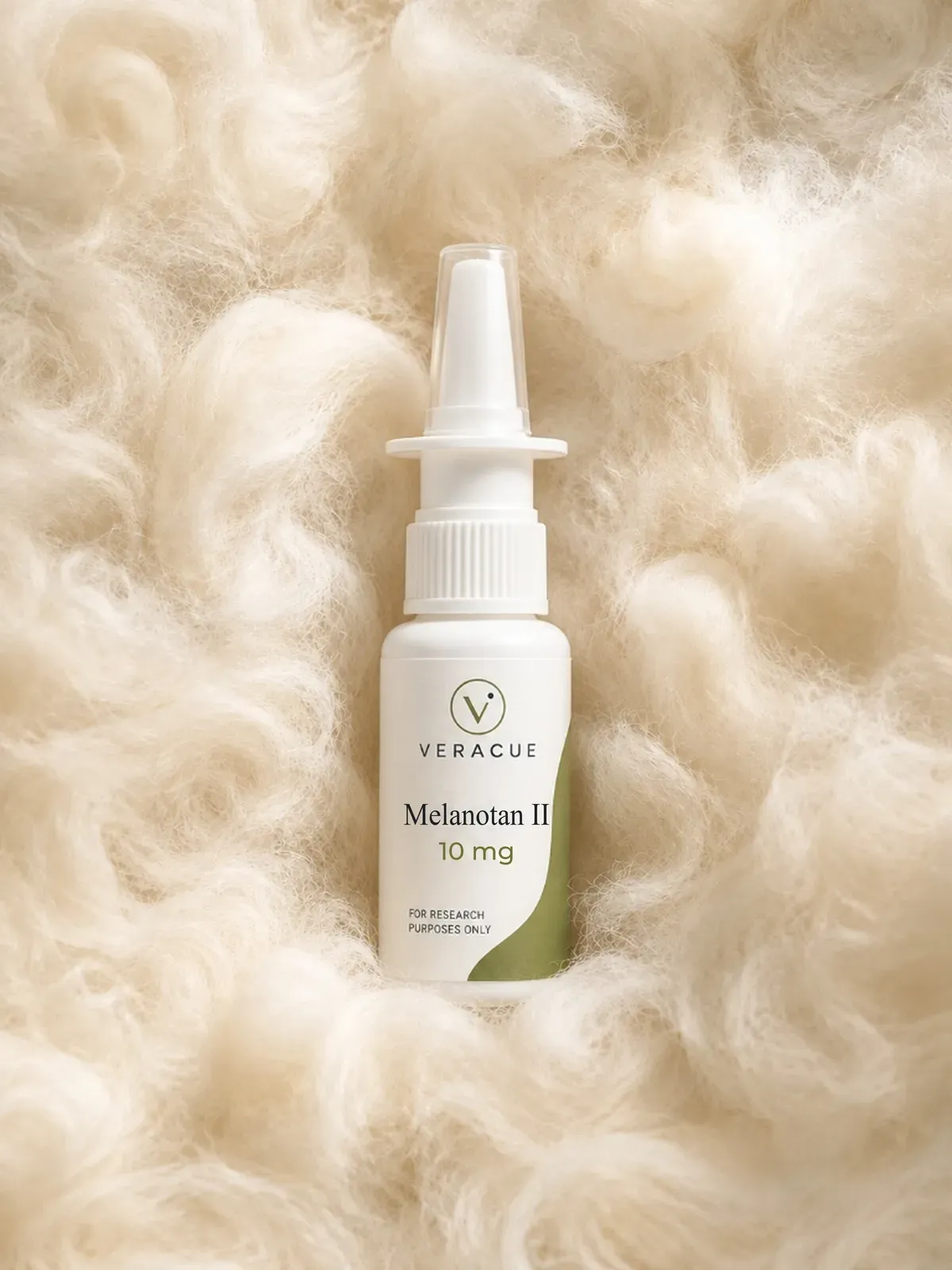
Seven residues, a lactam ring and an amide terminus: Melanotan II, CAS 121062-08-6, in a 10 mg bottle of 45 sprays. Laboratory research only.