NAD+ and AHK-Cu in Metabolic and Longevity Research: A Deep Dive
A research overview of NAD+ and AHK-Cu covering mitochondrial metabolism, sirtuin activation, copper-peptide signaling, and laboratory handling protocols.

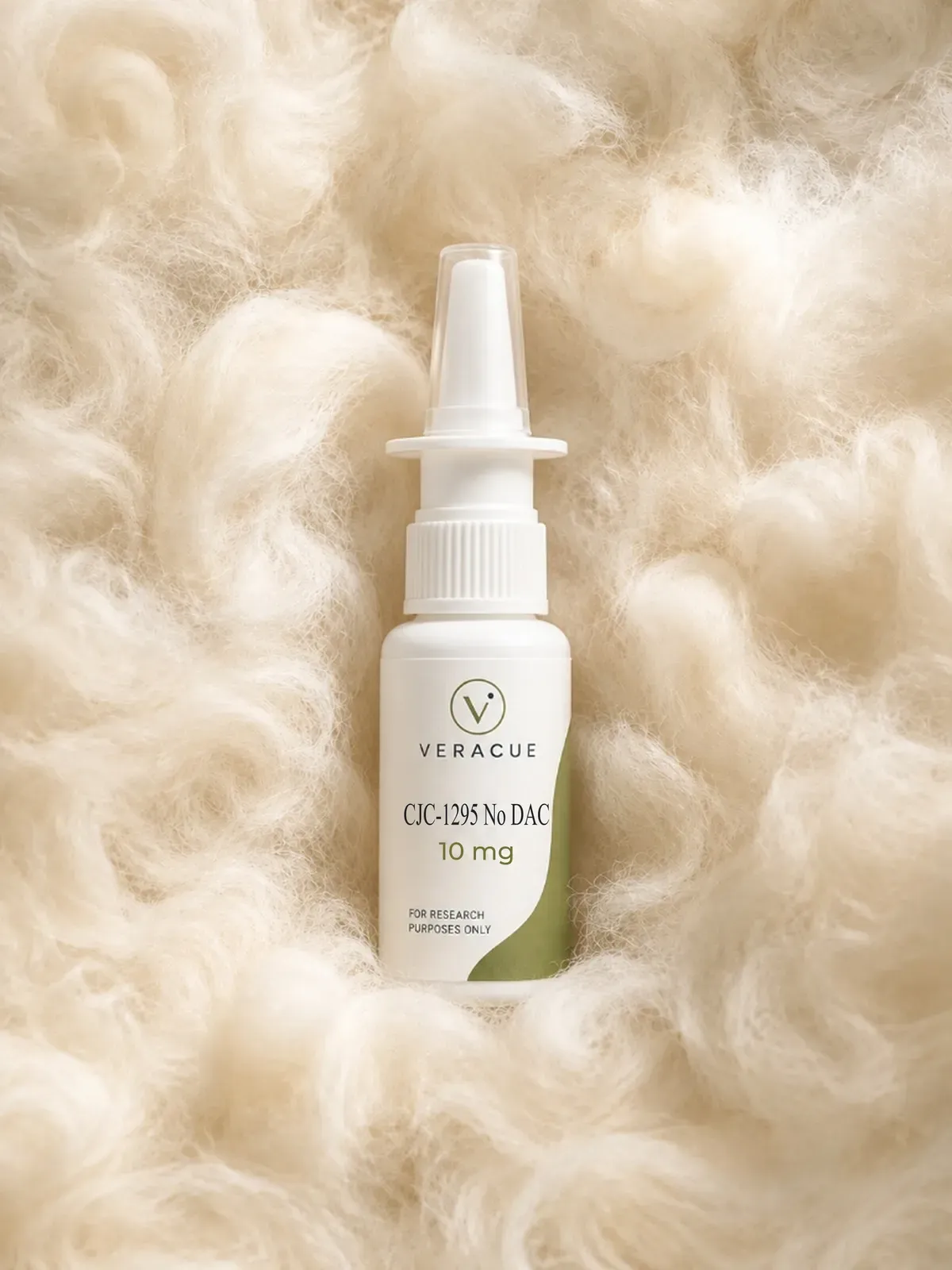
CJC-1295 No DAC Spray is a spray-dispensed form of modified GRF(1-29), a tetrasubstituted analog of the N-terminal 29-residue fragment of GHRH that ends in a C-terminal amide. Its changes from the native fragment are D-Ala2, Gln8, Ala15 and Leu27. Free-peptide reference values are C152H252N44O42 and an average mass near 3367.9 g/mol, with CAS 863288-34-0 and 446036-97-1 both appearing in supplier listings. No lysine-linked albumin-binding group is present, and the mass sits roughly 10 Da above Sermorelin. Supplied as a 10 mg bottle with 45 sprays per bottle, strictly for laboratory research use only.
Ask for the analytical documentation of any lot.
HPLC is the method used to measure purity
Ask for the report for a specific lot through the contact page
Supplied for laboratory research use only
Mass spectrometry is the method used to confirm identity
| Product name | CJC-1295 No DAC Spray (the peptide is also called Mod GRF 1-29 or modified GRF(1-29)) |
| Packaging | Spray-dispensed bottle, 45 sprays per bottle |
| Size offered | 10 mg |
| Peptide | Linear 29-residue analog of GHRH(1-29), C-terminal amide |
| Sequence (one-letter code) | YADAIFTQSYRKVLAQLSARKLLQDILSR-NH2 (the alanine at position 2 is the D isomer) |
| Sequence (three-letter code) | Tyr-D-Ala-Asp-Ala-Ile-Phe-Thr-Gln-Ser-Tyr-Arg-Lys-Val-Leu-Ala-Gln-Leu-Ser-Ala-Arg-Lys-Leu-Leu-Gln-Asp-Ile-Leu-Ser-Arg-NH2 |
| Edits to native GHRH(1-29) | D-Ala2, Gln8, Ala15, Leu27 |
| Molecular formula (free peptide) | C152H252N44O42 |
| Average molecular weight (free peptide) | About 3367.9 g/mol |
| CAS Registry Number | 863288-34-0 (446036-97-1 appears in other listings of the same peptide) |
| Research designation | Research Use Only |
The identity values describe the free peptide as a reference structure and are not a lot result. Concentration, fill volume, carrier, salt form, purity and storage conditions belong to each lot’s own paperwork, and the contact page is the place to ask for it.
The active ingredient is a synthetic chain of 29 amino acids that follows the first 29 positions of growth hormone-releasing hormone (GHRH) and is capped with an amide. Four positions were edited, which is why the same molecule turns up as tetrasubstituted GRF(1-29), modified GRF(1-29), Mod GRF 1-29, CJC-1295 without DAC and CJC-1295 W/O DAC. Veracue supplies it in a spray-dispensed bottle of 45 sprays, solely for research use.
Nothing is attached beyond the 29 residues. Where the name says "No DAC", it points to the absence of the Drug Affinity Complex, the albumin-directed group that distinguishes a related compound.
CJC-1295 with DAC keeps the same four edits and then extends the chain by one lysine whose side chain bears a maleimidopropionyl unit. That extension changes the formula to C165H269N47O46, moves the average mass to roughly 3647 g/mol and gives the compound a CAS number of its own, 446262-90-4, and separate lot paperwork.
Sermorelin is the unedited GHRH(1-29) amide: L-alanine at position 2, asparagine at 8, glycine at 15 and methionine at 27, formula C149H246N44O42S, CAS 86168-78-7. Tesamorelin runs to 44 residues and has a hexenoyl cap at the N-terminus, and Ipamorelin is a short pentapeptide acting at a different receptor. None of them can stand in for this peptide in a methods section.
This peptide is a ligand of the GHRH receptor, a G protein-coupled receptor found on pituitary somatotroph cells. Its signaling runs chiefly via adenylyl cyclase and cAMP, the route reported for Sermorelin and Tesamorelin as well. Ipamorelin belongs to a different arm of growth hormone research, because it acts at the ghrelin (GHS) receptor, whose signaling runs through phospholipase C and calcium.
Choosing a comparator therefore starts with the pathway being tested. GHRH-receptor questions call for GHRH-family ligands, and ghrelin-receptor questions call for secretagogues, with each molecule named precisely in the methods.
Counting residues gives five leucines, four alanines, three each of glutamine, serine and arginine, two each of tyrosine, lysine, aspartic acid and isoleucine, and one each of phenylalanine, threonine and valine. There is no cysteine, glycine, asparagine, methionine, tryptophan or proline in the chain, so no disulfide bond is possible and the usual oxidation-prone residues are absent.
Strip the DAC lysine from the with-DAC compound and the 29-residue chain left behind is this molecule. The mass accounts for the difference exactly: the added lysine and its maleimidopropionyl group contribute C13H17N3O4, about 279 Da. A mass reading is therefore a decisive test between the two, far easier to read than any difference in chromatographic behavior.
Against Sermorelin the gap is small. The three added CH2 groups raise the mass, and the lost sulfur lowers it, so the net result is about 10 Da, from 3357.9 to 3367.9 g/mol. The two share the same length and agree at 25 of 29 positions, and a D-Ala2 swap alone would leave the mass unchanged, so mass evidence needs to be read alongside sequence evidence.
The code CJC-1295 first belonged to the albumin-binding compound, and later usage added "No DAC" or "without DAC" for the shorter chain without always applying the split consistently. Look in the methods for the structure, the formula or a CAS number to learn which molecule was used, because findings from one do not automatically carry over to the other. The text above is molecular reference material only, and Veracue provides no dosing, administration or usage guidance of any kind.

For a peptide near 3.4 kDa, electrospray analysis normally produces several multiply charged peaks rather than one peak at the neutral mass. These are the calculated average-mass values for the ions most often inspected:
Sermorelin and this peptide fall about 2.5 units apart at 4+, so a calibrated instrument is needed to separate them, while the with-DAC compound is unmistakable. Adducts and salt forms move observed peaks, so a report should convert observed values to a neutral mass and state the form used for the expected value. A matching mass supports identity but says nothing about purity.
A certificate speaks for the lot it names and for nothing else, so start by matching its lot number to the bottle in hand. For a spray-dispensed product, items such as concentration, fill volume and carrier are lot-specific matters and are found on that lot’s own documentation rather than on this listing. The 45-sprays-per-bottle figure is a packaging count and not a statement about peptide content.
Paperwork for your lot can be requested through the certificate page. A complete report names the chemical form and gives observed against expected mass, the purity figure from HPLC with its chromatogram, plus the date of testing and the laboratory behind it.
No. HPLC reports how much of the detected material elutes as the main peak, and it would score a clean sample of a related peptide just as well. Identity comes from the mass result and, where needed, fragment data covering positions 2, 8, 15 and 27.
Nothing shows up in the mass, because D-Ala and L-Ala have identical atoms. Confirming the D configuration at position 2 depends on how the chain was built or on chiral amino acid analysis, so ask what evidence a lot offers on that point.
Save the listing text from the day of purchase, the lot certificate, the chemical form it names and the measured mass, with a note of when the bottle arrived and which experiments drew on it. That record makes later comparisons between lots straightforward.
Write to the Veracue team about documentation, or open the published certificates.
CJC-1295 No DAC Spray is a laboratory reagent. It is sold for research and analysis alone, is not a medicine, supplement, cosmetic or food, and is not meant for people or animals in any way. Veracue provides no dosing, administration or usage guidance of any kind. Orders are for qualified researchers and institutions, who remain responsible for lawful handling. Sitewide terms are set out in the Medical Disclaimer and the Terms and Conditions.
RESEARCH PEPTIDE
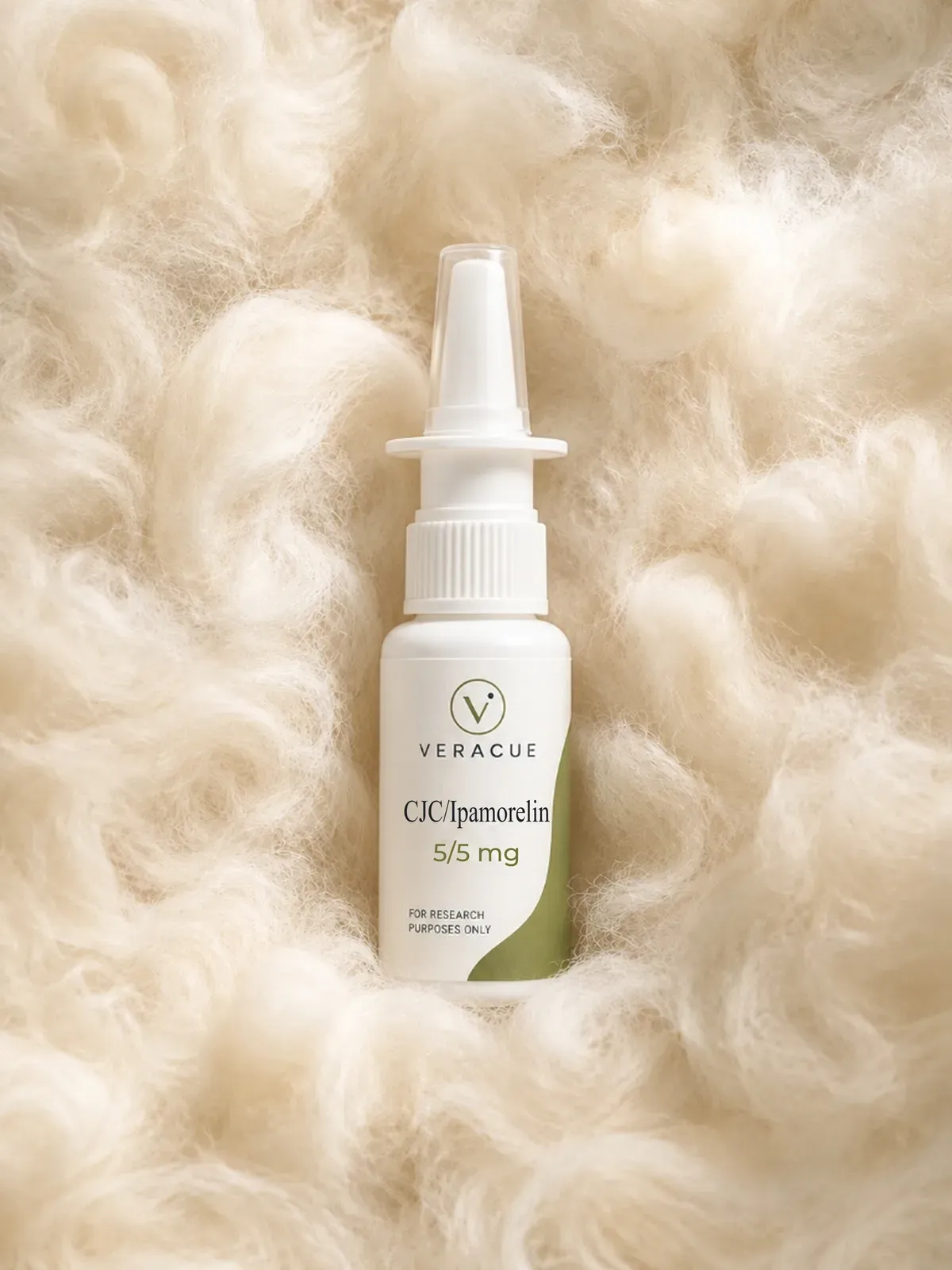
Spray bottle pairing a 29-residue GHRH analog with the pentapeptide Ipamorelin, 5 mg of each and 45 sprays per bottle. Laboratory research use only.

RESEARCH PEPTIDE
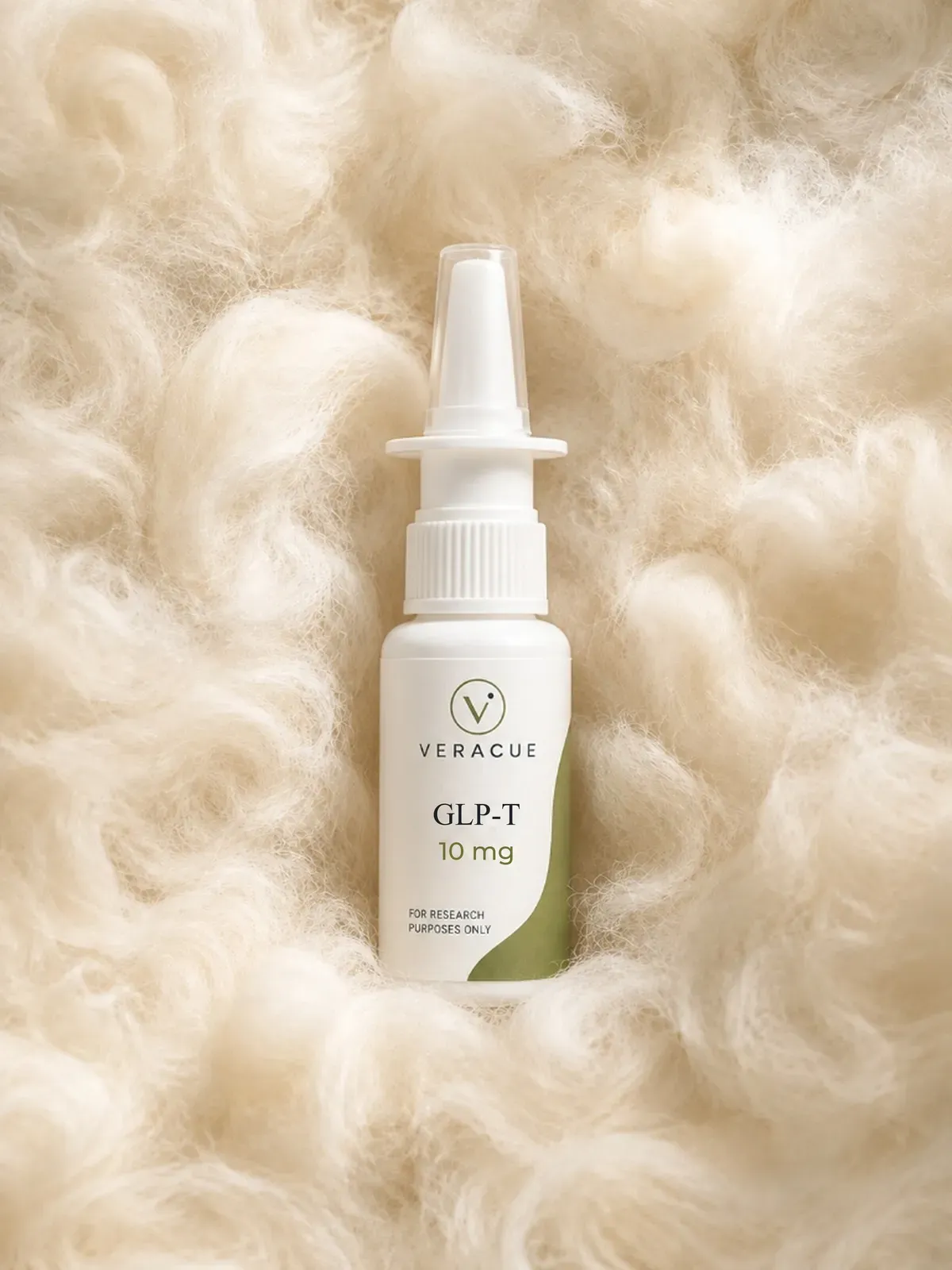
GLP-T Spray pairs a 39-residue peptide, LY3298176 (CAS 2023788-19-2), with a C20 diacid on lysine 20. 10 to 60 mg, research use only, 45 sprays a bottle.

RESEARCH PEPTIDE
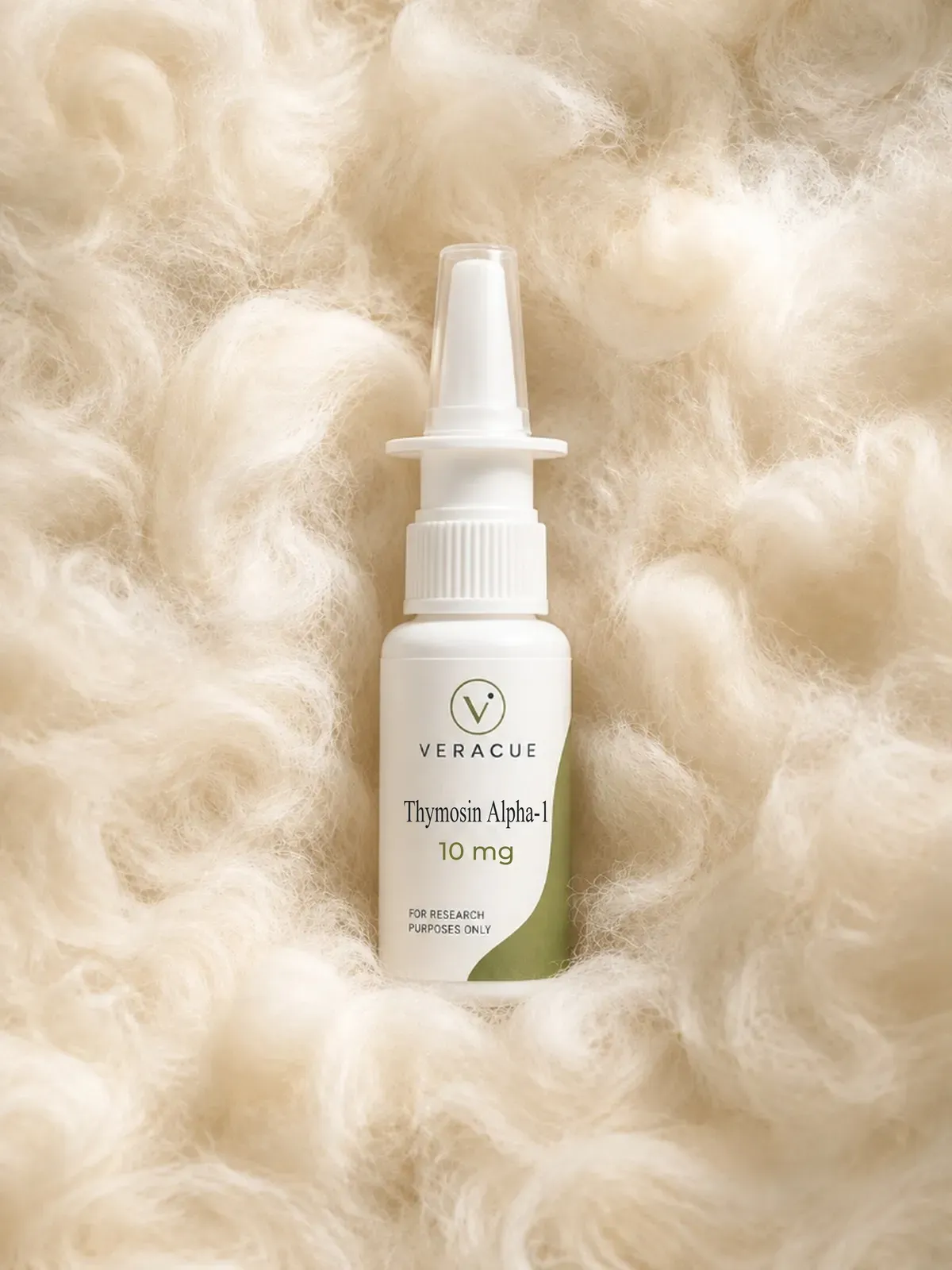
A 28-residue, N-acetylated peptide at 3108.3 g/mol, spray-dispensed in a 10 mg bottle with 45 sprays. Supplied for research use only.

RESEARCH PEPTIDE
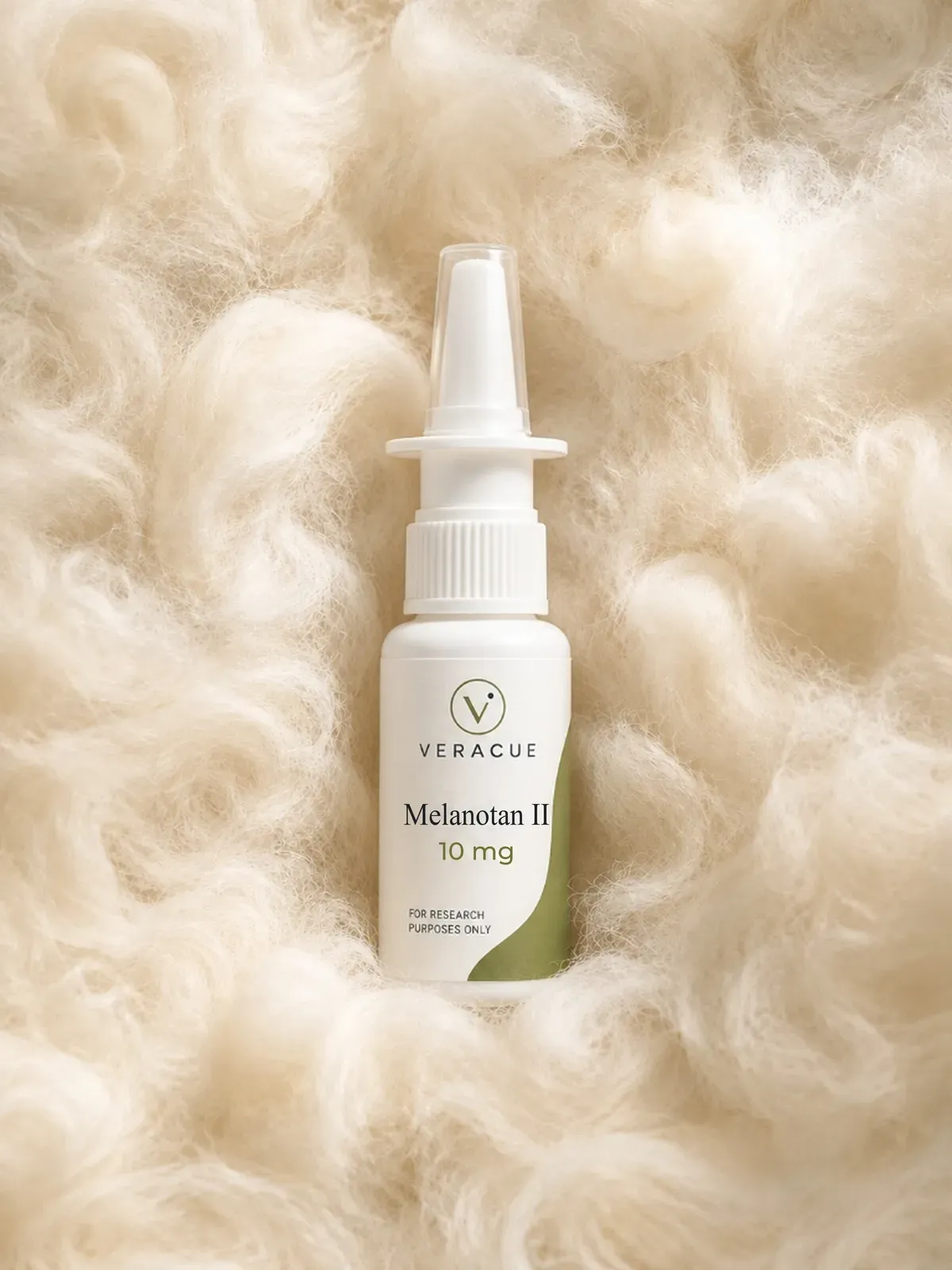
Seven residues, a lactam ring and an amide terminus: Melanotan II, CAS 121062-08-6, in a 10 mg bottle of 45 sprays. Laboratory research only.