NAD+ and AHK-Cu in Metabolic and Longevity Research: A Deep Dive
A research overview of NAD+ and AHK-Cu covering mitochondrial metabolism, sirtuin activation, copper-peptide signaling, and laboratory handling protocols.

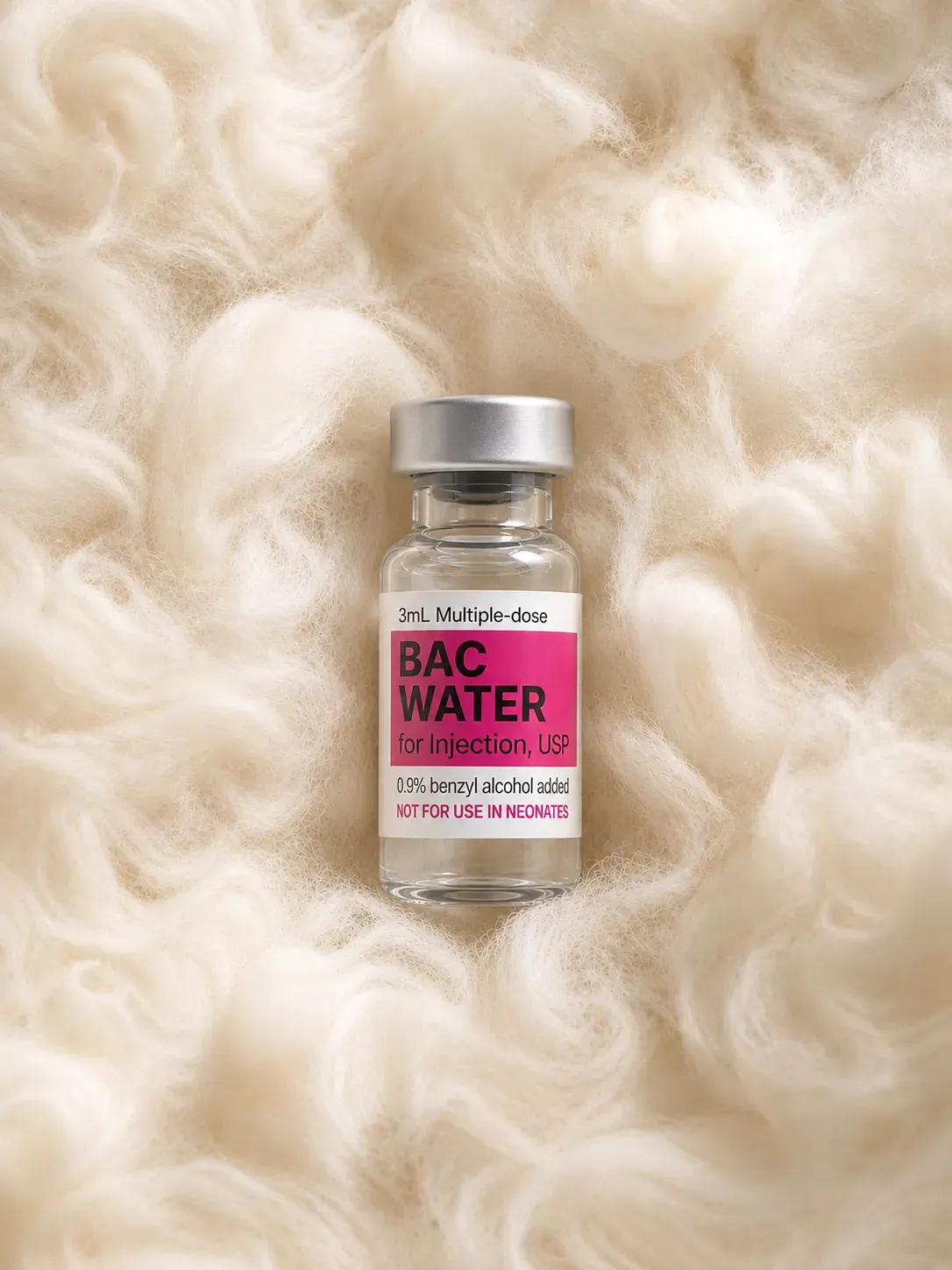
Bacteriostatic Water, often shortened to BAC water, is water with benzyl alcohol added as an antimicrobial preservative that helps limit bacterial growth once a container has been opened. The label shown on both sizes names benzyl alcohol as the only added ingredient and gives it as 0.9%, with no sodium chloride or active compound listed, which separates it from saline and from preservative-free sterile water. Veracue supplies it in 3 mL and 10 mL clear vials as a laboratory diluent for bench work, strictly for research use only.
Ask for the analytical documentation of any lot.
HPLC is the method used to measure purity
Ask for the report for a specific lot through the contact page
Supplied for laboratory research use only
Mass spectrometry is the method used to confirm identity
Bacteriostatic Water, usually shortened to BAC water, is water that has an antimicrobial preservative added. On the labels of Veracue’s containers the preservative is benzyl alcohol, printed as 0.9% benzyl alcohol added. Its job is to help limit bacterial growth in the container after it has been opened. It does not sterilize the liquid, and it does not make an open container contamination-proof.
In the laboratory it serves as a plain aqueous diluent, the liquid in which a research material is taken up or thinned at the bench. That describes what a diluent is in general terms and is not a method, and the listing gives no volumes, ratios or procedures. Veracue supplies it for research use only.
| Product name | Bacteriostatic Water (also written BAC water) |
| Product type | Aqueous laboratory diluent; not a peptide, not an active compound and not a blend |
| Composition | Water with benzyl alcohol added as an antimicrobial preservative |
| Preservative as labeled | Benzyl alcohol, printed as 0.9% on the label shown in the product photographs |
| Benzyl alcohol reference identifiers | Formula C7H8O, CAS 100-51-6 |
| Sizes offered | 3 mL and 10 mL |
| Container as photographed | Clear vial with a silver-colored cap and a white label |
| Label text shown | BAC WATER, the volume (3mL or 10mL) and 0.9% benzyl alcohol added |
| Research designation | Research Use Only |
Composition on this page is read from the label shown in the product photographs. The container you receive carries its own label, lot number and dates, and those, not this listing, are the record for that container. Questions about a specific lot can go through the contact page.
No. Bacteriostatic describes an agent that inhibits bacterial growth, while bactericidal describes one that kills bacteria. Microbiologists separate the two with methods such as the MBC to MIC ratio and time-kill curves, and the result depends on the organism, the medium and the conditions of the test. The word is a useful description of intended role, not a guarantee of protection against every organism.
Sterility describes a liquid that is free of viable microorganisms as supplied, and it needs its own testing and documentation. A preservative only acts against growth after contamination has occurred. The two claims rest on separate evidence, so neither one proves the other.
Four liquids are often confused because their names overlap. The table compares composition only.
| Liquid | What it contains | Preservative | Read on the label |
|---|---|---|---|
| Bacteriostatic water | Water with an added antimicrobial preservative | Yes, named on the label (benzyl alcohol on this product) | Preservative name and proportion |
| Sterile water (also sold as sterile water for injection) | Water only | None added | A sterility statement and the container type |
| Saline | Water with dissolved sodium chloride, commonly 0.9% | None unless stated | Sodium chloride in the ingredient line |
| Bacteriostatic saline | Sodium chloride and benzyl alcohol in water | Yes | Both ingredients on the label |
Research-grade products can differ from pharmaceutical products that share a name, so a comparison like this holds only after the label of each item has been read.
BAC water is a market name, not a specification. Labeled bacteriostatic waters exist with benzyl alcohol at 0.9% and at 1.1%, so the name alone cannot tell a researcher the proportion. The Veracue labels shown in the photographs state 0.9% benzyl alcohol added, and the label on the container in hand is the figure to record.
Benzyl alcohol, C7H8O under CAS 100-51-6, is an added component of the liquid. A methods record should therefore name the diluent and its preservative together, because a preservative can interact with other materials in an experiment.
A diluent is the liquid in which a research material is taken up or thinned at the bench so that it can be handled in a method. Choosing one is a decision for the researcher: whether a preserved or a preservative-free liquid suits the assay, what the liquid contains and which lot was used. This listing supplies identity and labeling information only, and Veracue provides no dosing, administration or usage guidance of any kind, and no volumes, ratios or procedures.
This listing states the product name, the two sizes and the composition printed on the label shown in the photographs. It does not state a sterility result, a pharmacopeial grade, a third-party test result, a storage temperature or a shelf life, and it does not present a certificate of analysis for this product. Where documentation exists for a lot, it is tied to that lot’s number, and questions about it can go through the contact page.
A diluent has no purity peak or mass to read, so verification rests on what is printed on the container and what can be seen in it. These checks involve no test results, only a comparison of the container against the order and the record.
| Check | What to look for | What it tells you |
|---|---|---|
| Product name | Bacteriostatic water or BAC water, matching the order | The container is the product that was ordered |
| Preservative | The preservative named, with its proportion | The composition, which the product name alone does not give |
| Volume | 3 mL or 10 mL as stated on the label | The size received matches the size ordered |
| Lot number | A lot number printed on the container | The link between this container and any batch records |
| Expiration date | A date printed on the label, if the label gives one | The limit the label sets for that container |
| Storage statement | Any storage wording printed on the label | The only storage guidance that applies to that container |
| Appearance | A clear liquid with no visible particles, cloudiness or discoloration, and an intact cap | Visible signs that a container should be set aside and reported |
Any document offered for a lot should name the product, show the same lot number that is printed on your container, and identify the laboratory, the date and the tests that were run. A document for a different lot, or one with no lot number, does not describe the container in hand. Check the certificate page for a report that matches your lot number.
No. Appearance shows only that nothing is visible. Sterility is a separate property that needs its own statement and documentation, and a visual check cannot confirm it.
No. A lot number is a pointer. It becomes useful when the supplier can connect it to batch records, so record it for every container and keep any matching document alongside it.
For each container, keep a snapshot of the listing, the volume, the preservative and proportion read from the label, the lot number, the expiration date if one is printed, the date received and the experiments that used it. Consistent records make container-to-container differences visible and let an unexpected result be traced back.
Ask the Veracue team what documentation exists for a lot, or review the certificate library.

Bacteriostatic Water is supplied for laboratory research use only, as a diluent for bench work. It is not intended for human or veterinary use, or for ingestion, injection or any form of administration, and it is not a drug, dietary supplement, cosmetic or food. This page contains no dosing, administration or usage guidance of any kind. Purchasers must be qualified researchers or institutions and must use the material in line with all applicable laws. See the Medical Disclaimer and the Terms and Conditions for sitewide policies.
The product photographs show each container as labeled. Any intended-use or grade wording printed on a pictured label does not change the research-use-only status of this listing, and Veracue makes no sterility, pharmacopeial or testing claim for it.

RESEARCH PEPTIDE
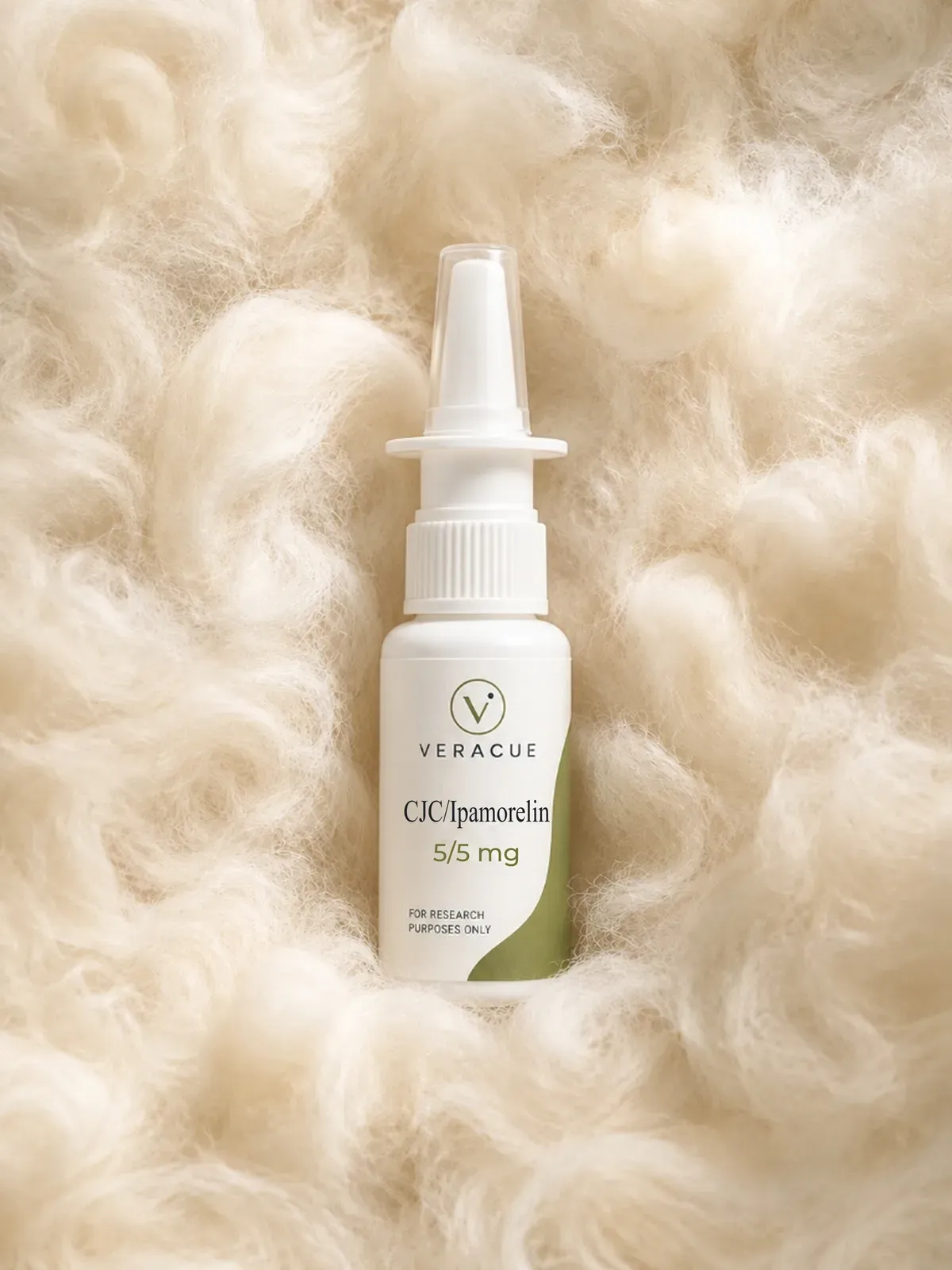
Spray bottle pairing a 29-residue GHRH analog with the pentapeptide Ipamorelin, 5 mg of each and 45 sprays per bottle. Laboratory research use only.

RESEARCH PEPTIDE
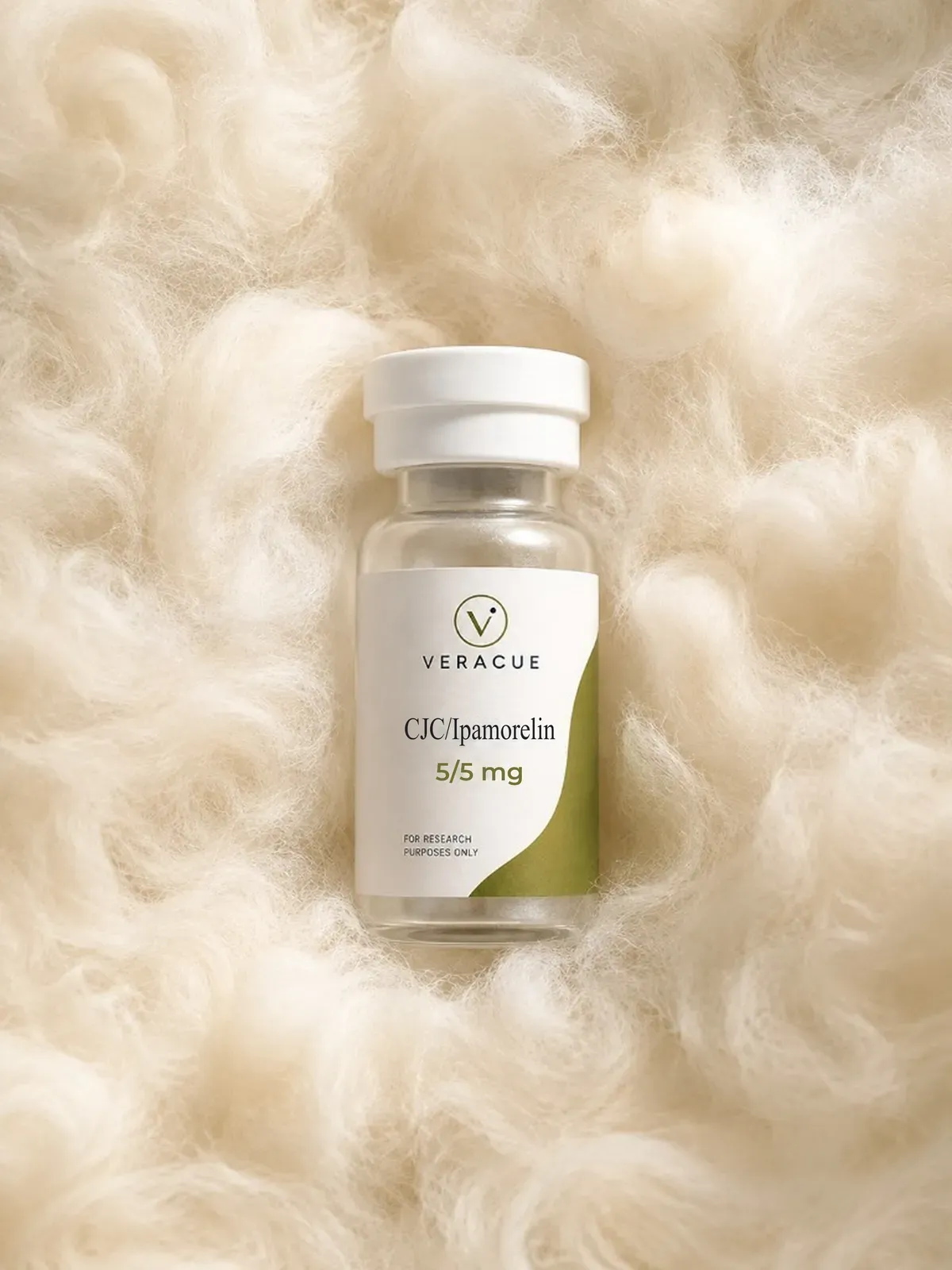
Mod GRF 1-29 plus Ipamorelin in a 5/5 mg vial, for research use only. The two peptides differ by about 2656 Da, so a mass reading separates them.

RESEARCH PEPTIDE
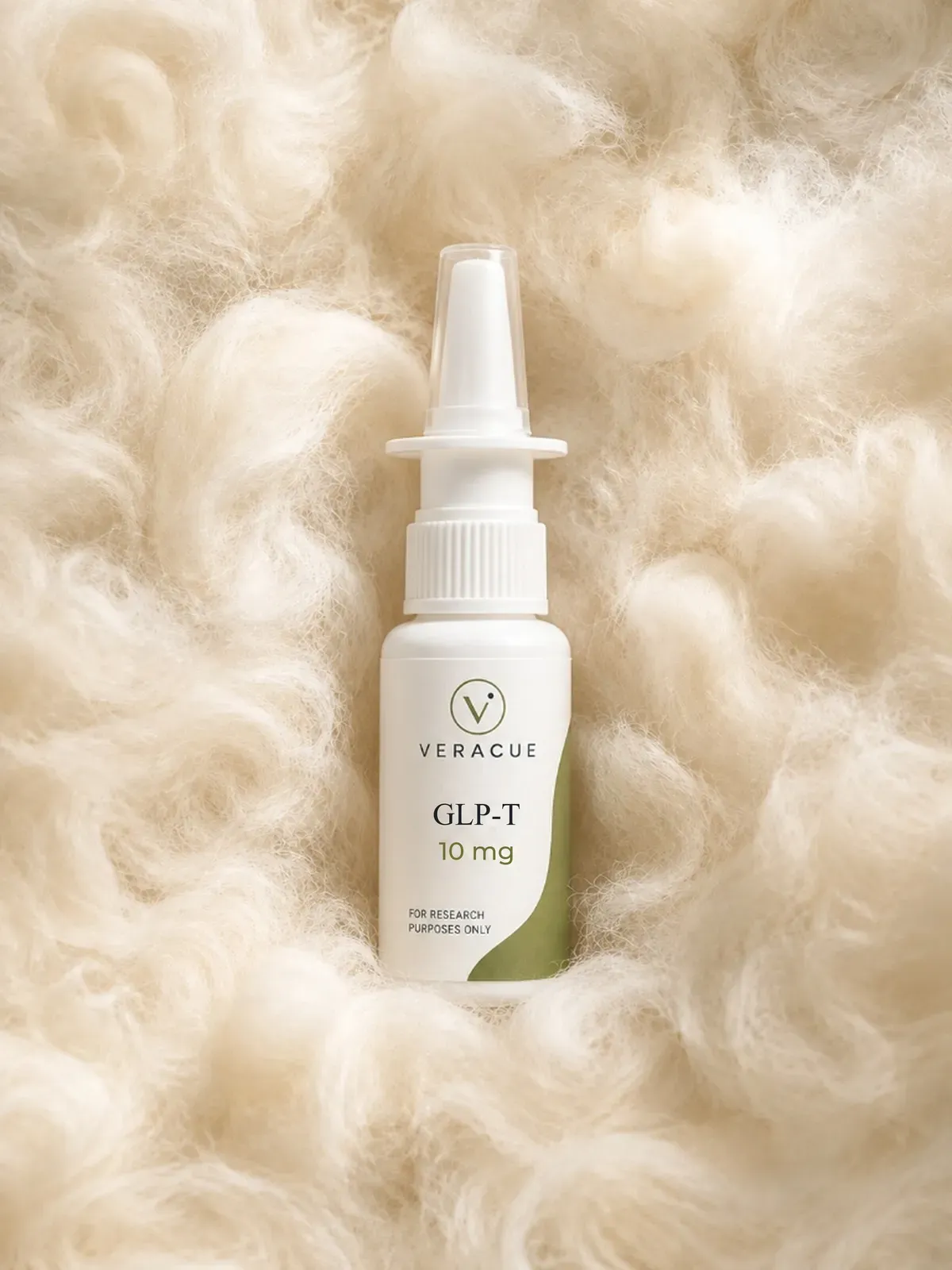
GLP-T Spray pairs a 39-residue peptide, LY3298176 (CAS 2023788-19-2), with a C20 diacid on lysine 20. 10 to 60 mg, research use only, 45 sprays a bottle.

RESEARCH PEPTIDE
A 28-residue, N-acetylated peptide at 3108.3 g/mol, spray-dispensed in a 10 mg bottle with 45 sprays. Supplied for research use only.