NAD+ and AHK-Cu in Metabolic and Longevity Research: A Deep Dive
A research overview of NAD+ and AHK-Cu covering mitochondrial metabolism, sirtuin activation, copper-peptide signaling, and laboratory handling protocols.

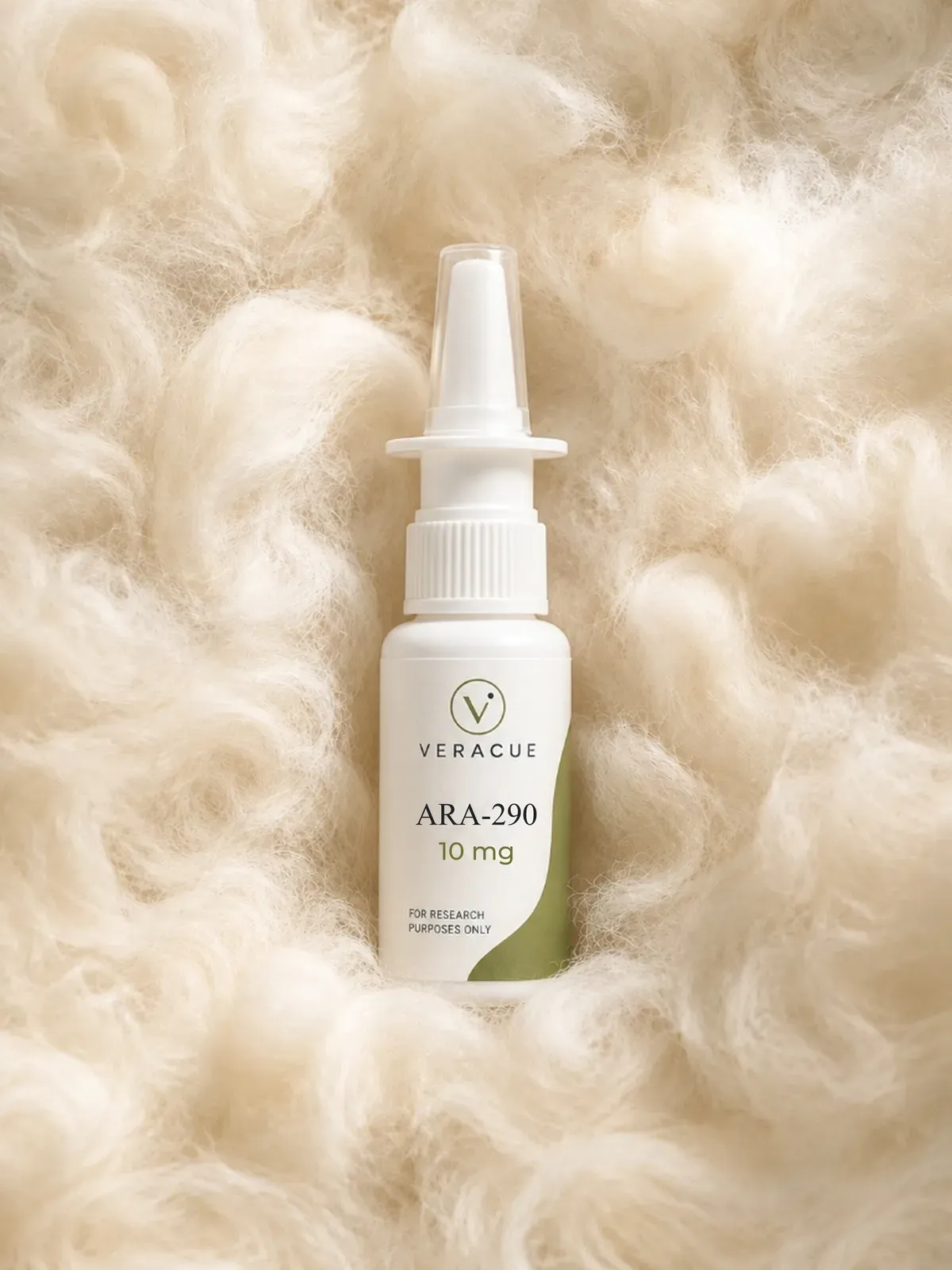
ARA-290 Spray is a spray-dispensed research format of an 11-residue peptide, pGlu-Glu-Gln-Leu-Glu-Arg-Ala-Leu-Asn-Ser-Ser, modeled on the helix B surface of erythropoietin and also known as cibinetide or pHBSP. Reference values for the free peptide are the formula C51H84N16O21, an average mass of 1257.3 g/mol, a monoisotopic mass of 1256.5997 Da and CAS 1208243-50-8. It is a short synthetic peptide and not erythropoietin itself. Offered as a 10 mg bottle with 45 sprays per bottle, for laboratory research use only.
Ask for the analytical documentation of any lot.
HPLC is the method used to measure purity
Ask for the report for a specific lot through the contact page
Supplied for laboratory research use only
Mass spectrometry is the method used to confirm identity
ARA-290 is a linear synthetic peptide of eleven residues. The chain starts with a pyroglutamate cap and reads pGlu-Glu-Gln-Leu-Glu-Arg-Ala-Leu-Asn-Ser-Ser, which one-letter notation shortens to pGlu-EQLERALNSS. The design is modeled on the surface of helix B in erythropoietin (EPO), the 165-amino-acid glycoprotein hormone that serves as its structural origin.
The bottle is spray-dispensed, 10 mg in size, with 45 sprays per bottle. Veracue sells it for laboratory research use only.
| Listing name | ARA-290 Spray |
| Peptide | ARA-290 (cibinetide) |
| Other names | ARA290, ARA 290, pHBSP, pyroglutamate helix B surface peptide |
| Chain | 11 residues, linear, N-terminal pyroglutamate |
| Three-letter sequence | pGlu-Glu-Gln-Leu-Glu-Arg-Ala-Leu-Asn-Ser-Ser |
| One-letter notation | pGlu-EQLERALNSS (PubChem writes XEQLERALNSS, with X standing for pyroglutamate) |
| Molecular formula | C51H84N16O21 |
| Average molecular weight | 1257.3 g/mol |
| Monoisotopic mass | 1256.5997 Da |
| CAS Registry Number | 1208243-50-8 |
| PubChem CID | 91810664 |
| UNII | 9W5677JKDA |
| Dispensing format | Spray-dispensed bottle, 45 sprays per bottle |
| Size offered | 10 mg |
| Research designation | Research Use Only |
Identifiers and masses describe the free peptide as a reference structure taken from public chemical databases, which also list acetate and TFA salt forms of the same peptide. Salt form, net peptide content, purity and lot results belong to each lot, and the documentation for a given bottle can be requested through the contact page.
Three labels circulate for this peptide. ARA-290 is the name used across most research papers, cibinetide is the name used in chemical databases, and pHBSP is the older descriptive code for the pyroglutamate helix B surface peptide. Hyphen and spacing variants such as ARA290 or ARA 290 change nothing about the molecule.
Because supplier naming is loose, the sequence, the formula and the CAS number together are a firmer test of identity than the name printed on a bottle.
EPO is a glycosylated hormone of 165 amino acids with a helical-bundle fold. ARA-290 represents only the exposed surface of one helix of that fold, helix B, as an eleven-residue chain capped with pyroglutamate. It is roughly fifteen times shorter than EPO and carries no carbohydrate.
The link between the two molecules is structural origin only. Findings, handling history or properties of EPO do not carry over to the peptide, and the reverse holds as well.
EPO’s classical receptor is a homodimer of two EPO receptor chains (EPOR/EPOR). A second, proposed complex pairs one EPOR chain with the beta-common receptor, CD131 (βcR), and has been called the innate repair receptor (IRR). ARA-290 was conceived within that second model, as a helix B surface mimic for probing IRR-linked signaling separately from EPOR homodimer signaling.
The model is not settled. Biophysical binding experiments on the purified extracellular domains of EPOR and βcR, run with and without EPO and with and without ARA-290, did not detect a direct association between the two domains. The same work noted that transmembrane and intracellular regions were outside the experiment, so whether the receptors pair inside cells is still debated.
| Component | Role in the proposed model |
|---|---|
| EPOR homodimer | Classical EPO receptor on erythroid precursor cells, the pairing the peptide was not designed around |
| EPOR with beta-common receptor (CD131) | Proposed innate repair receptor (IRR) |
| Isolated extracellular domain binding assays | No direct EPOR to βcR association detected |
| Overall status | Proposed research framework, not a confirmed mechanism for every reported readout |
Several short peptides sit beside ARA-290 in catalogs and search results, often under one shared category heading. They differ in origin and length, and their masses differ enough that a mass spectrum tells them apart immediately.
| Compound | Length and size | Structural origin |
|---|---|---|
| ARA-290 (cibinetide) | 11 residues, about 1257.3 g/mol | Modeled on the helix B surface of erythropoietin |
| Erythropoietin (EPO) | 165 amino acids, glycosylated | Parent protein with a helical-bundle fold |
| BPC-157 | 15 residues, about 1419.5 g/mol | Synthetic peptide inspired by a partial sequence identified in gastric juice |
| KPV | 3 residues (Lys-Pro-Val) | Fragment derived from alpha-melanocyte-stimulating hormone |
| TB-500 | Market name for a fragment of about 7 residues | Associated with thymosin beta-4, a 43-residue protein; usage of the name varies |
| SS-31 | 4 residues | Synthetic aromatic-cationic tetrapeptide designed to target mitochondria |
Within ARA-290 itself the N-terminus is the identity detail to check. The pyroglutamate ring forms when an open N-terminal glutamate loses a water molecule, so an uncyclized chain reads about 18 Da higher. The sequence also holds one Gln and one Asn, each a site where a +0.98 Da deamidation shift can occur. Only a mass spectrum tied to the exact lot shows which species a bottle contains.
This tab covers molecular identity and assay-level context only. Veracue provides no dosing, administration or usage guidance of any kind.

Peptides of this size are commonly read by electrospray or MALDI mass spectrometry. The calculated monoisotopic ions below are the numbers to look for in a spectrum. They are computed from the formula C51H84N16O21 (monoisotopic mass 1256.5997 Da) and are reference figures, not Veracue lot results.
| Ion | Calculated m/z |
|---|---|
| [M+H]+ | 1257.607 |
| [M+2H]2+ | 629.307 |
| [M+Na]+ | 1279.589 |
The average mass of 1257.3 g/mol is the figure for weighing and molar calculations, while the monoisotopic figure is what a high-resolution instrument resolves. Counterions such as acetate or TFA are not covalently bound, so they usually drop out of the spectrum and appear instead as a lower net peptide content.
| Shift from 1256.5997 Da (monoisotopic) | Possible reading |
|---|---|
| +18.011 Da | Open N-terminal glutamate in place of the pyroglutamate ring |
| +17.027 Da | Open N-terminal glutamine in place of the ring |
| +0.984 Da | Deamidation of the Gln or Asn residue |
| -0.984 Da | C-terminal amide in place of the free acid |
These offsets come from arithmetic on the structure and are a guide to reading a spectrum. A measured result from the lot is what establishes which species, if any, is present.
Reverse-phase HPLC reports chromatographic purity as a peak-area fraction under one set of conditions. The sequence is polar, with only two leucines and one alanine among eleven residues and charged glutamates and an arginine, so related species can elute close together. Ask for the column, gradient and detection wavelength alongside the percentage.
A clean trace shows that few species were detected. It does not by itself show that the main peak is ARA-290, which is why a purity figure should always sit next to a mass result.
No lot figures are published on the product listing, since results belong to individual lots. The certificate page explains how to request documents for a specific lot, and the contact page handles requests for a bottle with no record listed.
CAS 1208243-50-8, PubChem CID 91810664 and UNII 9W5677JKDA all point at the molecule in general. What ties a particular bottle to that molecule is its lot number plus a mass or sequence result from the same lot. For spray-dispensed material, keep the lot number, the certificate and the packaging details (10 mg size, 45 sprays per bottle) together in one record.
ARA-290 Spray is sold for laboratory and analytical work by qualified researchers. It is not a drug, dietary supplement, cosmetic or food, and it is not for human or veterinary use, ingestion, injection or any other form of administration. Veracue provides no dosing, administration or usage guidance of any kind. The Medical Disclaimer and the Terms and Conditions set out the sitewide policies, and the buyer is responsible for lawful use within an appropriate research setting.
Nothing in this listing is a statement about safety, efficacy or suitability for any use.

RESEARCH PEPTIDE
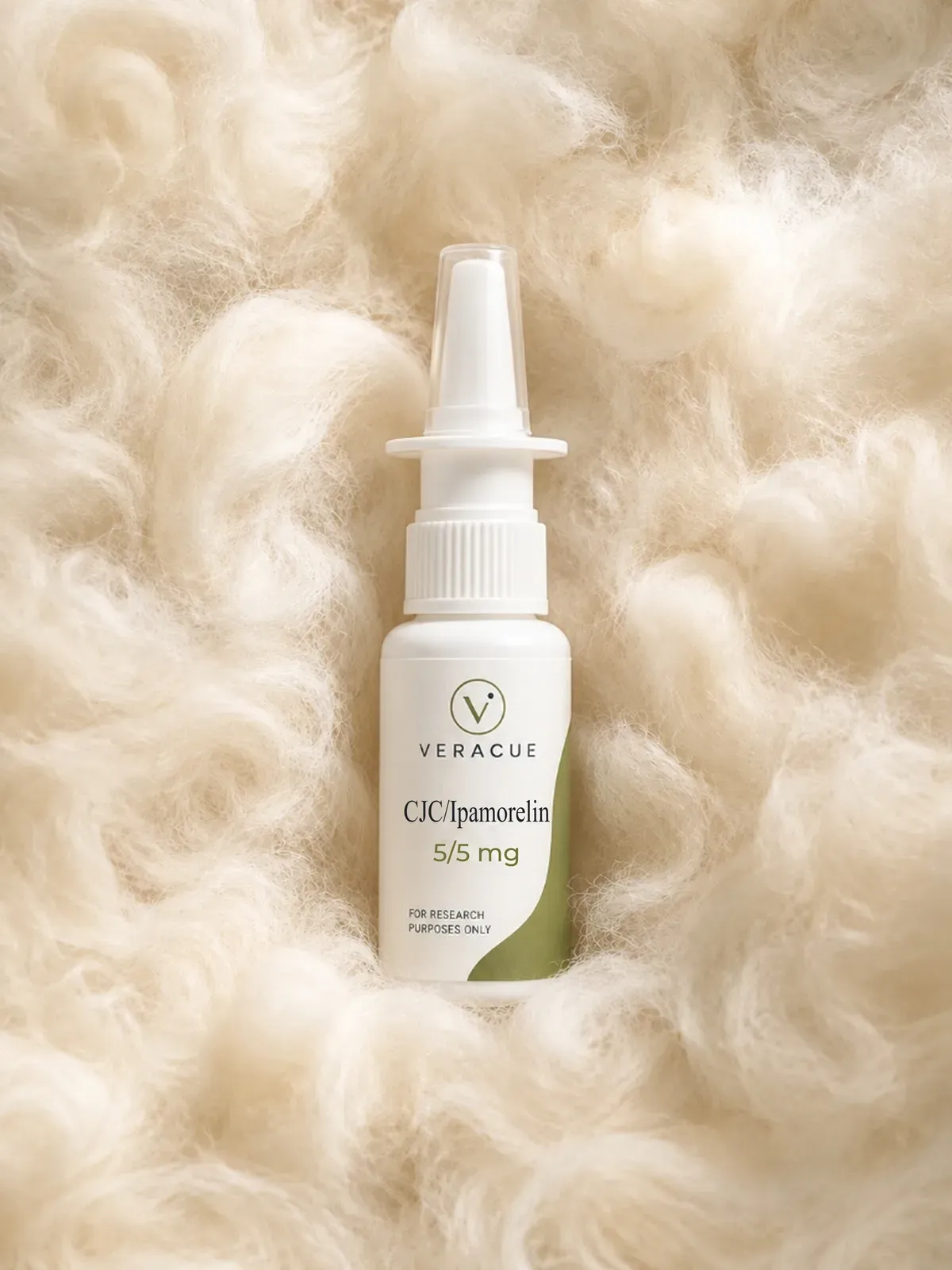
Spray bottle pairing a 29-residue GHRH analog with the pentapeptide Ipamorelin, 5 mg of each and 45 sprays per bottle. Laboratory research use only.

RESEARCH PEPTIDE
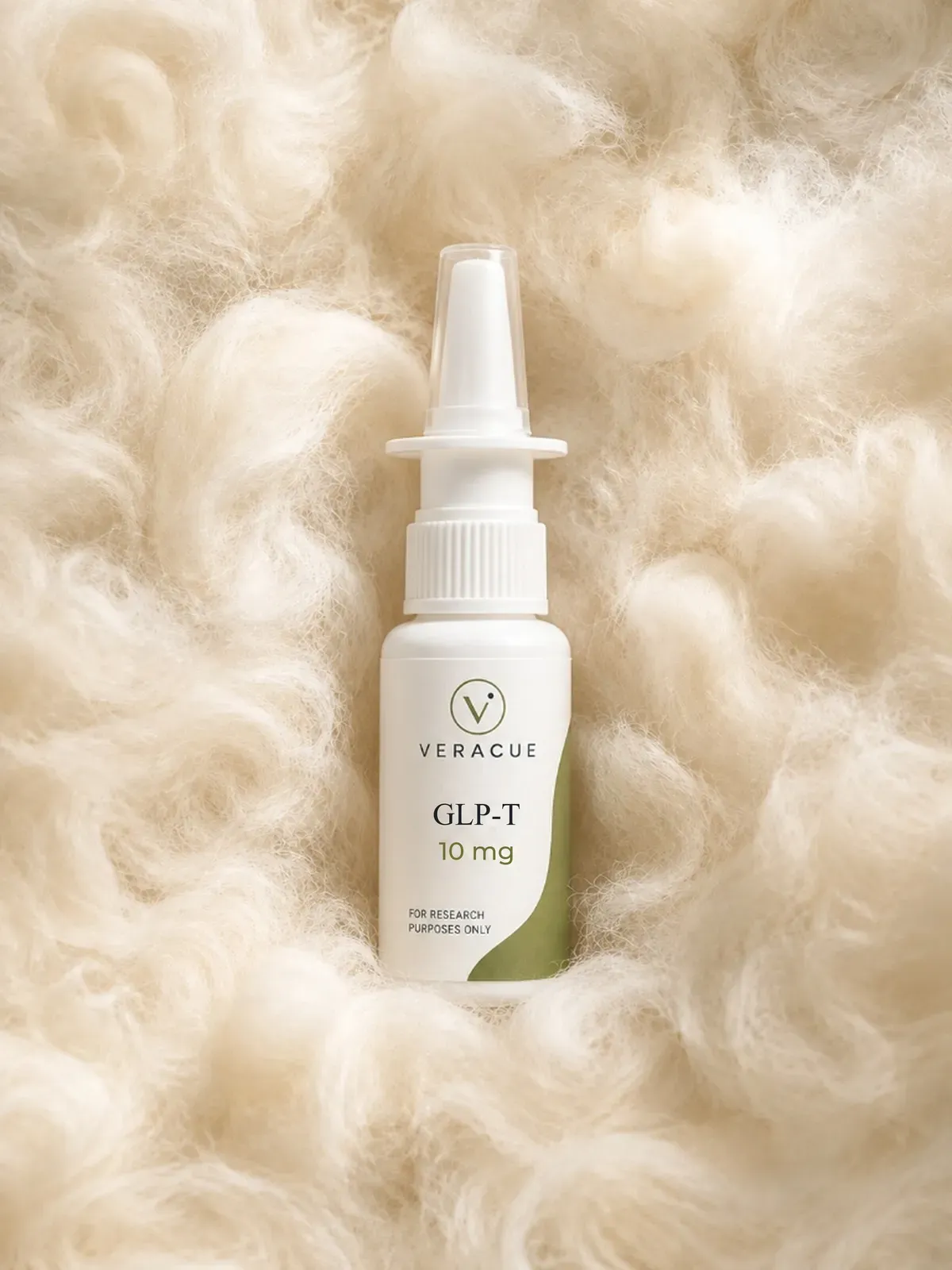
GLP-T Spray pairs a 39-residue peptide, LY3298176 (CAS 2023788-19-2), with a C20 diacid on lysine 20. 10 to 60 mg, research use only, 45 sprays a bottle.

RESEARCH PEPTIDE
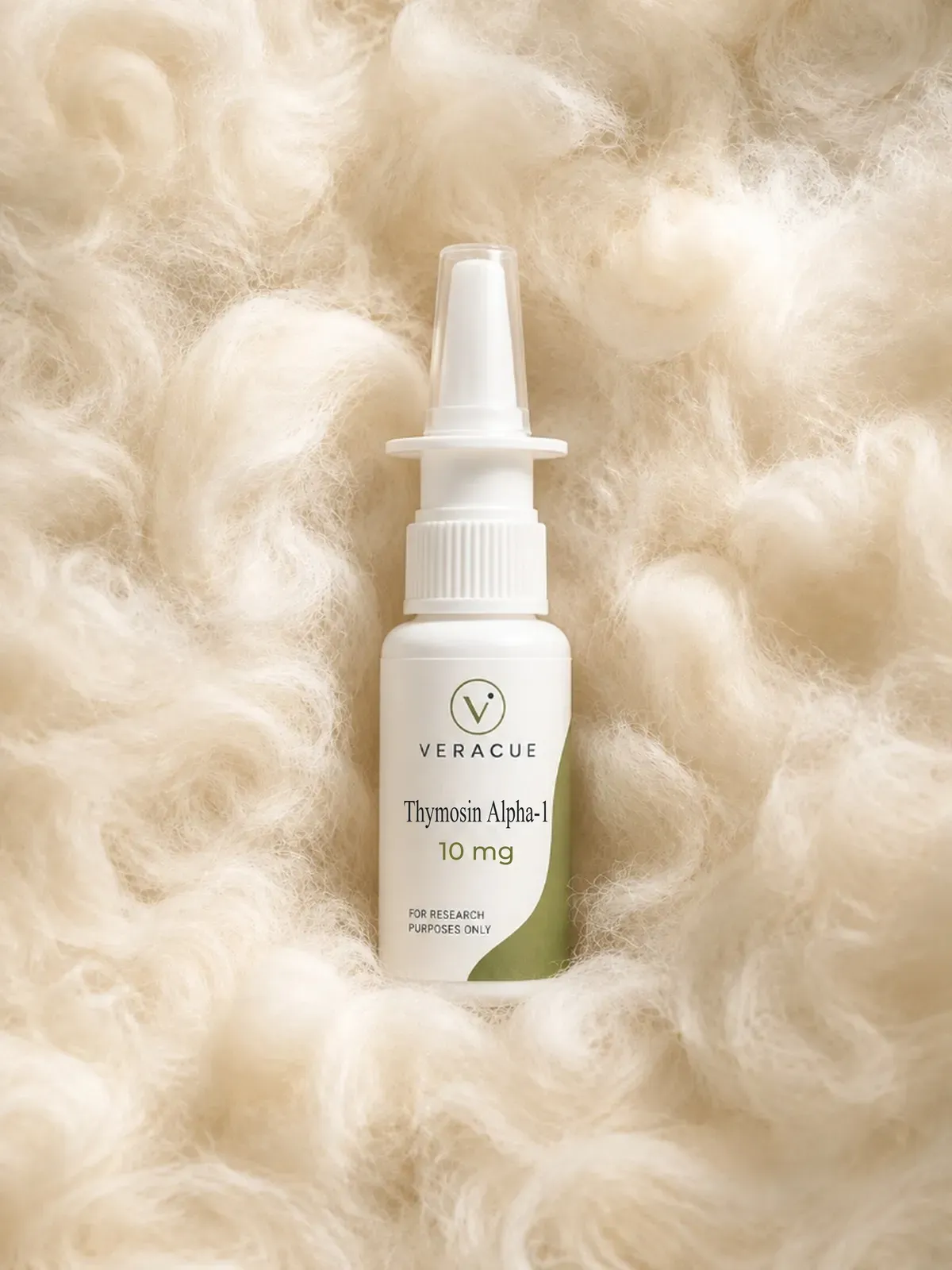
A 28-residue, N-acetylated peptide at 3108.3 g/mol, spray-dispensed in a 10 mg bottle with 45 sprays. Supplied for research use only.

RESEARCH PEPTIDE
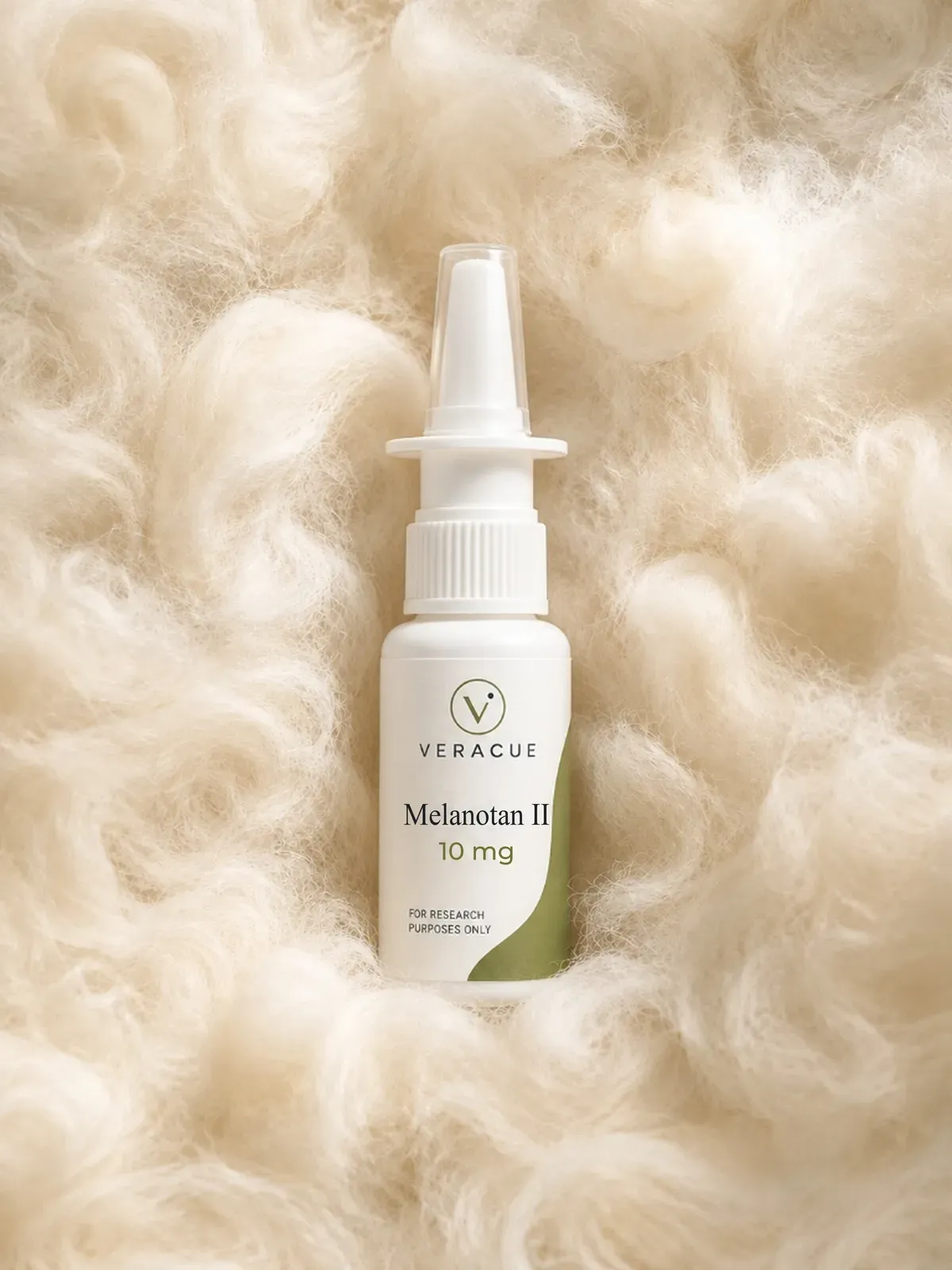
Seven residues, a lactam ring and an amide terminus: Melanotan II, CAS 121062-08-6, in a 10 mg bottle of 45 sprays. Laboratory research only.