NAD+ and AHK-Cu in Metabolic and Longevity Research: A Deep Dive
A research overview of NAD+ and AHK-Cu covering mitochondrial metabolism, sirtuin activation, copper-peptide signaling, and laboratory handling protocols.

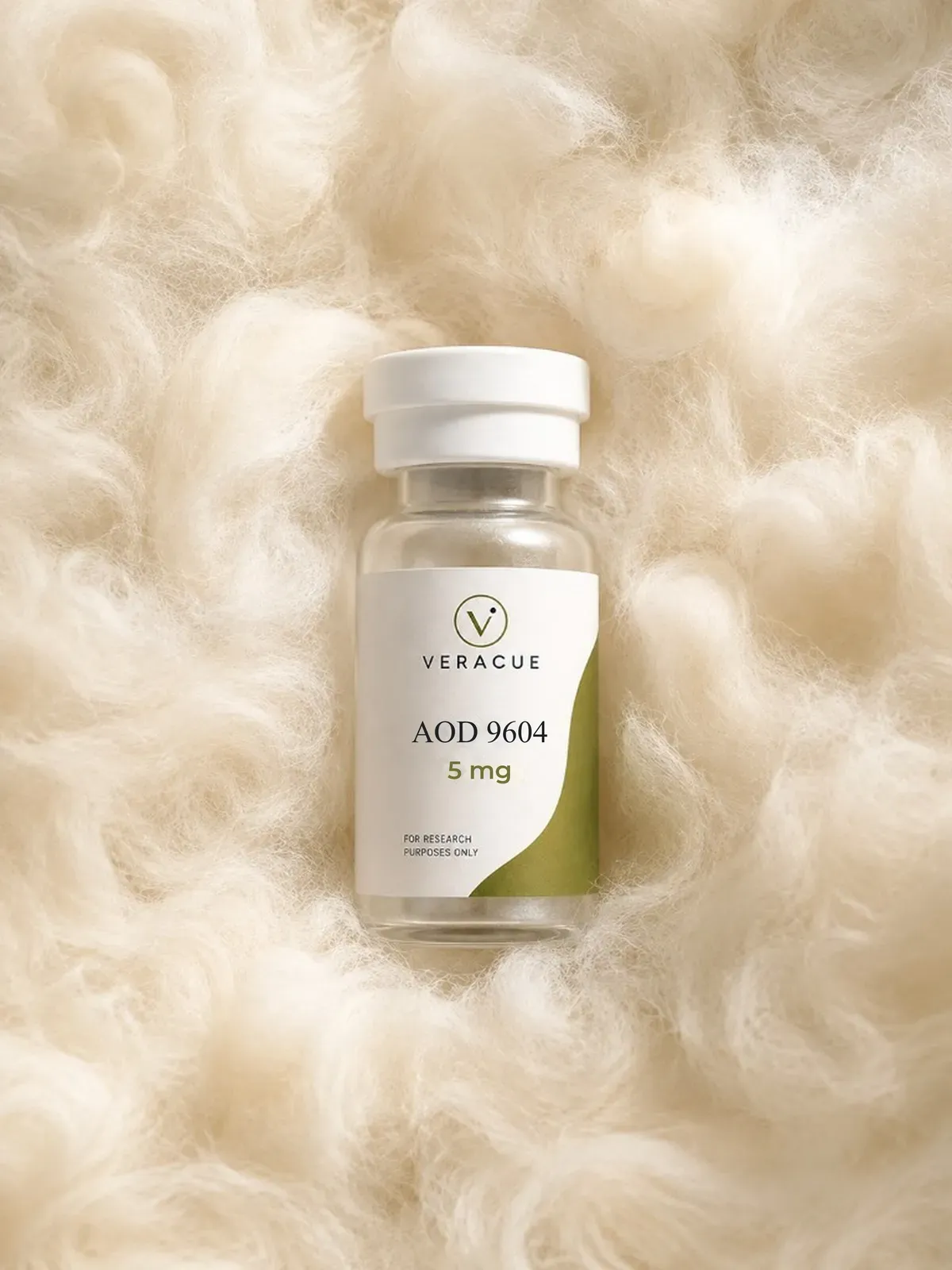
AOD 9604 is a 16-residue peptide, YLRIVQCRSVEGSCGF, made from residues 177 to 191 of growth hormone with an added N-terminal tyrosine and closed into a loop by a Cys7-Cys14 disulfide bond. Its free-base formula is C78H123N23O23S2, with an average mass of 1815.1 g/mol and CAS 221231-10-3. It is a modified fragment, not full-length growth hormone. Available in 5 mg and 10 mg vials for laboratory research only.
Ask for the analytical documentation of any lot.
HPLC is the method used to measure purity
Ask for the report for a specific lot through the contact page
Supplied for laboratory research use only
Mass spectrometry is the method used to confirm identity
AOD 9604 is a synthetic 16-amino-acid peptide taken from the tail end of human growth hormone (residues 177-191), with an extra tyrosine added at the front and one disulfide bond between Cys7 and Cys14. Its sequence is YLRIVQCRSVEGSCGF. Veracue supplies it for laboratory research only.
The peptide is sometimes written AOD9604 or AOD-9604, and it is also studied under the code LAT8881. Some suppliers list it as hGH Fragment 176-191, which is a slightly different sequence. See the research tab for how to tell them apart.
| Product name | AOD 9604 (also AOD9604, AOD-9604, LAT8881) |
| Sequence | YLRIVQCRSVEGSCGF |
| Length | 16 amino acids |
| Disulfide bond | Cys7-Cys14 |
| Molecular formula (free base) | C78H123N23O23S2 |
| Average molecular weight | 1815.1 g/mol |
| Monoisotopic mass | 1813.860 Da |
| CAS Registry Number | 221231-10-3 |
| PubChem CID | 71300630 |
| Research designation | Research Use Only |
Formula and mass values describe the free base as a reference structure, taken from the PubChem record. They are not a statement about the form Veracue supplies. Vial contents, physical form, salt or counterion, purity, lot results and storage conditions are reported on each lot’s documentation and can be requested through the contact page.
The full sequence is Tyr-Leu-Arg-Ile-Val-Gln-Cys-Arg-Ser-Val-Glu-Gly-Ser-Cys-Gly-Phe. Residues 2 to 16 match human growth hormone residues 177-191, and the tyrosine at position 1 is the addition. The two cysteines at positions 7 and 14 form a disulfide bond that closes part of the chain into a loop.
Not quite, although suppliers often use the names interchangeably. Native hGH residues 176-191 begin with phenylalanine (FLRIVQCRSVEGSCGF). AOD 9604 adds a tyrosine ahead of residues 177-191 (YLRIVQCRSVEGSCGF). Because listings are inconsistent, sequence, disulfide state, expected mass and lot-specific analytical data are the most reliable way to confirm which peptide a product actually is.
Match on the printed sequence. AOD 9604 begins Tyr-Leu-Arg, native hGH 176-191 begins Phe-Leu-Arg, and AOD9401 is a separate related analogue that appears in its own set of papers. Findings for one should not be applied to another.
| Property | Value |
|---|---|
| Sequence (three-letter) | Tyr-Leu-Arg-Ile-Val-Gln-Cys-Arg-Ser-Val-Glu-Gly-Ser-Cys-Gly-Phe |
| Length | 16 amino acids |
| Disulfide bond | Cys7-Cys14 |
| Molecular formula (free base) | C78H123N23O23S2 |
| Average molecular weight | 1815.1 g/mol |
| Monoisotopic mass | 1813.860 Da |
| CAS number | 221231-10-3 |
| PubChem CID | 71300630 |
These values describe the AOD 9604 molecule itself. They are reference data, not a result from a specific Veracue lot.
AOD 9604 is a handy example of isolating one part of a large hormone and asking how the fragment behaves compared with the whole. Its defined sequence and single disulfide bond also make it useful for method development, such as peptide characterization and stability testing.
The molecular target of AOD 9604 has not been established. In cell assays, it did not compete with hGH for growth-hormone-receptor binding and did not drive receptor-dependent cell growth. That is one reason it is not treated as a conventional growth hormone secretagogue.
These are observations from specific laboratory models, not a confirmed pathway, and they should not be read as describing any particular research lot.
It reports molecular reference information and general research context. It cannot establish the identity, purity or content of a particular vial, which requires lot-specific testing. Veracue does not provide dosing, administration or usage guidance of any kind.

A useful COA confirms what the material is, how pure it is by a named method, and that the report belongs to the lot in hand. Certificates vary between laboratories, so treat the list below as what a COA may include rather than a fixed checklist.
| COA item | What it helps establish |
|---|---|
| Peptide name and sequence | Whether the record ties the material to YLRIVQCRSVEGSCGF. |
| Lot number | Which production run the results describe. It should match the vial. |
| Purity and method | The reported purity value and the named method behind it, such as HPLC. |
| Mass spectrometry result | Whether the measured mass fits the expected value for the tested form. |
| Molecular form | Free base or a salt or counterion form. |
| Testing laboratory and test date | Who ran the analysis and how recent it is. |
Veracue confirms a field only when the lot certificate reports it. Purity, mass results, lot number, test date and laboratory are reported on each lot’s documentation and can be requested through the certificate library or the contact page.
HPLC helps assess chromatographic purity, while mass spectrometry helps assess molecular identity and mass. Neither one alone establishes everything about material quality. A single purity percentage does not confirm what a peptide is or how much of it is in a vial.
| Value | Figure |
|---|---|
| Monoisotopic mass (free base) | 1813.860 Da |
| Average molecular weight (free base) | 1815.1 g/mol |
A salt form will weigh more than the free base, so the COA should state which form was tested. This is reference information only, not a result from any specific lot.
Check the sequence, the disulfide state and the expected mass together, then compare them with a lot-specific analytical result. Product names alone are not enough, since AOD 9604, AOD-9604 and hGH Fragment 176-191 are used loosely across listings.
No. PubChem-level identity data and a lot’s certificate of analysis are two different things. Confirm purity and content only from the certificate that matches your lot.
Ask the Veracue team about documentation for a specific lot, or browse the rest of the catalog.
AOD 9604 supplied by Veracue is intended solely for laboratory research and analytical characterization. It is not a drug, dietary supplement or food, it is not intended for human or veterinary use, and it has not been evaluated by the FDA. This page contains no dosing, administration or usage guidance of any kind. Purchasers are responsible for using the material lawfully and in an appropriate research setting. See the Medical Disclaimer and the Terms and Conditions for sitewide policies.
RESEARCH PEPTIDE
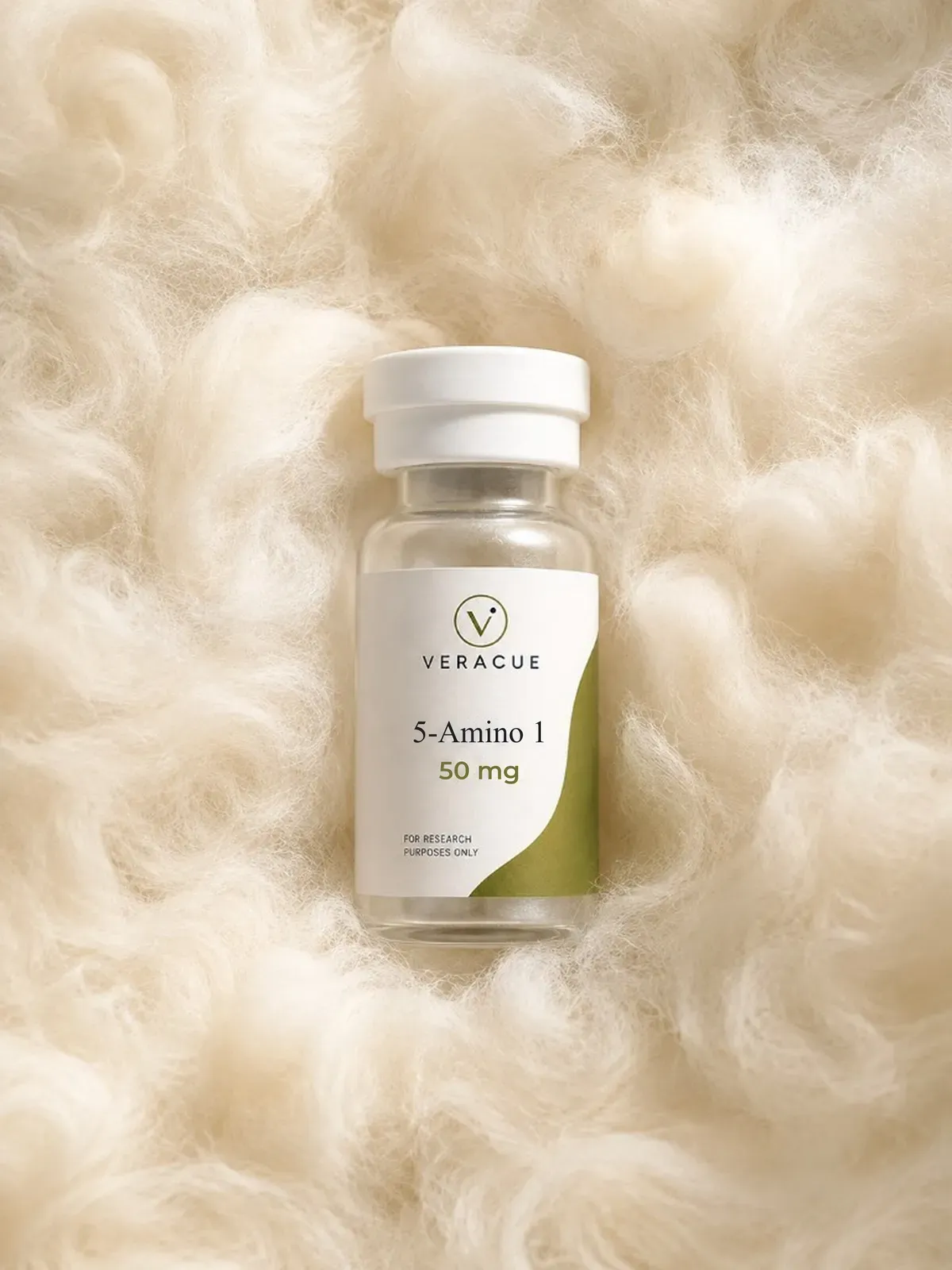
Not a peptide: 5-Amino-1MQ is a quinolinium cation, C10H11N2+ (159.21 g/mol); its iodide salt is 286.11. Check the form. Laboratory research, 50 mg.

RESEARCH PEPTIDE
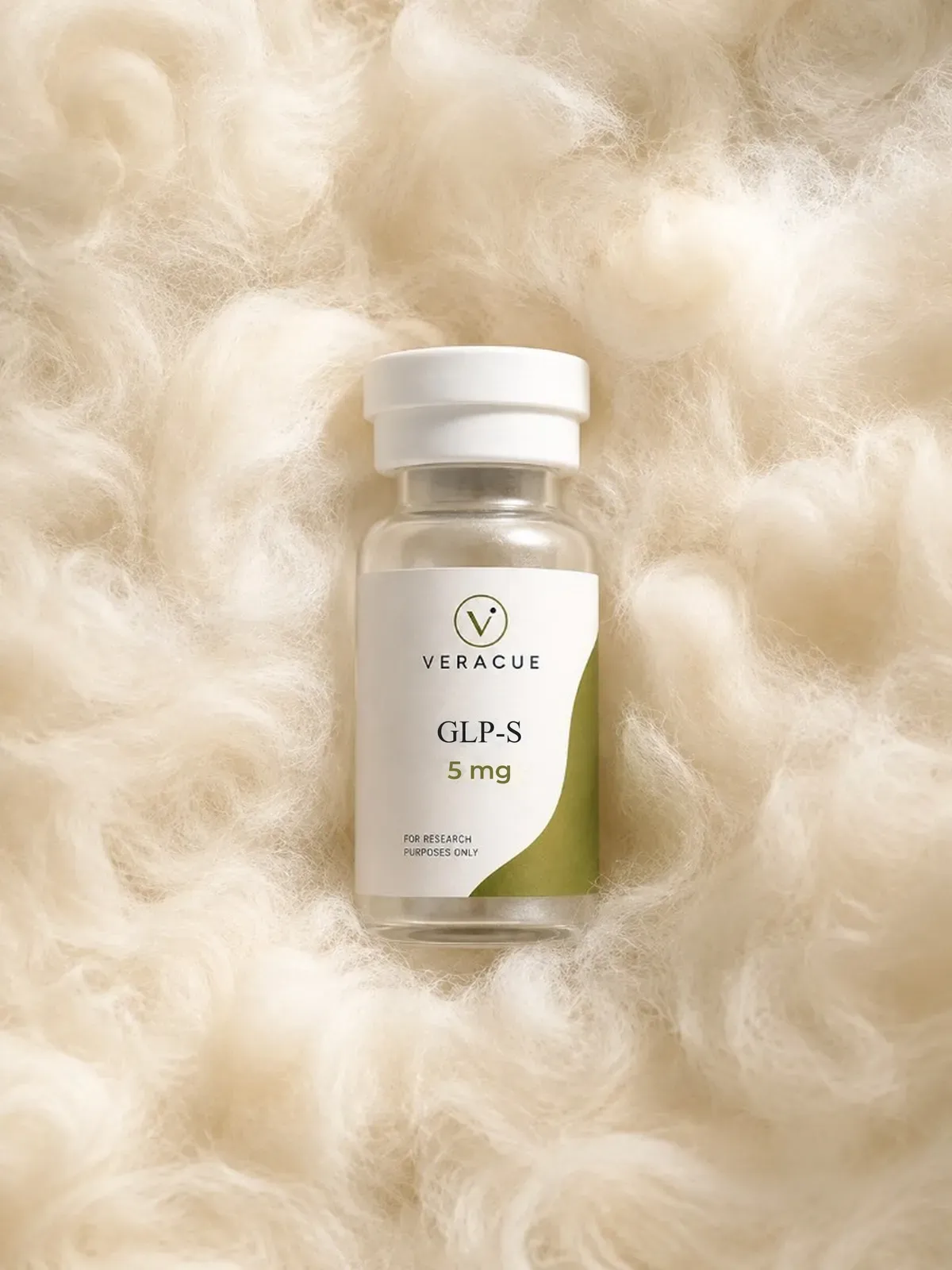
GLP-S is a 31-residue GLP-1 analog with a C18 diacid on lysine 26 (C187H291N45O59, CAS 910463-68-2). Available from 5 to 30 mg, research use only.

RESEARCH PEPTIDE
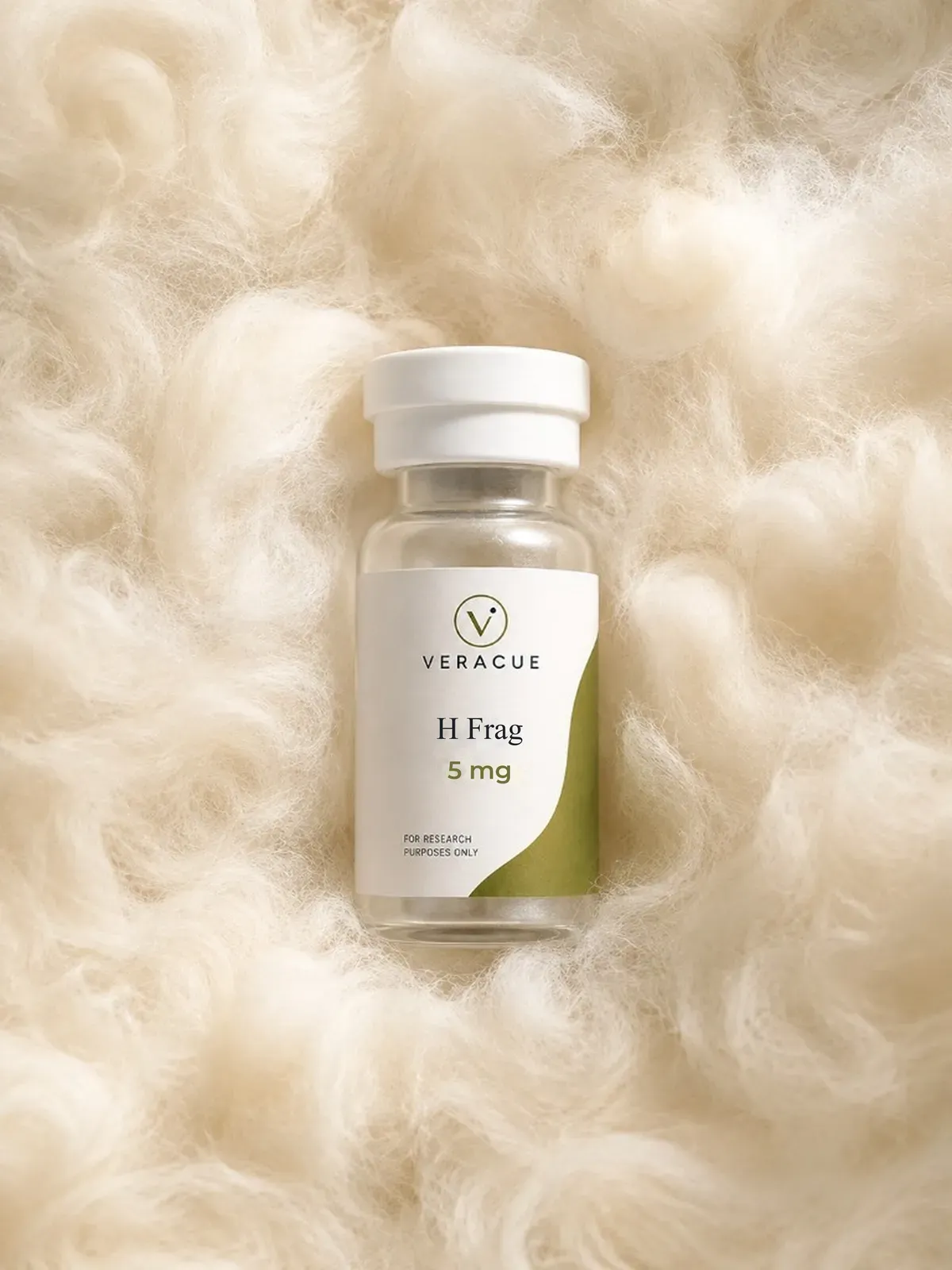
Is H-Frag just AOD 9604 under another name? No. It opens with Phe, not Tyr, and weighs 1799.1 g/mol (CAS 66004-57-7). A 5 mg vial for laboratory research.

RESEARCH PEPTIDE
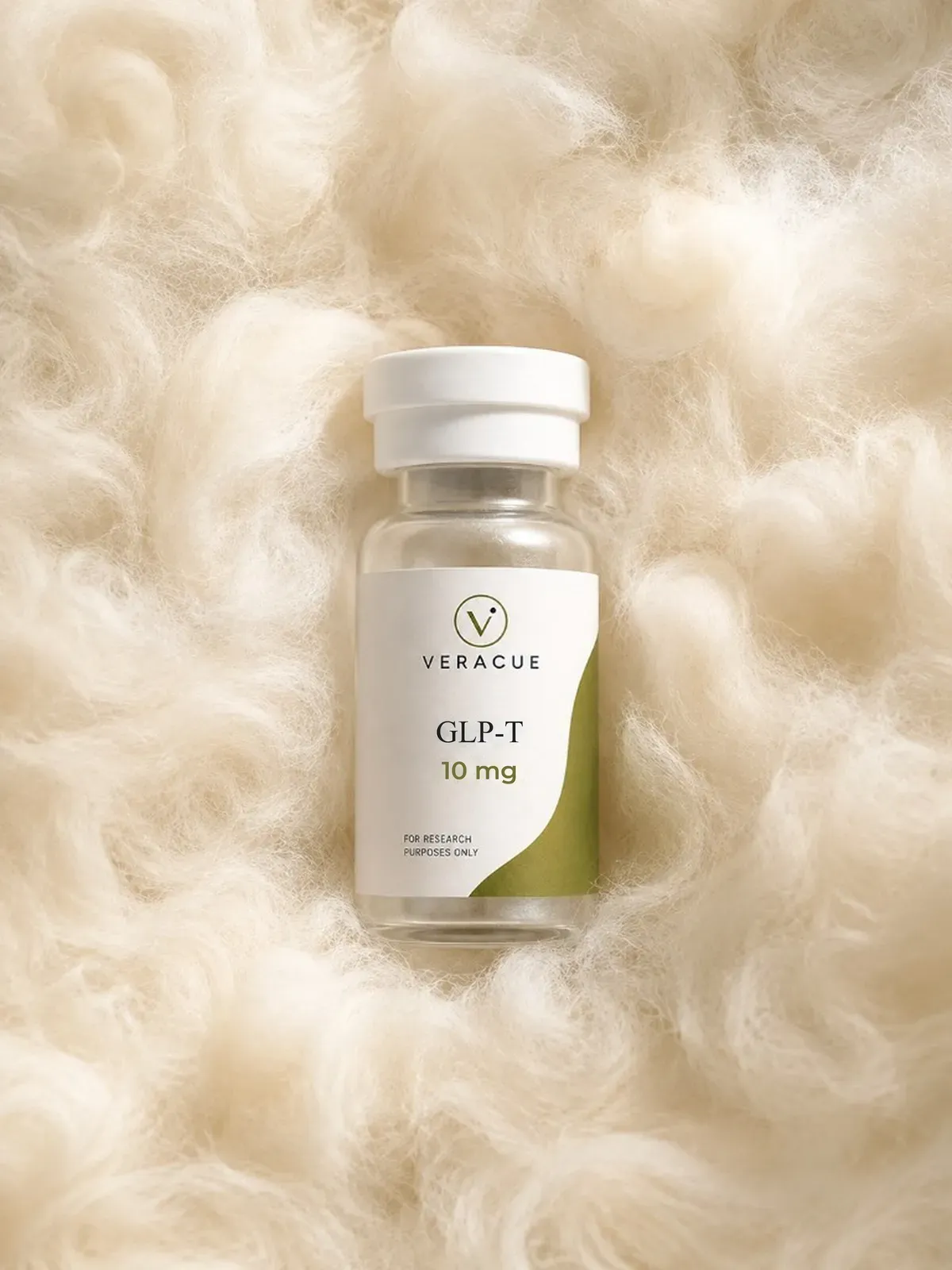
GLP-T (LY3298176) is a 39-residue peptide with a C20 fatty diacid, CAS 2023788-19-2. See the COA notes. 10 to 60 mg, research use only.