NAD+ and AHK-Cu in Metabolic and Longevity Research: A Deep Dive
A research overview of NAD+ and AHK-Cu covering mitochondrial metabolism, sirtuin activation, copper-peptide signaling, and laboratory handling protocols.

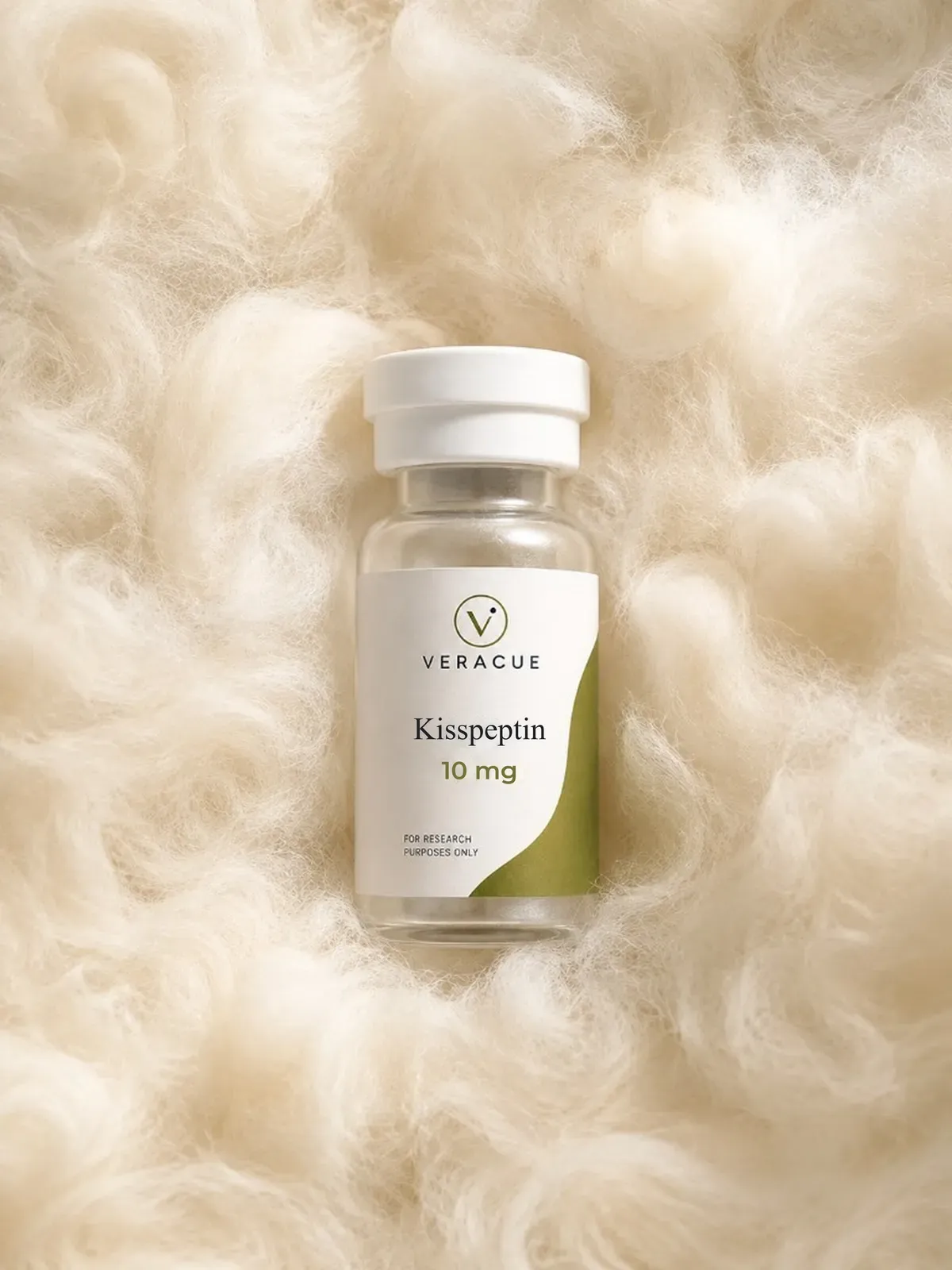
Kisspeptin-10 (KP-10) is the ten-residue C-terminal fragment of kisspeptin-54, with the sequence Tyr-Asn-Trp-Asn-Ser-Phe-Gly-Leu-Arg-Phe-NH2. The free base is C63H83N17O14 at 1302.45 g/mol, CAS 374675-21-5. In assays it is a reference ligand for the KISS1R (GPR54) receptor, and it is also listed as Metastin (45-54). It differs from the longer kisspeptin-54, so the fragment name matters when comparing suppliers. Sold as a 10 mg vial for laboratory research only.
Ask for the analytical documentation of any lot.
HPLC is the method used to measure purity
Ask for the report for a specific lot through the contact page
Supplied for laboratory research use only
Mass spectrometry is the method used to confirm identity
Kisspeptin-10 (KP-10) is the ten-residue C-terminal fragment of kisspeptin-54, the peptide product of the human KISS1 gene. Its sequence is Tyr-Asn-Trp-Asn-Ser-Phe-Gly-Leu-Arg-Phe-NH2, and Veracue supplies it for laboratory research only, as a 10 mg vial.
Many kisspeptin listings say only "Kisspeptin", with no fragment, sequence or mass. Here the fragment is Kisspeptin-10, and the identifiers below let you check that against your own records.
| Product name | Kisspeptin (Kisspeptin-10, KP-10) |
| Synonyms | KP-10, Metastin (45-54), KISS-1 (112-121) |
| Sequence | Tyr-Asn-Trp-Asn-Ser-Phe-Gly-Leu-Arg-Phe-NH2 (YNWNSFGLRF-NH2) |
| Length | 10 amino acids, C-terminal amide |
| Molecular formula | C63H83N17O14 (free base) |
| Molecular weight | 1302.45 g/mol (free base) |
| CAS Registry Number | 374675-21-5 |
| PubChem CID | 25240297 |
| Receptor | KISS1R (also called GPR54) |
| Vial size | 10 mg |
| Form | Lyophilized powder |
| Research designation | Research Use Only |
Molecular weight is quoted for the free base. Salt forms carry extra counterion mass, so a COA that reports net peptide content will read lower than the gross vial weight. Salt or counterion form, purity, lot results and storage conditions are reported on each lot’s documentation and can be requested through the contact page.
KP-10 is a fragment, not a separate molecule. It is residues 45 to 54 of kisspeptin-54, equivalent to residues 112 to 121 of the KISS1 gene product. The amidated C-terminal tail is the minimum structure needed to activate KISS1R.
The two forms are different chemical entities with different masses and CAS numbers. A record that says only "kisspeptin" is ambiguous, so match the fragment name and formula rather than the family name alone.
| Attribute | Kisspeptin-10 | Kisspeptin-54 |
|---|---|---|
| Residues | 10 | 54 |
| Synonyms | Metastin (45-54), KISS-1 (112-121) | Metastin, KISS-1 (68-121) |
| Molecular formula | C63H83N17O14 | C258H401N79O78 |
| Molecular weight | 1302.45 | 5857.43 |
| CAS Registry Number | 374675-21-5 | 374683-24-6 |
| PubChem CID | 25240297 | 71306396 |
No, and mixing them up is a frequent error. KISS1 is the gene that encodes the kisspeptin precursor protein. Kisspeptin is the peptide family produced when that precursor is cleaved, including KP-54, KP-14, KP-13 and KP-10. KISS1R, also called GPR54, is the receptor those peptides bind. A product cannot correctly be called a "KISS1 peptide".
In receptor assays, KP-10 binds KISS1R, a Gq/11-coupled receptor. Activation drives phospholipase C, which generates IP3 and DAG, which in turn raise intracellular calcium and activate protein kinase C. Published Ki values for KP-10 are 1.59 nM at the rat receptor and 2.33 nM at the human receptor, and KP-54 binds the same receptor with comparable affinity.
It reports molecular reference information and general assay-level context. It cannot establish what is in a particular vial, and a result obtained with one kisspeptin form does not carry over to another. Veracue does not provide dosing, administration or usage guidance of any kind.

A certificate of analysis documents one lot, so read it as a set of linked facts. Certificates vary between laboratories and testing programs, so treat the list below as what a COA may include rather than a fixed checklist.
| COA item | What it helps establish |
|---|---|
| Lot number | Which production run the results describe. It should match your vial. |
| Product identity | The compound name, which should agree with the formula and mass shown. |
| Purity and HPLC method | The reported chromatographic purity and the method behind it. |
| Mass spectrometry result | Whether the measured mass sits near 1302 Da for KP-10. |
| Molecular form | Free base, acetate, trifluoroacetate or another counterion. |
| Molecular weight convention | Whether figures are free base or net peptide content. |
| Test date | How recent the result is. |
Any field above depends on the lot’s own documentation, and Veracue confirms a field only when the lot certificate reports it. The certificate page explains how to request lot documentation.
| Method | What it establishes | What it does not establish |
|---|---|---|
| RP-HPLC | Chromatographic purity as a share of total peak area, plus synthesis and degradation byproducts | Molecular identity. A 99% peak says one species dominates, not which one |
| Mass spectrometry | Molecular mass, supporting identity. KP-10 near 1302 Da is clearly distinct from KP-54 near 5857 Da | Residue order. Peptides with the same composition share a mass |
| MS/MS or peptide mapping | Sequence-level confirmation from fragment ion patterns, and detection of truncations or modifications | Quantitative purity. It complements HPLC |
| Counterion analysis | Salt identity and net peptide content | Sequence or purity |
Two checks are worth making on any Kisspeptin-10 certificate. First, confirm the reported mass is near 1302 Da rather than near 5857 Da, which separates KP-10 from KP-54 immediately. Second, look for oxidation, since the tryptophan at position 3 is the residue most likely to pick up 16 Da.
A purity figure describes one measurement of one lot. It does not establish sterility or biological activity.
No. HPLC measures how much of the sample is one dominant species, not which species it is. Mass confirmation does that job, so read the two results together.
1302.45 is the free base. Synthetic peptides are usually supplied as acetate or trifluoroacetate salts, and the counterion adds mass. Neither is an error, but the certificate should state the convention it uses so figures can be compared.
Ask the Veracue team about documentation for a specific lot, or browse the certificate library.
Kisspeptin is supplied for laboratory research, scientific investigation and analytical characterization only. It is not a drug, dietary supplement, cosmetic or food product, is not intended for human or veterinary use, and has not been evaluated by the FDA. This page contains no dosing, administration or usage guidance of any kind. Buyers confirm they are qualified researchers or institutions acquiring it for lawful research purposes. See the Medical Disclaimer and the Terms and Conditions for sitewide policies.
RESEARCH PEPTIDE
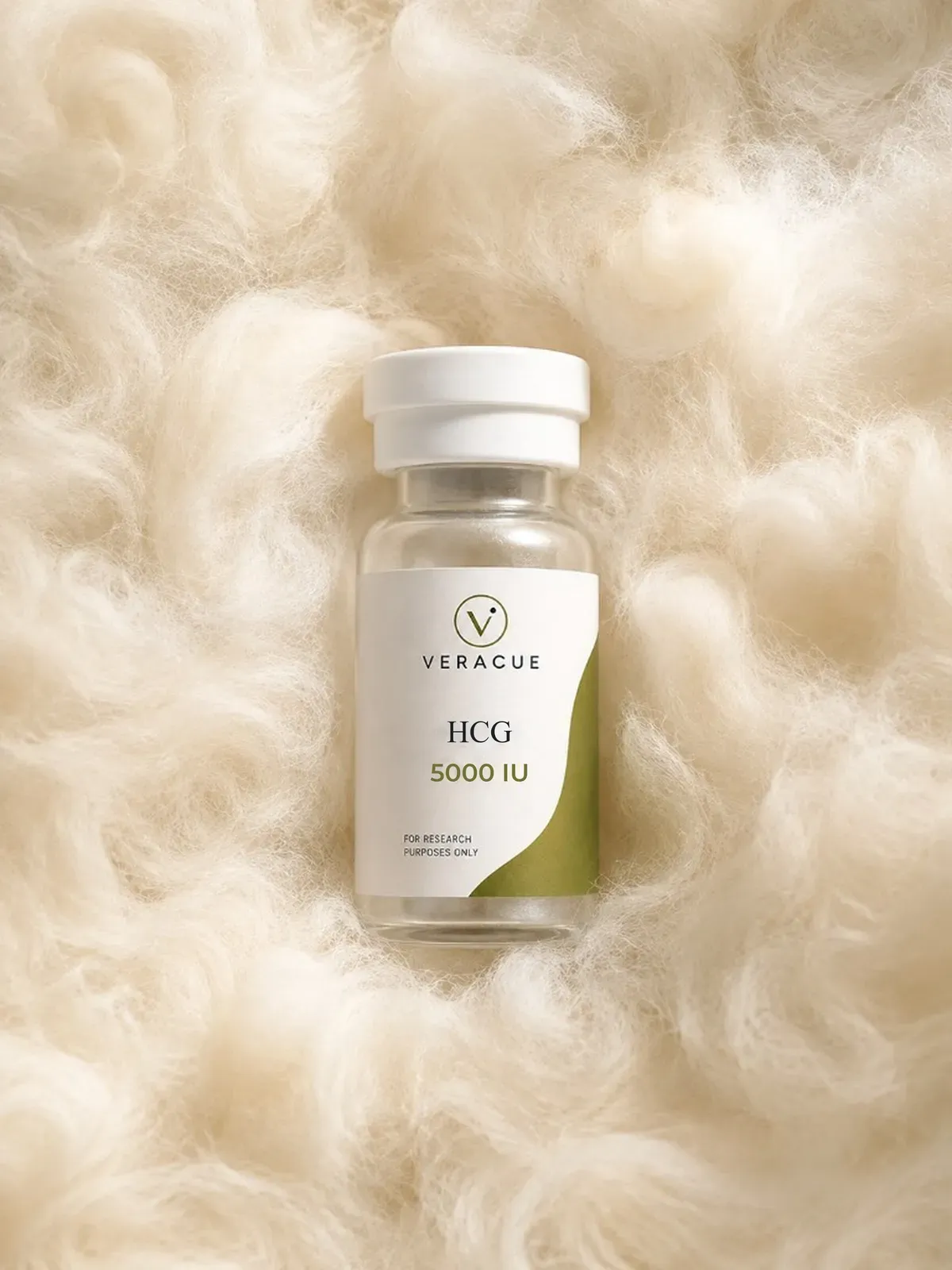
HCG is a glycoprotein, so it is measured in IU, not milligrams. Learn how that changes COA reading. 5000 and 10000 IU, research use only.

RESEARCH PEPTIDE
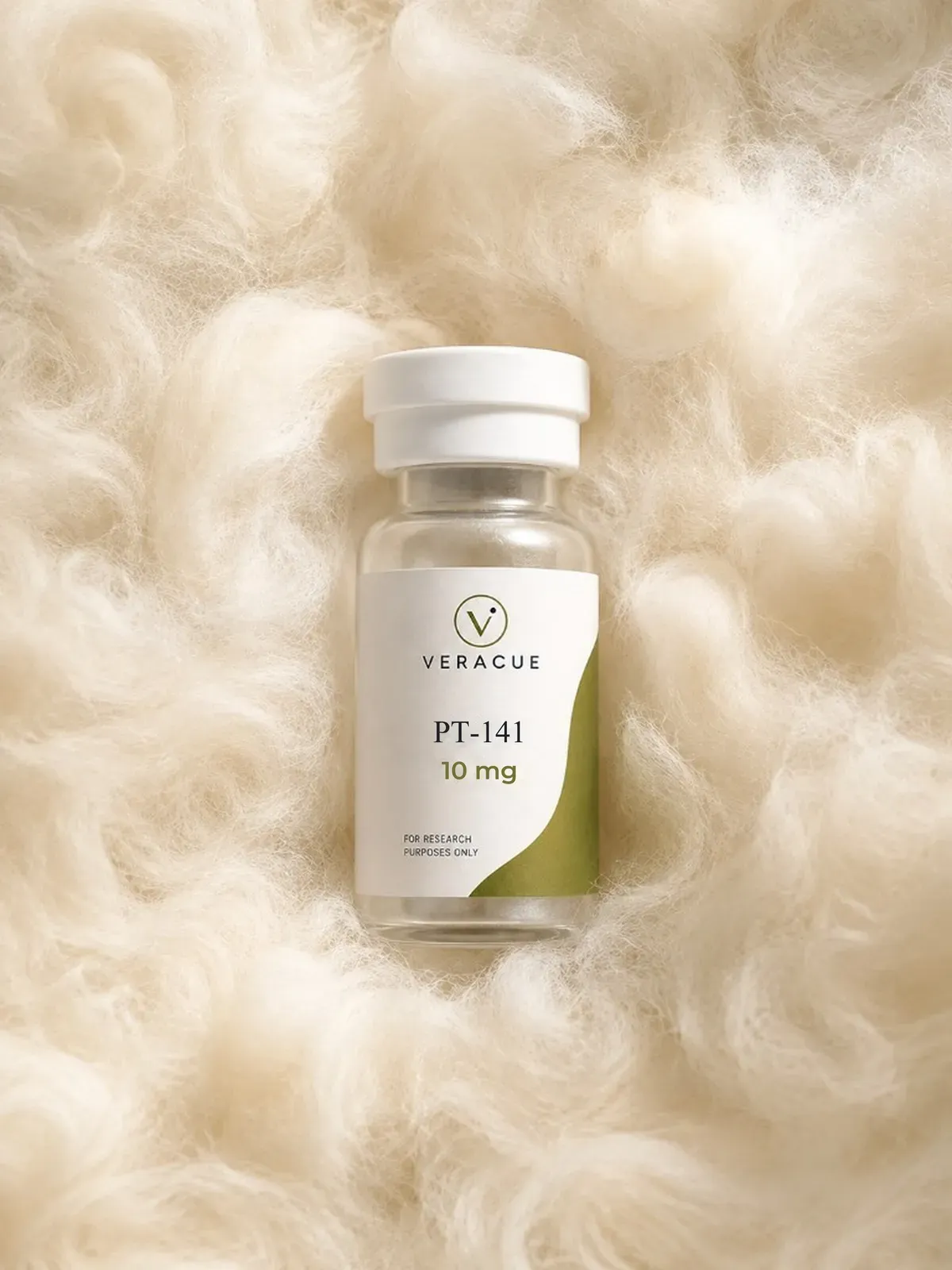
PT-141 is a cyclic lactam peptide (CAS 189691-06-3) ending in a free acid, unlike Melanotan II’s amide. Comes as a 10 mg vial, for research use only.

RESEARCH PEPTIDE
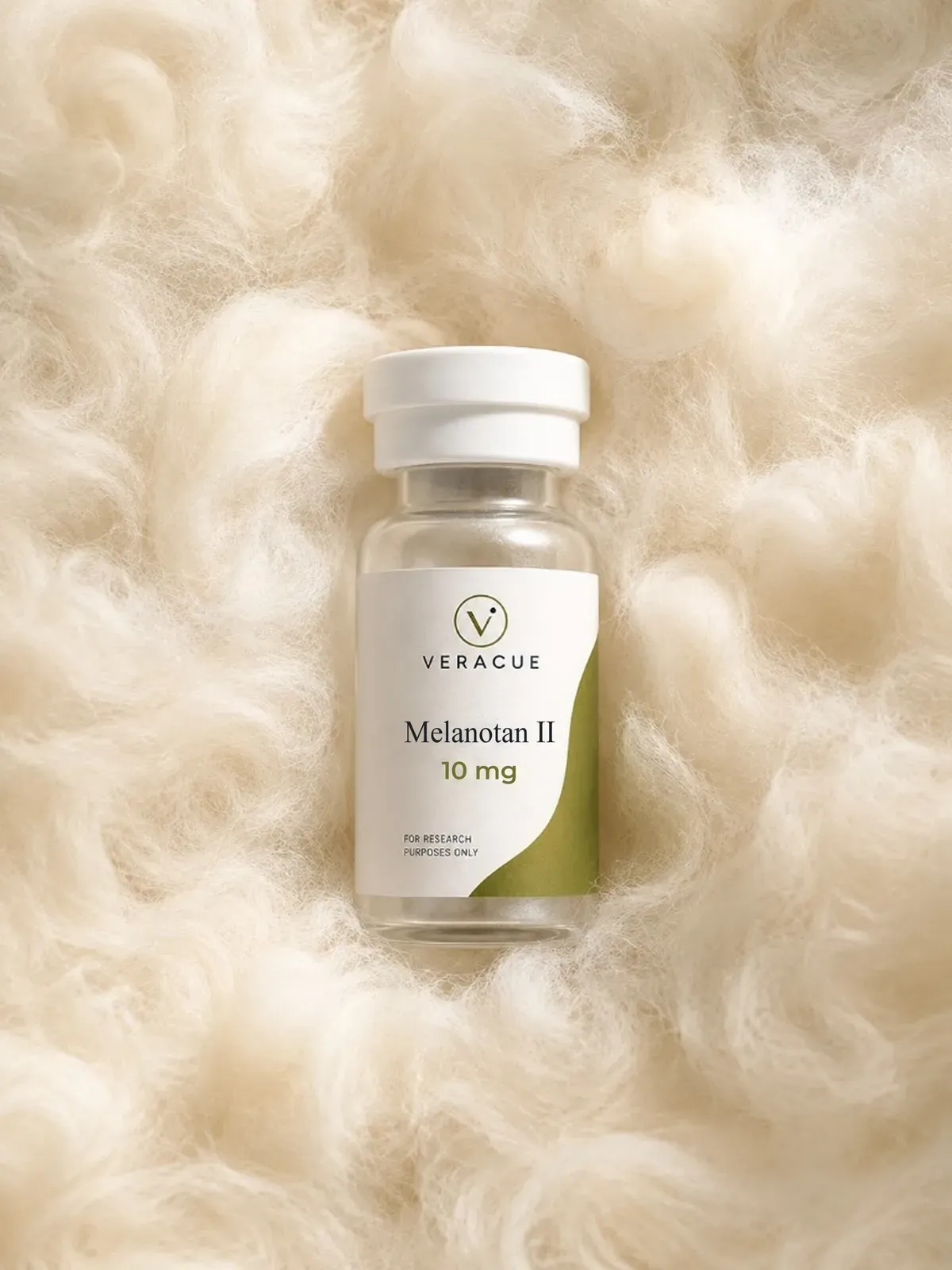
Melanotan II is a cyclic peptide with a lactam bridge (CAS 121062-08-6), unlike linear Melanotan 1. The 10 mg vial is for research use only.

RESEARCH PEPTIDE
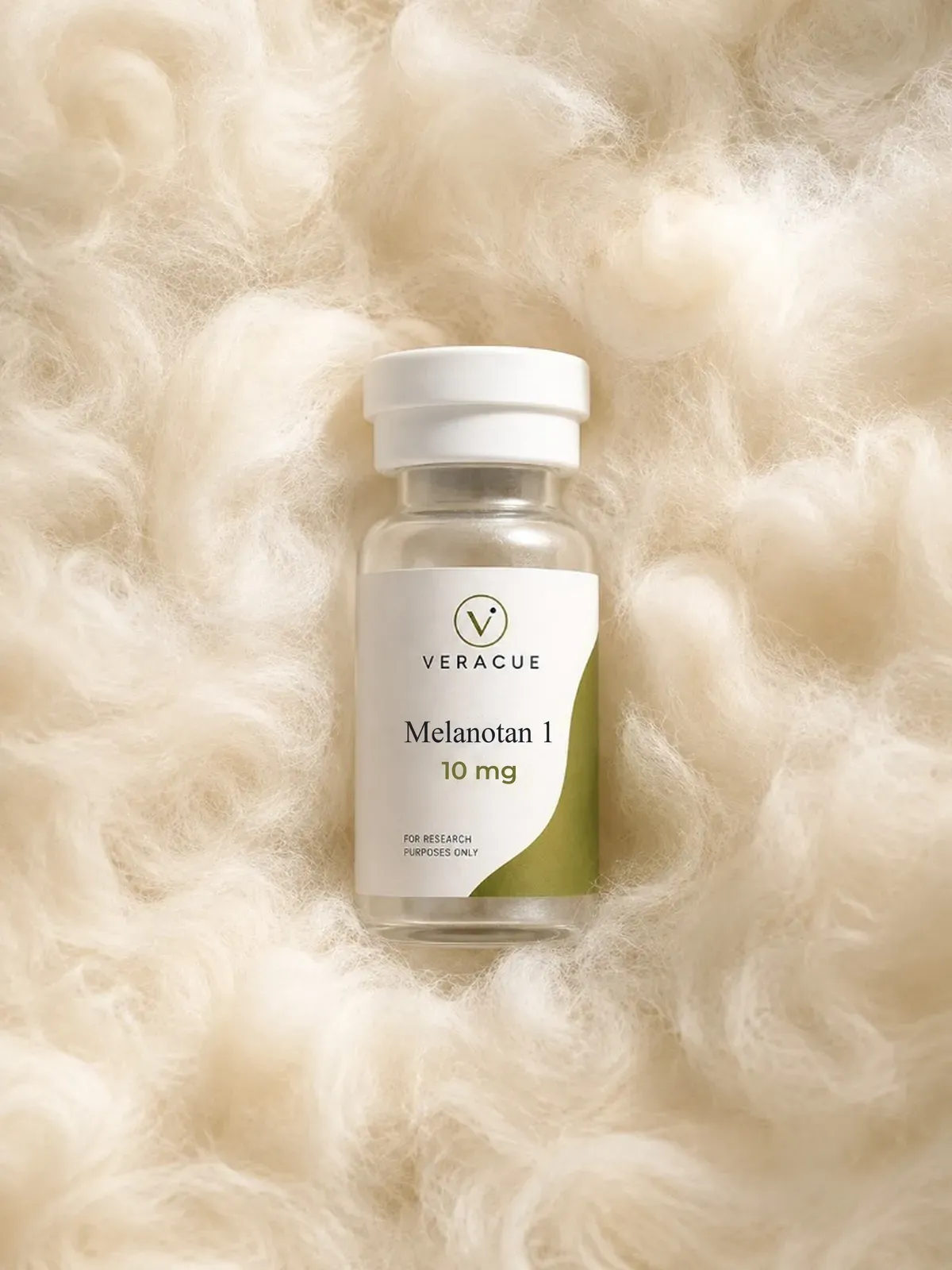
Melanotan 1 is a linear 13-residue peptide, unlike cyclic Melanotan II (CAS 75921-69-6). See the COA tips. For research use only, in a 10 mg vial.